Gather a few things See what you’ll need
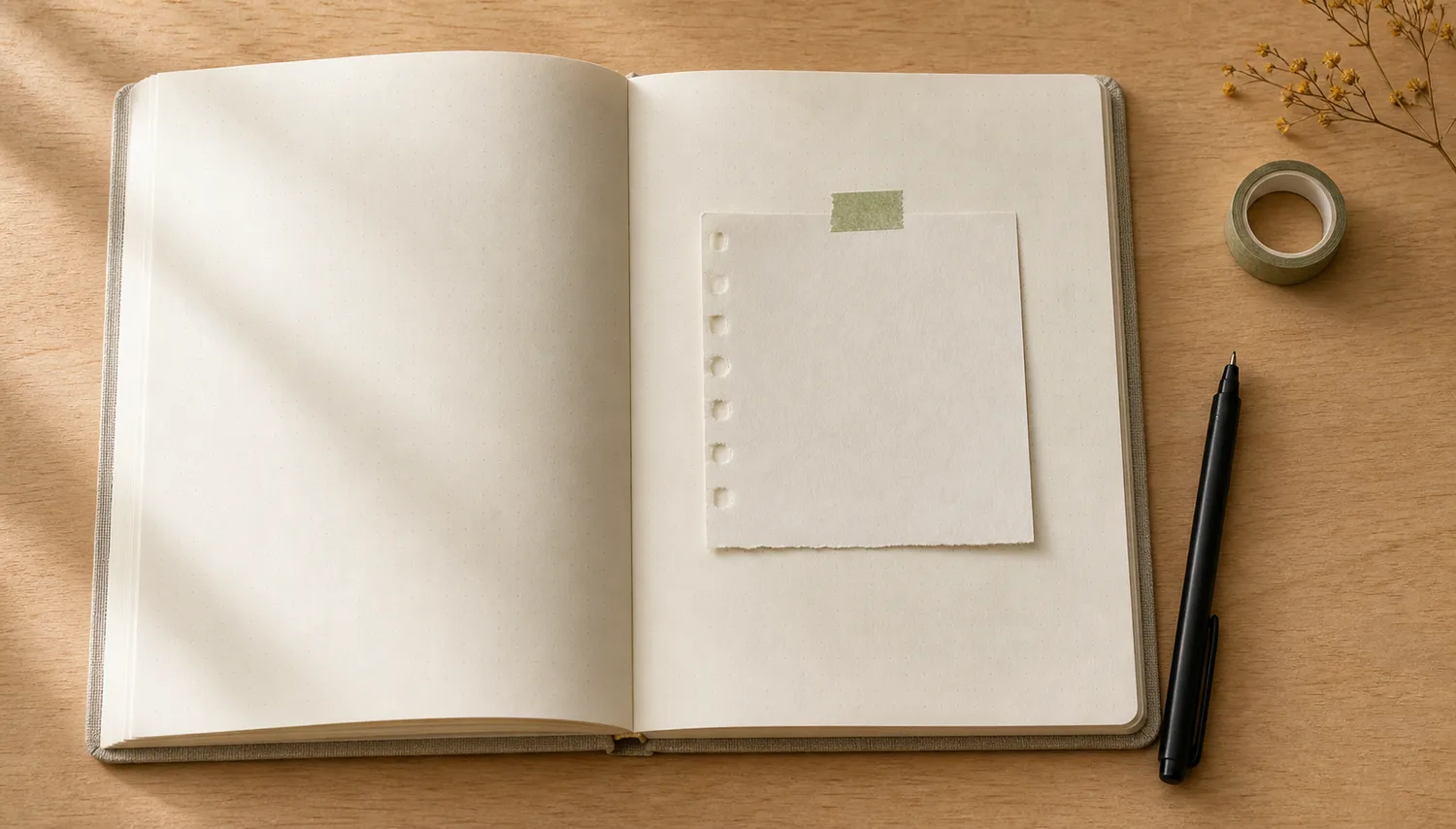
- Journal and pen
- Optional ready-to-use memo or sticky note
- Optional familiar highlighter
- Optional clean paper scrap and ready adhesive tab
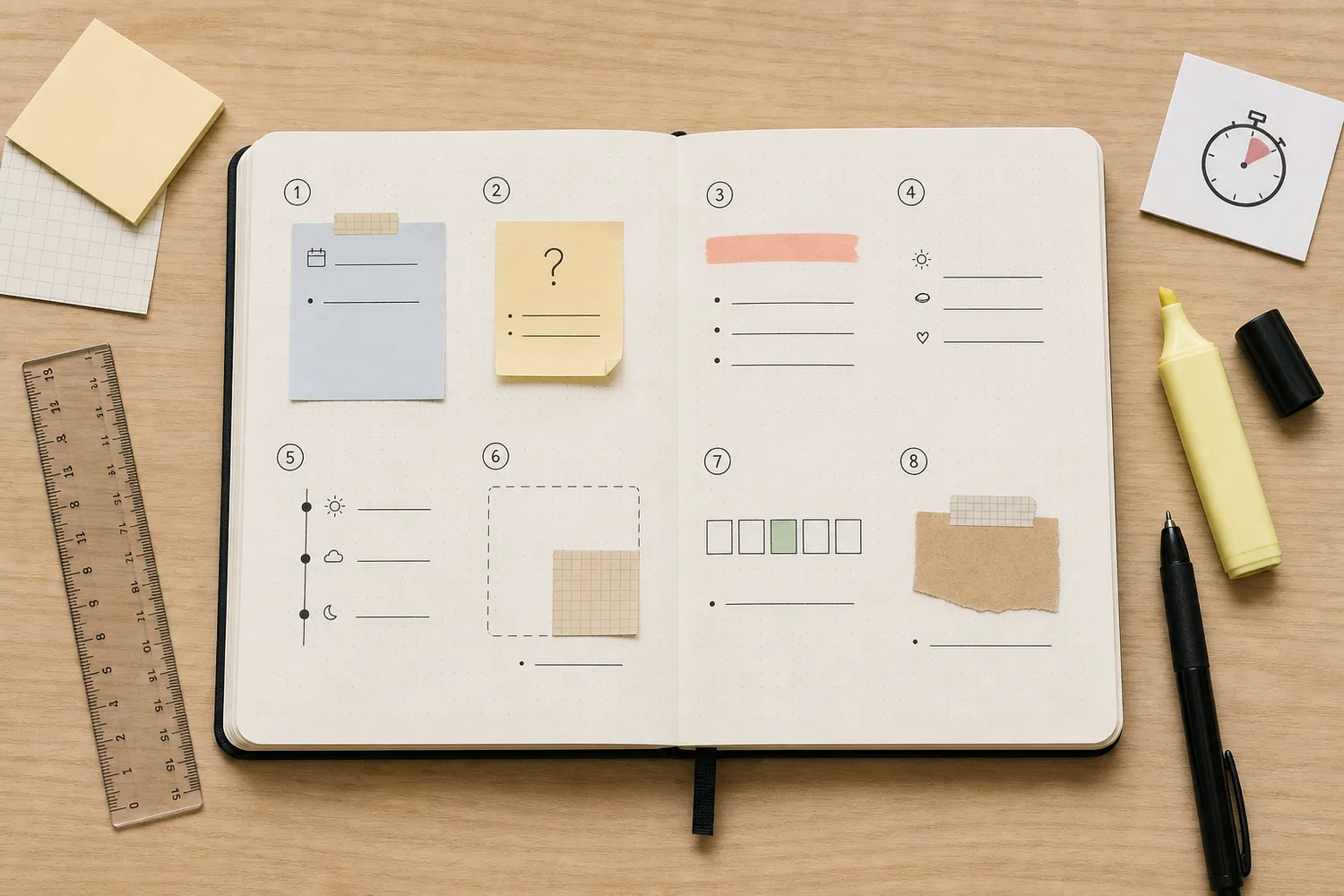
Choose an exercise 4 things to try as you read
Have the pen ready before you start the clock
The minute begins when your notebook is open and the things you need are within reach. A pen alone is enough for several of these ideas. If you'd like to attach a memo or scrap, have the adhesive ready too. Looking through a drawer for the right tape is a different activity.
Use a timer only if it helps keep the start small. It is a boundary for this visit to the page, not a deadline for wet ink or difficult handwriting. If you need another moment to finish a word clearly, take it. A short entry remains short without making the clock its most important part.
Compare the optionsChoose the start that uses what is already ready
Choose the start that uses what is already ready
Choose the material within reach and compare the smallest workable page.
Read the words in this example
- Today
- one detail
Write the date and one remembered detail.
A pen-only entry needs no search through supplies. Begin with the thing you can name already and leave space below it. A minute is a way to limit setup, not a test of speed or a requirement to produce a complete decorated spread.
ONE WORKED EXAMPLE
One sense gives you enough
You open a page with “I saw,” “I heard,” and “I felt,” but only a sound comes back clearly. You want a brief record before putting the notebook away.
Before
The draft fills the other headings with “nice things” and “fine,” which add little and make the one particular detail harder to notice.
After
The date sits above one line: “I heard the bicycle bell twice before I saw Mara at the gate.” The unused headings are left for another day. If a visual detail returns later, it can follow beneath this sentence with room to breathe.
What changed—and what to check
Keeping the one specific recollection gives the short visit a useful result. The starter headings support memory without requiring three completed answers.
Try this check. Read the entry once and identify the particular sound or action that you wanted to keep.
If you can name one thing
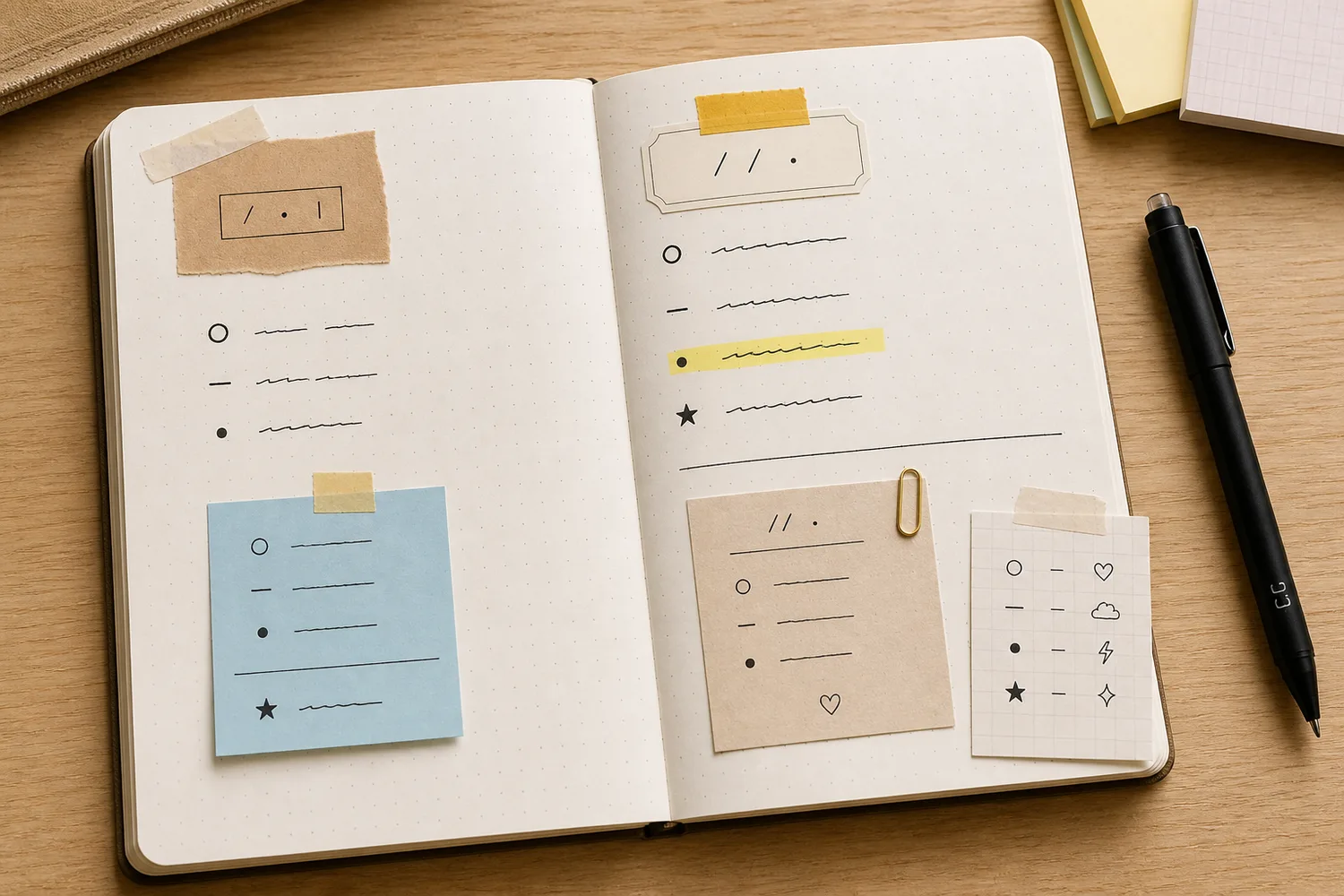
For a memo and date, write today's date at the top of a small note. Underneath, finish 'Today, I want to remember...' with whatever arrives first. 'The dog asleep beside my shoes' works. If a full sentence feels like too much, use a few words. Attach the memo where it fits, or write the same little entry directly on the page.
For a sticky prompt, put 'What did I notice today?' on a sticky note and place it beside an open writing area. Answer on the journal page: 'The first cool air through the kitchen window.' Keep the question simple enough to answer without reviewing your entire life. You can leave the same prompt there for tomorrow if you like.
“You don't owe the blank space a border, a theme, or an explanation.”
If the first line needs a little help
A highlight header gives the page a visible beginning. With a pen, highlighter, and paper combination you already know works, make a small pale bar, let it dry, and write 'today' over it. Add three short notes underneath: something seen, something done, something felt. If the ink needs longer to dry, give it that time or use a pen-only heading.
Write “I saw,” “I heard,” and “I felt” only if those starts help you recall something. Wet paving, the neighbor’s radio, or tired feet can each stand alone. If one line yields a useful detail and the others do not, keep that line rather than supplying vague answers to make the set look complete.
Write your versionStart with the senses that gave you a detail
Start with the senses that gave you a detail
Edit the sample observations. A blank field can stay blank.
I sawWet paving stones beside the gate.
I heardThe neighbor’s radio through the open window.
I feltTired feet after the long walk.
Your words have a place now.
The filled card is a sample. Replace any part with your own words; leave a field empty if it does not help.
- Words on this card
- 25
If you remember the order, or want a smaller page
A tiny timeline is one short vertical line with three dots. Label them morning, afternoon, and evening, then add a moment beside each. Or use 'before,' 'during,' and 'after' for one event. 'Nervous / laughing / glad I went' can bring back an evening without describing every part of it. Put the date nearby so you'll know which evening it was.
A corner card gives you less space to fill. Place one memo in a corner and write a short note on it or beside it. Leave the rest of the page open. If you'd like a little finish, draw an L-shaped line around one corner of the memo. You can use this on a partly filled page as well as a new one.
Write your versionKeep the shape of one event in three short notes
Keep the shape of one event in three short notes
Use before, during, and after for a single event instead of accounting for the whole day.
Before:Nervous on the doorstep.
During:Laughing around the kitchen table.
After:Glad I went, ready for quiet.
Your words have a place now.
The filled card is a sample. Replace any part with your own words; leave a field empty if it does not help.
- Words on this card
- 18
GO A LITTLE FURTHERIf words are thin but something is still there
If words are thin but something is still there
A mood meter can be five little boxes and one clearly named feeling. Write 'calm,' for example, and shade from one box for very little calm to five for a lot. Add a brief reason if you have one: 'Better after the walk.' Keep the meaning of the scale beside it so later you won't have to guess what the filled boxes meant.
Today's scrap starts with one clean, dry piece already on the desk: a tea tag, a wrapper corner, or a little paper label. Attach it with the tape you have ready and write 'This stayed because...' beside it. If attaching it would take longer than you want, sketch its shape and write the name instead. Keep anything greasy or damp out of the notebook.
Leave yourself an easy place to return
When the minute is up, read the note once. Does it tell you what you wanted to keep? If a word is missing, add it. If the page is mostly empty, you can leave it that way. You don't owe the blank space a border, a theme, or an explanation.
To return later, begin directly below the detail already there. Add the person’s name, the next moment, or why the scrap mattered; you need not start a new layout. If choosing among eight starts used up your attention, use the first one next time: a date and a detail you actually want back.
Try a what-ifThe pale heading has not dried
The pale heading has not dried
Consider this page before choosing your next move.
You started a highlighter heading with a familiar pen and paper, but the bar is still damp as your one-minute timer ends.
Compare the three choices
What keeps the short start workable?
- Let it dry, or use a pen-only heading elsewhere.
The timer does not change drying time. You can preserve a small entry without writing into a wet surface.
- Write through the damp bar so the entry stays within the minute.
Finishing on the clock may smear the heading and create a repair that takes longer than waiting.
- Add more highlighter to make the wet area uniform.
Another layer extends the wet step rather than making room for the sentence.
A short writing session can still respect the time its materials need.
What would you try?
Choose an option to see what it would do. You can explore all three.
Something for a future page?
The Washi Tape ShopAffiliate links: we may earn a commission if you buy through these links.
Where this idea began
Eli Brook's rushed-day layouts show what she actually returns to when time is short. The remaining sources informed short starts, rapid logging, white space, and uncomplicated memory keeping.
Want to explore the techniques a little further? Here are the maker tutorials and references behind this guide.
- Maker exampleEli Brook: Five Quick Bullet Journal Layouts
Eli Brook’s quick layouts supply the named example of simpler pages used when time is short.
- Method referenceTiny Ray of Sunshine: rapid logging as short-form bullet journal notation
Tiny Ray of Sunshine’s practitioner guide explains Bullet Journal notation with credit to the method.
- Method referenceBullet Journal: Rapid Logging, Bullets, and Signifiers
Official meanings for tasks, events, notes, status changes, and signifiers; decorative variants remain optional.
- Design principleGet It Scrapped: white space as breathing room in scrapbook page design
Scrapbook examples of leaving open space around the main content.
- Creative contextAli Edwards: making memory keeping less complicated
Ali Edwards’s simpler memory-keeping approach informs reducing decorative decisions.