Gather a few things See what you’ll need
- A pocket notebook or folded sheet
- A pencil or pen
- One or two colored pencils if available
- A familiar place to look
Pick a color broad enough to find
Choose a color family you can recognize comfortably in your setting: blue, rusty orange, pale green, or cream. A very specific shade may make the exercise feel like a search for the correct answer, so leave room for variations. Write the chosen color and your place at the top of the page. Color-based outdoor journaling tutorials, including Writing Mindset's work, use observed colors as starting points for notes and writing. This exercise follows that idea with a simple location record. It doesn't need a claim about a trend, an emotional effect, or an ideal length of walk.
Notice what changes the blue you see
Choose a situation and notice how the example changes. Each choice gives a different useful next move.
Keep the surface and light beside the color.
The practice gate is dark blue in shade with glossy patches. Those conditions help explain your description without claiming that a single swatch is an exact measurement of the object.
Reserve small spaces for a few finds
Make three empty spaces on your page, each with room for an object, a color description, and its location. These are suggested limits to keep the first entry manageable, not a quota you must meet. If you have colored pencils, test them on spare paper before choosing a rough match. Leave the label outside the swatch so it stays readable. If you have only one pen, draw a plain box and write “faded blue” inside. You are recording observed differences, so a written comparison can be entirely adequate without owning a large selection of materials.
“The page is complete when you can identify where your finds came from and one difference among them.”
Notice the color and the surface together
For each find, name the object and one feature affecting its appearance: glossy, dusty, translucent, shadowed, faded, or patterned. “Blue on the shaded metal gate” tells you more than “blue.” Stay in places where you can observe without touching objects or stepping into someone else's space. Stop moving before writing, and keep awareness of your surroundings. If the same object looks different when the light changes, record both impressions with their conditions. The page can say what you saw without claiming an exact color measurement or deciding which impression is the object's single true shade.
Located variations
Move the reveal control to compare the two written examples. Read what the changed detail allows you to understand.
The note before revision
Repeated color names lose the objects and conditions you compared.
Keep three invented blue observations
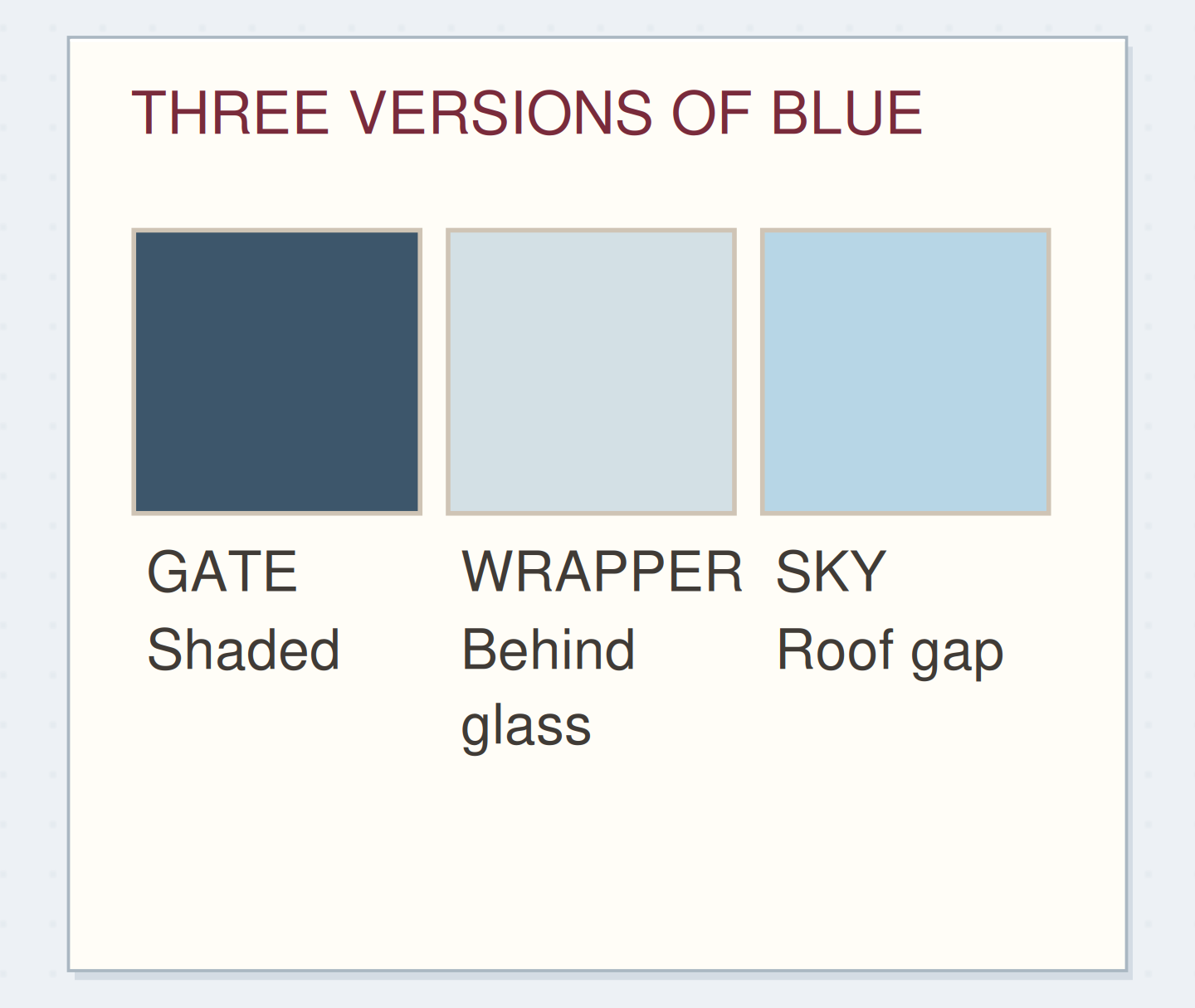
An example page might read, “Blue, courtyard to corner shop. Gate: dark blue in shade, small glossy patches. Wrapper behind shop glass: pale blue, almost gray. Sky gap above roof: lighter blue than the gate, with a soft edge against cloud.” Make three small swatches if your pencils allow, but keep the words when the matches are poor. At the bottom, write, “The gate looked darkest; the wrapper was the dullest.” These are comparisons within the observed view. The invented example shows a method for recording, rather than reporting actual colors from a particular location or time.
Draft: Follow One Color Through an Ordinary Place
Edit the practice words to make a note you can use in your own notebook. Keep any uncertainty visible.
Chosen color and placeBlue, courtyard to corner shop.
Three located findsGate: dark, glossy shade. Wrapper: pale behind glass. Sky gap: lighter than gate.
One comparisonThe gate looked darkest; the wrapper looked dullest.
Your words have a place now.
The initial words are an invented practice example. Edit only the details you want to keep; your entry can stay short.
- Words on this card
- 35
When you find too much or nothing
If every object seems to qualify, narrow your attention to surfaces or choose only the next three finds you can comfortably describe. If nothing matches, widen the color family or keep a page about its absence in the limited view. “No orange found from this window today” is more accurate than “There is no orange here.” If a swatch goes wrong, label the intended color beside it instead of layering until the paper tears. You can also keep an unmatched swatch as a note about your available materials, clearly separate from the color you meant to describe.
Let the observations suggest a journal detail
Back at your writing place, choose one relationship to borrow: a dark color beside a pale one, a tiny bright patch among duller surfaces, or repeated shades on different objects. Try it on scrap paper before adding it to another journal page. Keep any writing area readable and don't assume a pleasing outdoor combination will work unchanged behind small handwriting. You can use the color names as words in a short entry instead. If you want to compare another visit, repeat the location and note the light, rather than expecting the same surface to look identical every time.
Stop with one comparison you can name
The page is complete when you can identify where your finds came from and one difference among them. You don't need a rainbow, a distance record, or a photograph of every object. Write a final comparison that belongs to this visit, then let the search end. If a color catches your attention later, it can begin another page rather than extending today's entry forever. A small collection of located observations gives you something concrete to reuse in writing or composition while leaving the ordinary place available to enjoy without constantly recording it.
Prepare to compare the recorded finds
Move the steps and check the dependencies. Only the stated preparation relationships matter.
One workable order
- Choose the color familyThis defines the focus of the search.
- Find a visible exampleThe note needs an object you actually saw.
- Record location and surfaceKeep the conditions that make the color description useful.
- Compare the recorded findsA comparison needs the located observations it refers to.
Which check needs to come first?
The example shows one workable order. This order keeps the required checks before the decisions that rely on them; other unconnected steps can change places.
Where this idea began
Want to follow the idea further? These community discussions and maker references are a good place to start.
- Do you focus on colors as you move through your day?
The discussion proposes noticing a chosen color while moving through ordinary surroundings.
- Journaling Type Help/Prompts
A reader asks how to observe sky, weather, animals, and plant changes, with suggestions including color-based observations.
- Painting with Words — Writing Mindset
The tutorial uses observed colors, locations, and small written responses as prompts for outdoor notebooks.