Gather a few things See what you’ll need
- A small notebook
- A pencil
- A comfortable available place to sit or stand
- A clock if useful
Pick the view you can actually revisit
Look for a place that is accessible, permitted, and easy to leave. A view of a single tree, courtyard, planter, or patch of sky is enough. Illinois Extension's sit-spot guidance emphasizes choosing an appealing place that is easy to visit; use that practical idea rather than searching for a perfect natural setting. Note where you are positioned and which direction you face using landmarks if you don't know compass directions. “Kitchen chair, facing the gate” can establish a repeatable view. Keep the activity within ordinary conditions you can comfortably observe, including through a closed window.
Choose a manageable focus for this visit
Choose a situation and notice how the example changes. Each choice gives a different useful next move.
Locate the shadow beside a fixed landmark.
The planter is shaded while the gate rail is lit in the practice visit. Keep both landmarks in the note so a later comparison can refer to the same view and time context.
Make a few fixed anchors on the page
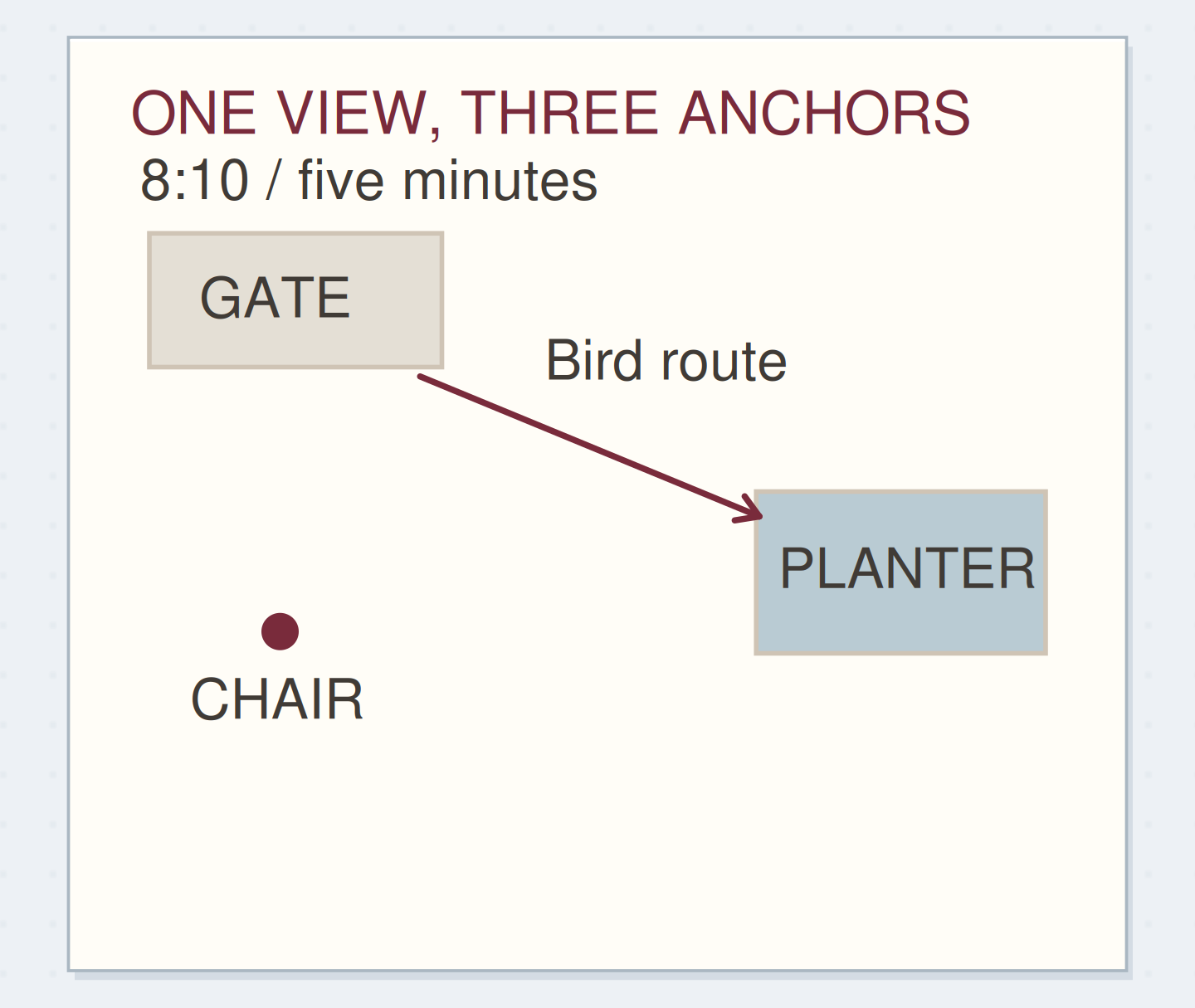
Draw a small rectangle for your field of view and place three simple anchors inside it, such as the gate, planter, and corner of a roof. Label them with words. This isn't a measured landscape map; it is a reminder of where observations happened. Leave most of the page for notes and add the date and approximate time. The anchors make future entries easier to compare without redrawing the whole scene. If the view changes because you move seats, write that down. A new angle can reveal something different without proving that the place itself changed.
“Stop when the entry has its viewpoint, a few located observations, and any condition that affects the comparison.”
Follow one kind of change at a time
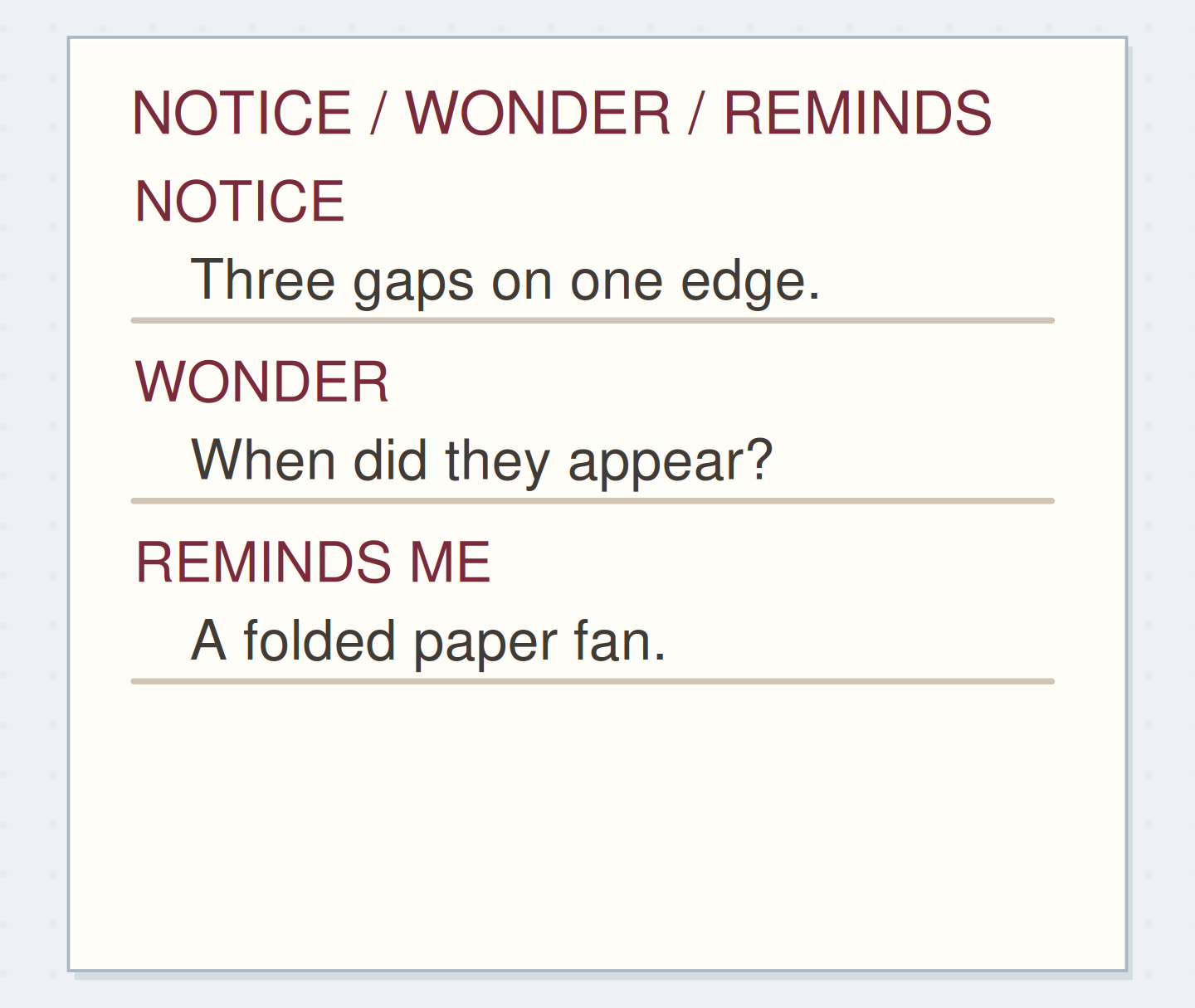
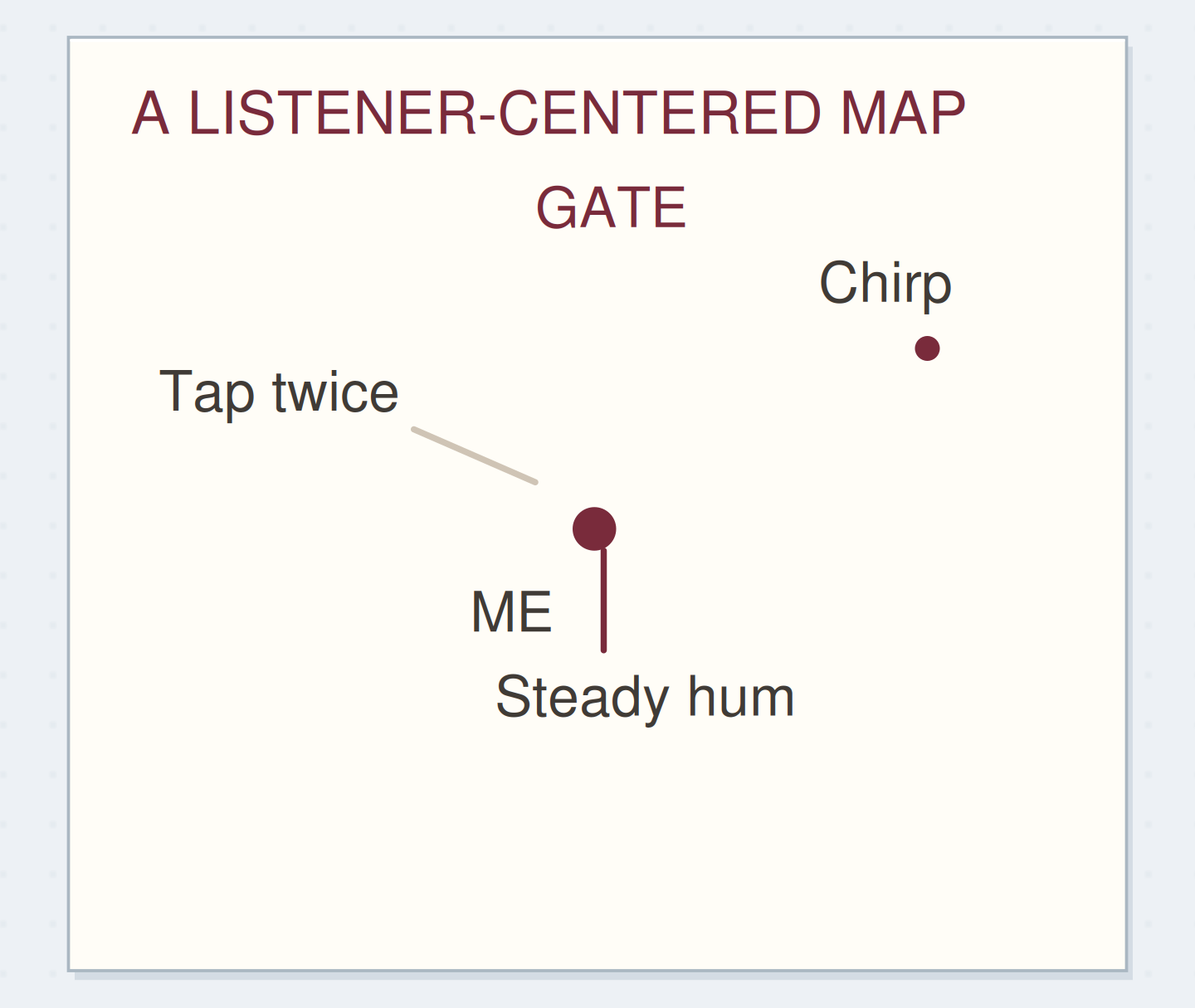
On the first visit, choose a manageable focus: where light falls, which movements cross the view, or what sounds reach you. Watch before filling the page. Record a few events in the order you notice them, using ordinary descriptions instead of uncertain species names. “Small bird lands on gate, then moves behind planter” is enough. If nothing happens in your chosen category, describe the visible conditions rather than inventing an event. A quiet entry can show what you looked for and how long you observed without suggesting that nothing happened outside your observation window.
A bounded observation
Move the reveal control to compare the two written examples. Read what the changed detail allows you to understand.
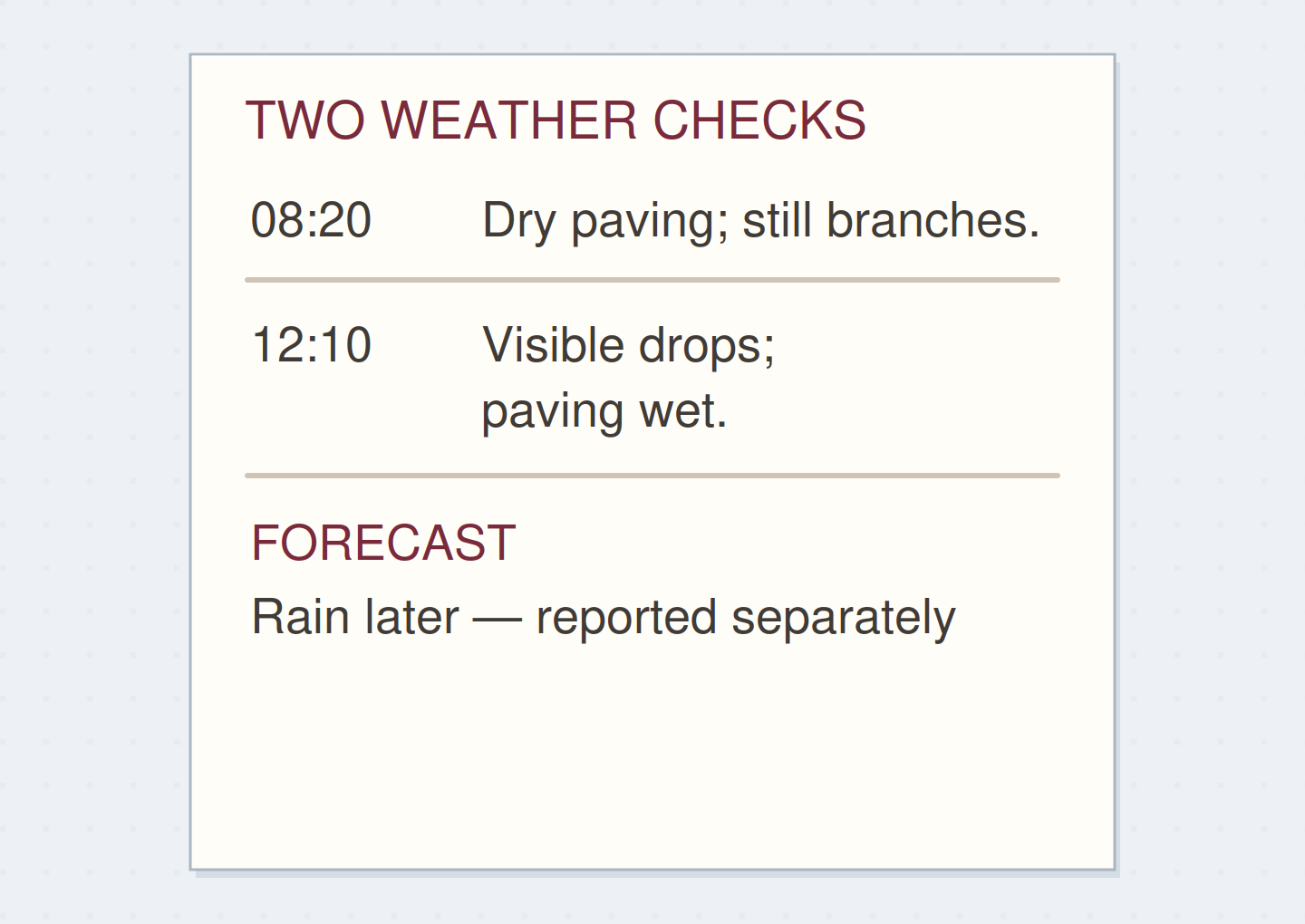
The note before revision
Nothing happened may hide an actual period of watching.
Make a gate-and-planter entry
Try this invented record: “Tuesday, about 8:10, kitchen chair, five-minute view. The planter is in shade; the top rail is lit. One small bird pauses on the gate and disappears behind the planter. A delivery cart passes outside the view; wheels are audible.” On the map, add a short arrow from gate to planter and label the sound at the edge. Finish with “Next visit: check where the shade ends.” The arrow represents the observed movement only. It doesn't identify the bird, trace an unseen route, or claim that the cart caused it to leave.
Draft: Return to One Ordinary View
Edit the practice words to make a note you can use in your own notebook. Keep any uncertainty visible.
Viewpoint and timeKitchen chair facing gate, Tuesday about 8:10, five minutes.
Observed detailPlanter shaded; gate rail lit.
Next questionWhere will the shade end on another visit?
Your words have a place now.
The initial words are an invented practice example. Edit only the details you want to keep; your entry can stay short.
- Words on this card
- 29
Keep gaps and interruptions honest
If you forget a week, continue with the real date. A sit-spot notebook doesn't need reconstructed entries to repair its appearance. If you are interrupted halfway through, write “Observation ended when the phone rang” or simply shorten the recorded interval. If you can't tell whether a sound came from your view, place it in a separate “Heard nearby” note. These small distinctions prevent later you from reading a tidy page as a complete account. When a view feels repetitive, change your focus for one visit while keeping the physical spot, and label that change clearly.
Read two visits beside each other
Choose two entries and ask one narrow question: did the light reach the same landmark, or did you hear the same kind of repeated sound? Check the date, time, and viewpoint before interpreting a difference. A later visit in the afternoon is not the same comparison as two visits at breakfast. Write “On these visits…” instead of generalizing about what always happens. If you want to track a particular seasonal event, move into a repeat-observation page with a clear feature to check. The sit spot can remain broad enough to hold unexpected details that a checklist misses.
Leave one invitation for another visit
Stop when the entry has its viewpoint, a few located observations, and any condition that affects the comparison. You can leave one question for a future visit without scheduling it or making it a task you must complete. Before closing the notebook, look once more at the place to see whether a label needs correcting. Then let the observation end. A useful sit-spot page can be modest: it preserves what you attended to during a particular visit, and gives the next visit a familiar starting place without insisting that it produce something new.
Prepare to compare with another visit
Move the steps and check the dependencies. Only the stated preparation relationships matter.
One workable order
- Identify the viewpointYour later comparison needs the place you observed from.
- Make the actual observationThe record must come from a visit you made.
- Write time and detailsPreserve the conditions and what you saw during that visit.
- Compare with another visitCompare only after both dated observations exist.
Which check needs to come first?
The example shows one workable order. This order keeps the required checks before the decisions that rely on them; other unconnected steps can change places.
Where this idea began
Want to follow the idea further? These community discussions and maker references are a good place to start.
- Anyone else keep a perpetual nature journal?
A reader describes keeping a long-running written record of familiar local birds and other nearby nature.
- How often do you nature journal?
The post asks about observation frequency and explicitly describes gaps between entries.
- Find Your Sit Spot — Illinois Extension
The author recommends an appealing, accessible place for recurring observation and descriptive journal notes.