Gather a few things See what you’ll need
- A notebook
- A pencil
- A natural object you can observe without disturbing it
- A ruler if measurement is useful
Choose something that will stay available
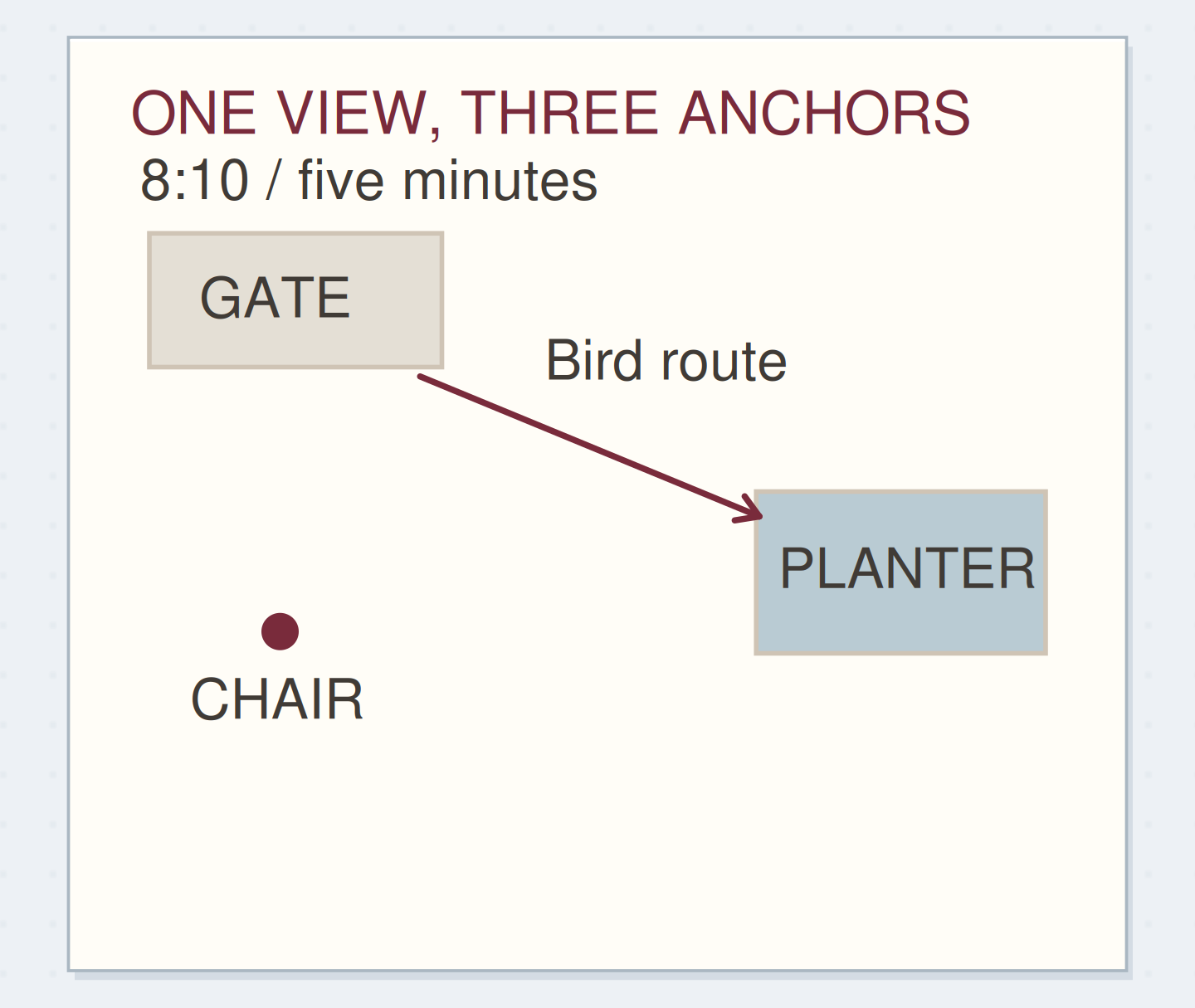
Begin with a small, stationary subject you can see from a comfortable position: a leaf still on a plant, a stone beside a path, or the shape of a branch outside a window. Leave living things and unfamiliar objects where they are. Write the date, location, and a description that will help you find the subject again. “Leaf on the low branch beside the gate” is useful even when you don't know the species. Choose a subject you can examine without leaning into traffic, damaging plants, or turning the entry into a collecting expedition.
Keep three kinds of attention separate
Choose a situation and notice how the example changes. Each choice gives a different useful next move.
Put the feature under Notice.
Three gaps along the leaf edge can be pointed out in the practice example. Record that visible feature before proposing an explanation; the observation does not identify what made the gaps.
Describe what the subject actually shows
Under “I notice,” write details you could point out to another observer. “Three pale lines branch from the center” is different from “It needs water,” which proposes an explanation. Look at the edge, surface, direction, and relationship between parts. If a count is uncertain, write “about” or describe the area you counted. A rough drawing can help place a note, but words alone work. Put a leader line from each label to the part it describes. You can say “darker here” without matching the exact shade or deciding what caused it.
“Stop when you have one observation you can point to, one question you honestly have, and one connection that makes sense to you.”
Turn a detail into a real question
Under “I wonder,” let an observed feature lead to something you don't yet know. A curled edge might prompt “Is the other side curled too?” or “Does it look different after rain?” Some questions can be explored by changing your viewpoint; others require another visit or a reliable reference. Don't rush to answer all of them. Write a possible explanation as “Maybe” and keep it out of your observations. The notebook should preserve uncertainty clearly. Not knowing a plant's name doesn't stop you from asking about its shape, position, changes, or relationship to nearby objects.
Observe before explaining
Move the reveal control to compare the two written examples. Read what the changed detail allows you to understand.
The note before revision
Naming an insect invents a cause the leaf observation has not established.
Try an invented leaf entry
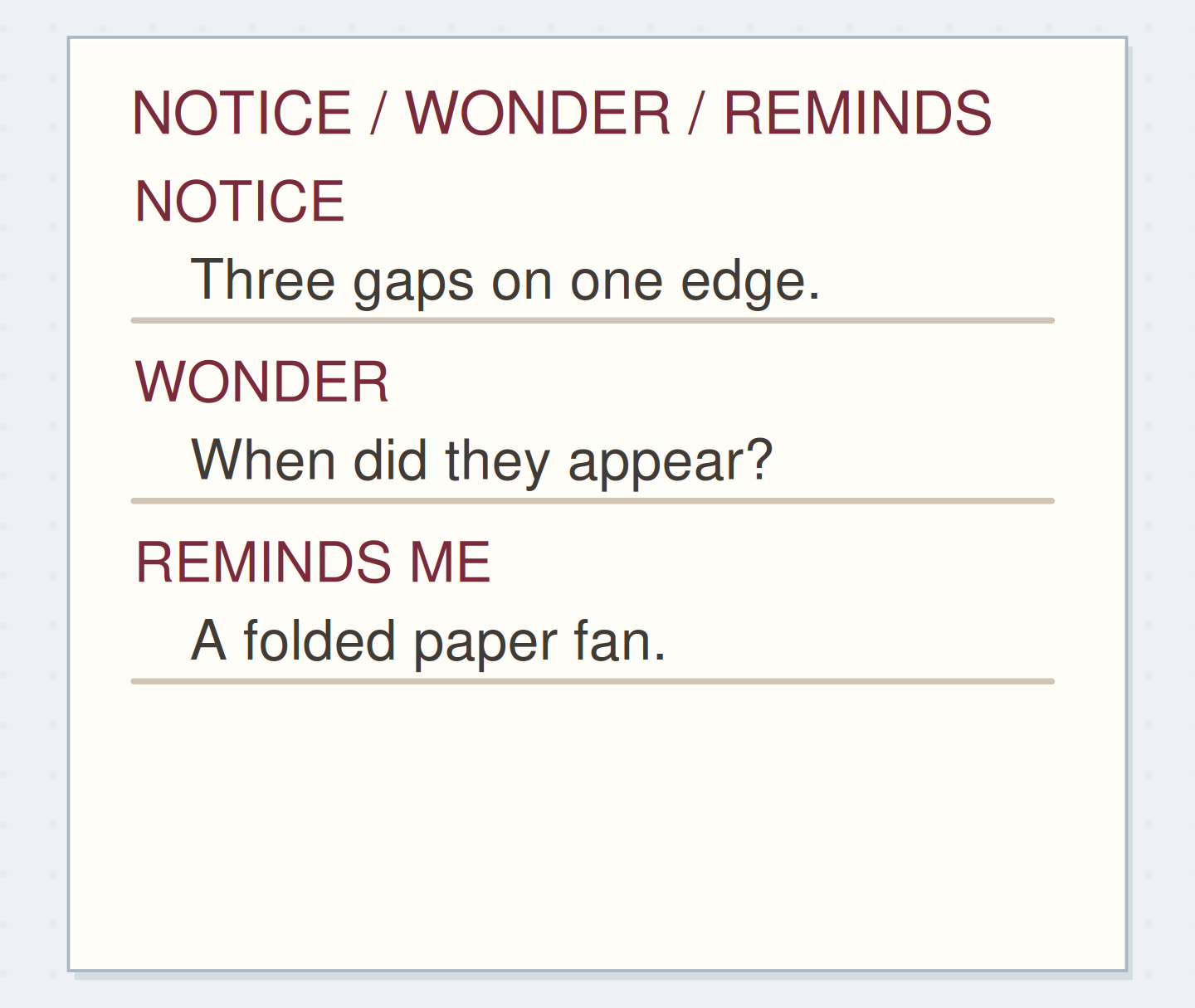
Here is an original practice example: “I notice three small gaps along one edge and a pale line down the middle. I wonder whether the gaps were already there when the leaf opened. It reminds me of a folded paper fan, especially where the smaller lines spread outward.” The first sentence reports visible features; the second asks about history; the third describes a resemblance. “A paper fan” isn't an identification or evidence for what made the gaps. You can sketch the fan beside the leaf if you label it as a connection rather than part of the observed subject.
Draft: Look Again With Notice, Wonder, and Reminds Me
Edit the practice words to make a note you can use in your own notebook. Keep any uncertainty visible.
I noticeThree gaps along one edge and a pale central line.
I wonderWere the gaps there when the leaf opened?
It reminds me ofA folded paper fan where the smaller lines spread.
Your words have a place now.
The initial words are an invented practice example. Edit only the details you want to keep; your entry can stay short.
- Words on this card
- 35
When you jump straight to naming things
If you write only “oak leaf” or “bird,” cover the name and add two details that don't depend on it. If you write an explanation with no supporting observation, move it under a question and identify what would let you check it. You can also rescue a stalled drawing by writing the feature the drawing failed to show. “Edge has tiny teeth” may be more informative than redrawing the outline repeatedly. A nature journal is allowed to contain corrections and unfinished shapes. Its usefulness comes from keeping your attention and your record connected, not from making every mark attractive.
Give one question a next step
Choose a question that still interests you and name the smallest sensible way to pursue it. You might view the reverse without touching, return to the same branch, or consult a field guide for possible identification. Record new information with its source and date. If the answer remains uncertain, leave that visible instead of choosing the first plausible name. For repeated observations, describe the subject's location carefully enough that you won't accidentally compare different leaves. You can share the question with another journaler, but a confident suggestion still needs evidence before becoming your own recorded fact.
Finish before the subject becomes an assignment
Stop when you have one observation you can point to, one question you honestly have, and one connection that makes sense to you. More notes are welcome only while they remain interesting. On another day, you may use just one prompt or spend the whole page with a single feature. Keep the date so a later entry can sit beside this one without pretending the conditions were the same. You don't have to discover a species, solve a mystery, or complete a polished illustration for this particular encounter to be worth keeping.
Prepare to choose a way to investigate
Move the steps and check the dependencies. Only the stated preparation relationships matter.
One workable order
- Find the visible featureYou need a real feature to make the observation-based question specific.
- Record what you noticeKeep the visible detail apart from an explanation.
- Ask about that featureThis question depends on the observation it addresses.
- Choose a way to investigateThe next observation or reference should answer the question you wrote.
Which check needs to come first?
The example shows one workable order. This order keeps the required checks before the decisions that rely on them; other unconnected steps can change places.
Where this idea began
Want to follow the idea further? These community discussions and maker references are a good place to start.
- Still very very new to this
A beginner describes using limited supplies and valuing observations that need not be identified immediately.
- Journaling Type Help/Prompts
A reader asks how to observe sky, weather, animals, and plant changes, with suggestions including color-based observations.
- John Muir Laws and the Art of Paying Attention
Laws explains Notice, Wonder, and Reminds Me and acknowledges inspiration from Kerry Ruef’s Private Eye Project.