Gather a few things See what you’ll need
- A notebook or dated document
- A pen
- An ordinary upcoming activity
Choose an event close enough to imagine concretely
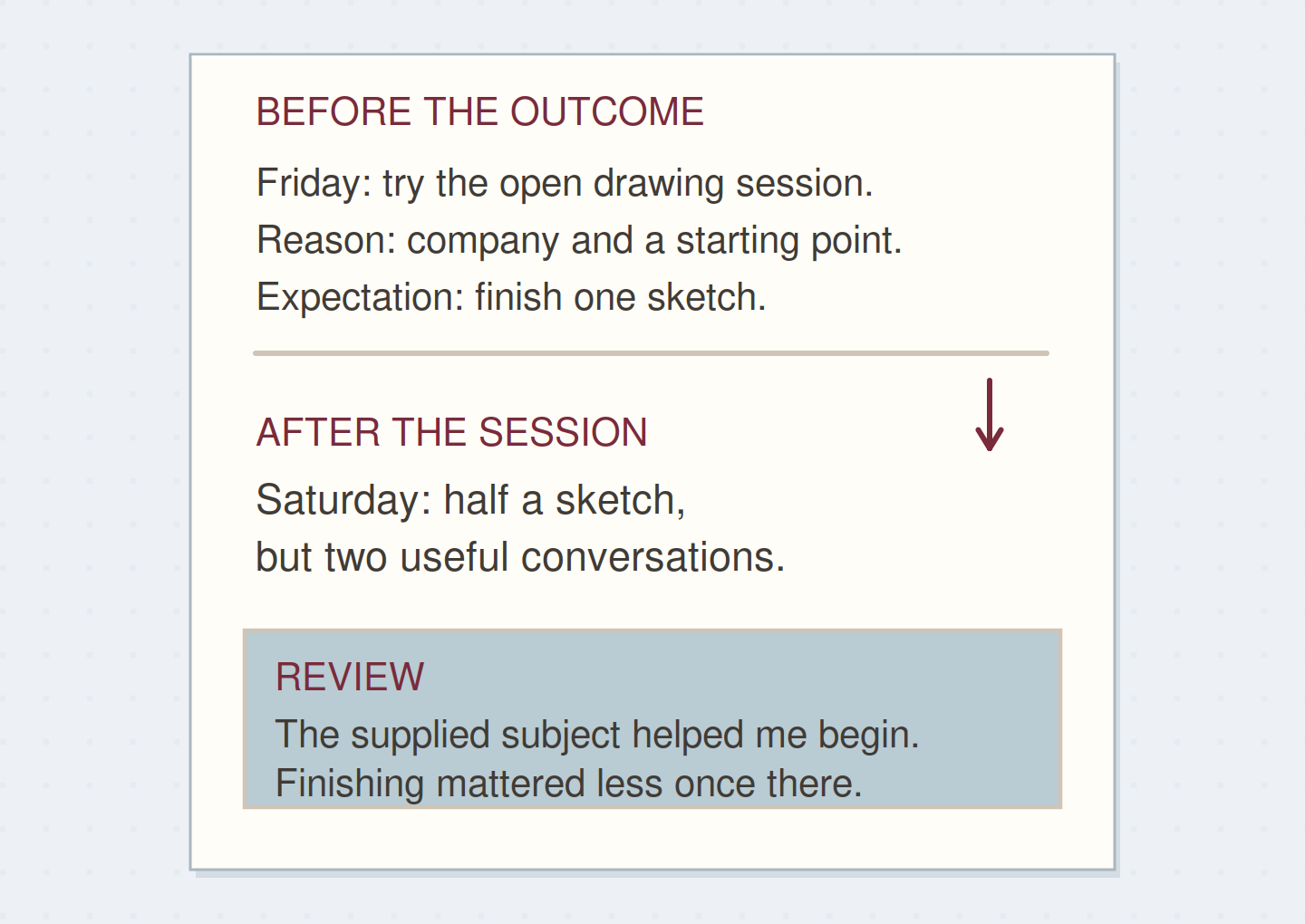
Pick something likely to happen soon and give it a plain heading: “Saturday, the riverside walk.” If the plan is tentative, say so. A possible event can still be a subject for anticipation, but the page should show that it is possible rather than confirmed.
A simple-living community discussion invites people to share both recent pleasures and things they look forward to. George Mason University’s reflective-writing guide suggests noting expectations before an experience. This small journal version combines those directions: preserve the looking-forward part and make room for what the actual event will add.
Watch the event add something unforeseen
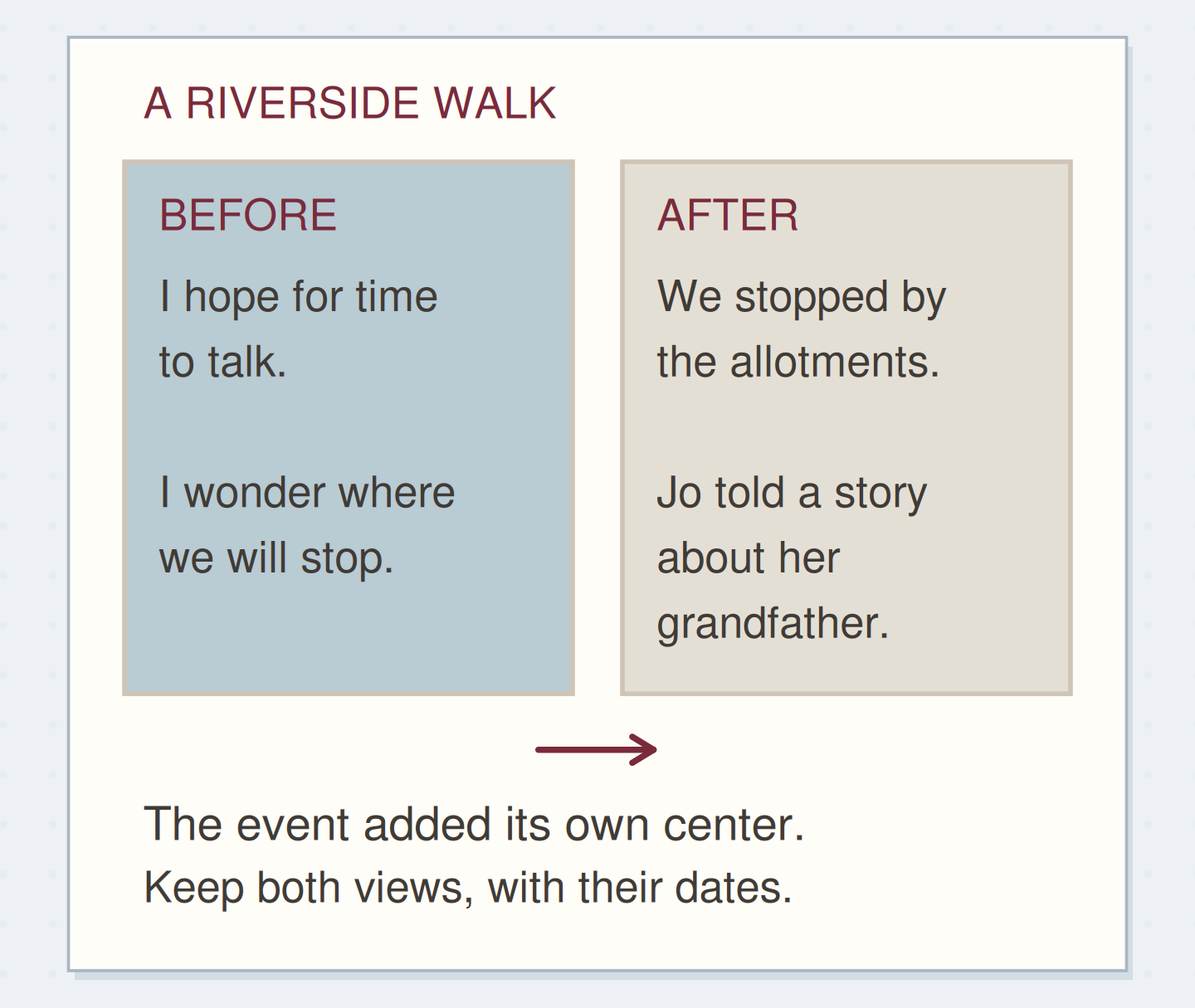
The walk’s after-entry does more than confirm the original plan.
The before-entry names what the writer wants.
This is a hope, not a guarantee.
Keep a hope distinct from a prediction
Write “I’m looking forward to…” and name the part you want to experience. Then, separately, write “I expect…” only if you have a prediction. “I’m looking forward to talking without watching the time” is a hope. “We’ll probably take the shorter path” is an expectation about what may happen.
The distinction matters because an unmet hope isn’t necessarily a false prediction. You may want sunshine while expecting rain. Keeping both statements visible gives the later entry a more accurate starting point than a single line declaring that the afternoon will be perfect. You can also leave the prediction out entirely.
“The after-entry gets to surprise the before-entry.”
Leave one thing open for the event to answer
Add a question you can answer from experience: “Which part of the path will we linger on?” or “Will I want to make this recipe again?” Then choose a small detail you’re curious to notice, such as the sound near the water or the texture of the finished bread.
Don’t turn the outing into a checklist you must perform. The question can stay in the notebook while you enjoy the activity. You’re leaving an opening for the after-entry, not assigning yourself a reporting job. If you forget the question until afterward, answer from what you remember and leave the rest unknown.
Write the before-view
Try a hope, an optional expectation and an open question.
Talking with Jo without a table between us.
We will probably take the short loop.
Where will we stop and linger?
Your words have a place now.
Add the actual experience later with its own date; it may answer a different question.
- Words on this card
- 21
Follow one riverside walk through both entries
Before: “I’m looking forward to talking with Jo without a table between us. I expect we’ll take the short loop because the weather looks uncertain. I wonder where we’ll stop. I’d like to notice what the river sounds like near the footbridge.”
After: “We took the short loop, but stopped at the allotment fence instead of the bridge. Jo recognized a plant her grandfather used to grow. I remember the scrape of a rake more clearly than the river. The part I hadn’t imagined was standing still while she told that story.” The after-entry adds its own material; it doesn’t merely tick off the earlier guesses.
Distinguish wanting from predicting
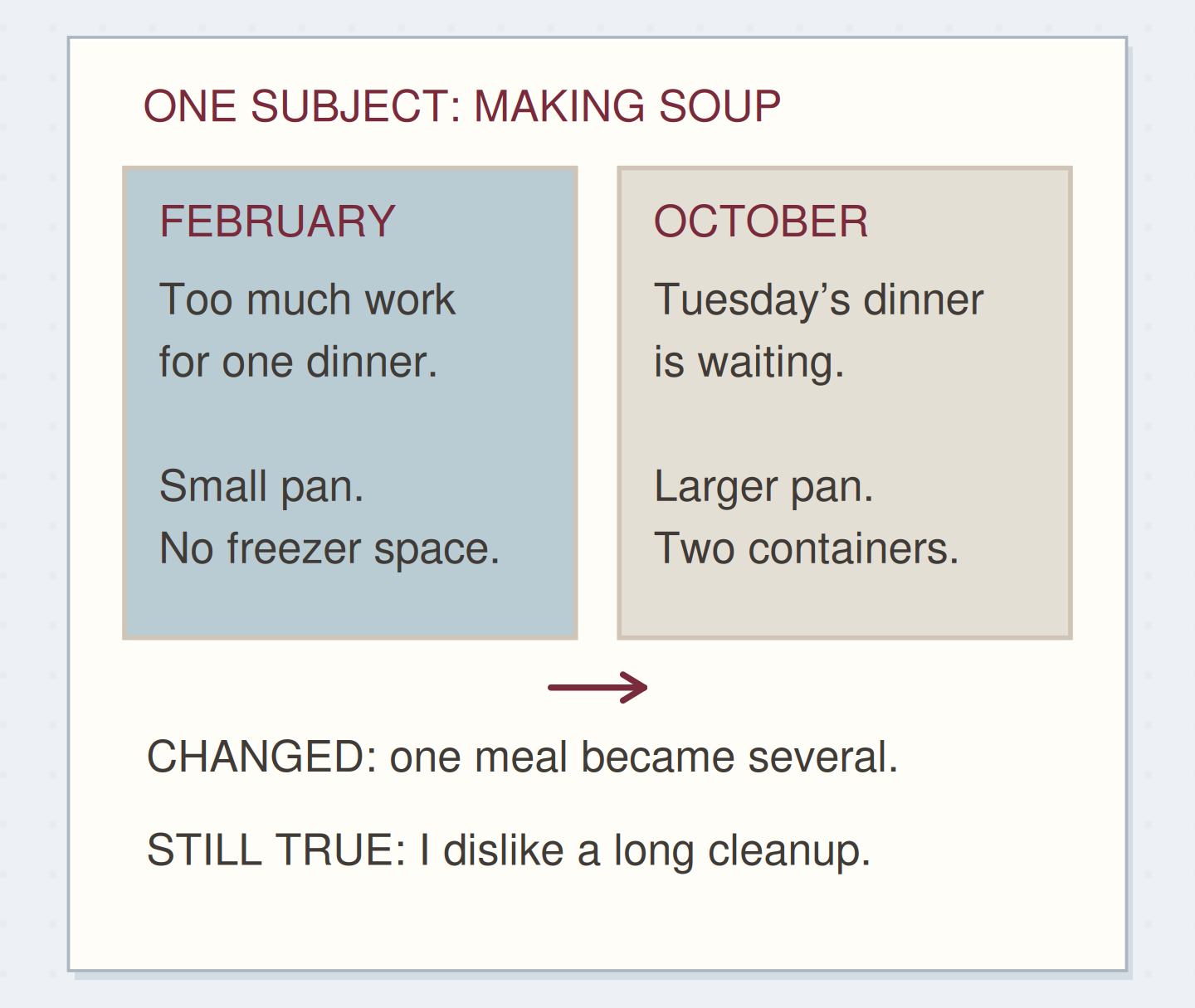
The revision preserves both without asking them to agree.
Starting version
A broad prediction mixes hope with certainty.
If the plan changes or doesn’t happen
Write what changed, with a date. “The walk was cancelled because we couldn’t find a shared time” is a complete update. You can still note what the anticipation showed you: perhaps you wanted a conversation outdoors, and that preference remains available for another occasion.
If the event disappoints, describe the mismatch specifically. “We spent most of the hour finding the entrance” says more than “It was a failure.” You don’t need to invent a bright side. The entry can preserve a hope that wasn’t met and a practical detail you would want to know next time.
Let the after-entry choose its own center
When you return, write a few sentences before rereading the prediction. What stayed with you? Which detail comes back first? This gives the actual event room to establish its own center. Then read the before-entry and add one comparison if you want it.
A match may be interesting, but a surprise often gives you something new to describe. The surprise can be pleasant, inconvenient or simply different. Keep its scale intact. A changed stopping place can be the whole discovery; it doesn’t need to become a lesson about how you should approach every future plan.
Give every outcome an honest after-entry
A pair can close with a match, a surprise or a cancellation.
A hoped-for part really happened.
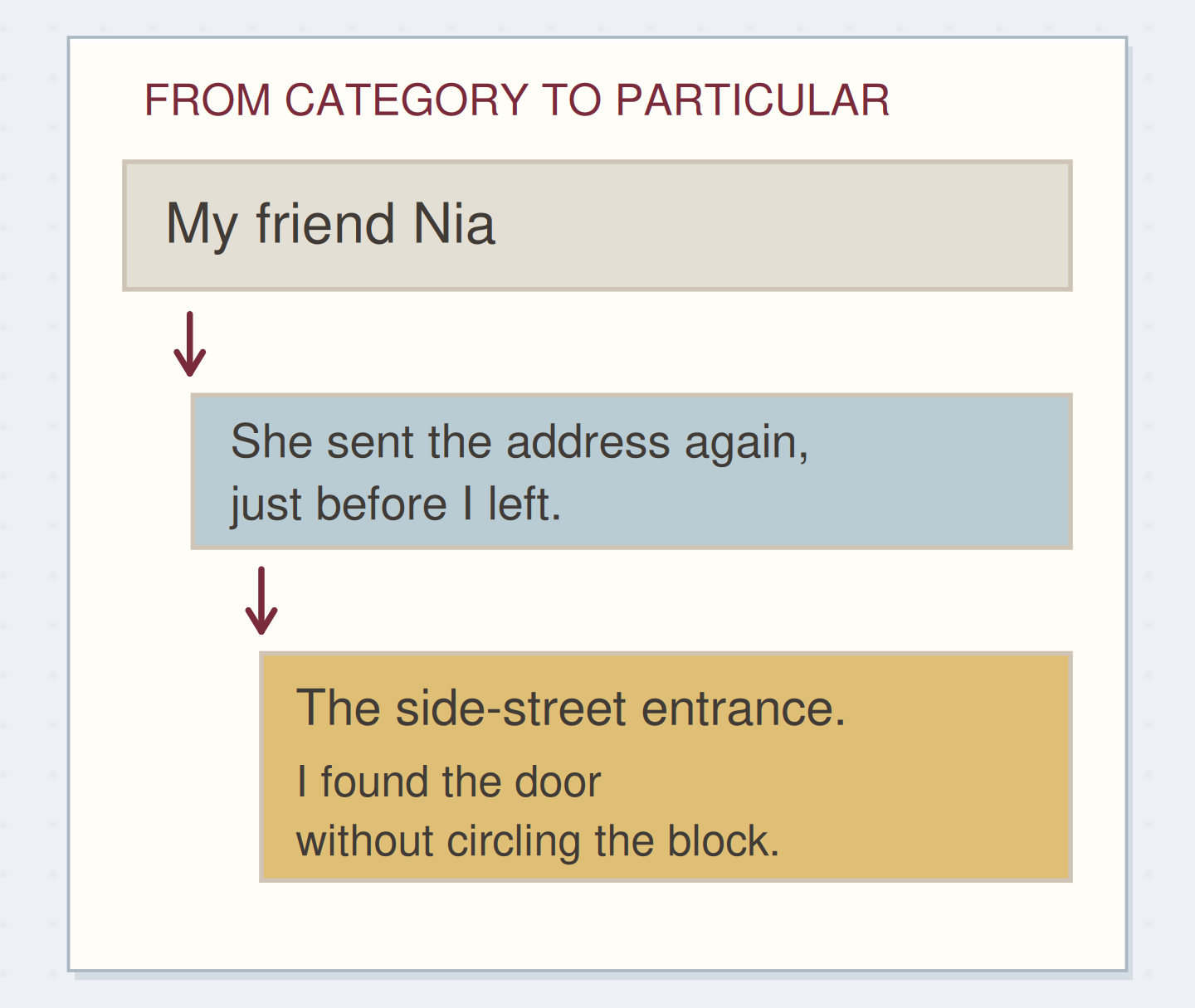
Add the detail that makes the match particular.
Close the pair with one thing you couldn’t know before
Finish “Beforehand, I couldn’t have known…” and name an actual detail, or write “The plan is still open” if it hasn’t happened. Add the date to distinguish the two views. If you made a practical note for a future outing, move it to the place where you keep plans.
The after-entry gets to surprise the before-entry. Stop once the pair contains a hope and an honest update. You can make these pages occasionally around things you already look forward to, without requiring a calendar full of special events or turning every enjoyable plan into another thing to document.
Where this idea began
Want to follow the idea further? These community discussions and maker references are a good place to start.
- Simple pleasures, joy, and appreciation thread — June 17–June 30
The discussion invites both recent appreciations and things people are looking forward to; replies name ordinary activities and upcoming time off.
- Reflective Essays — George Mason University Writing Center
Suggests noting expectations before an experience and distinguishes description from interpretation in the later reflection.