Gather a few things See what you’ll need
- Envelope or folded scrap
- Plain paper
- Pencil or pen
Choose an edge you can follow
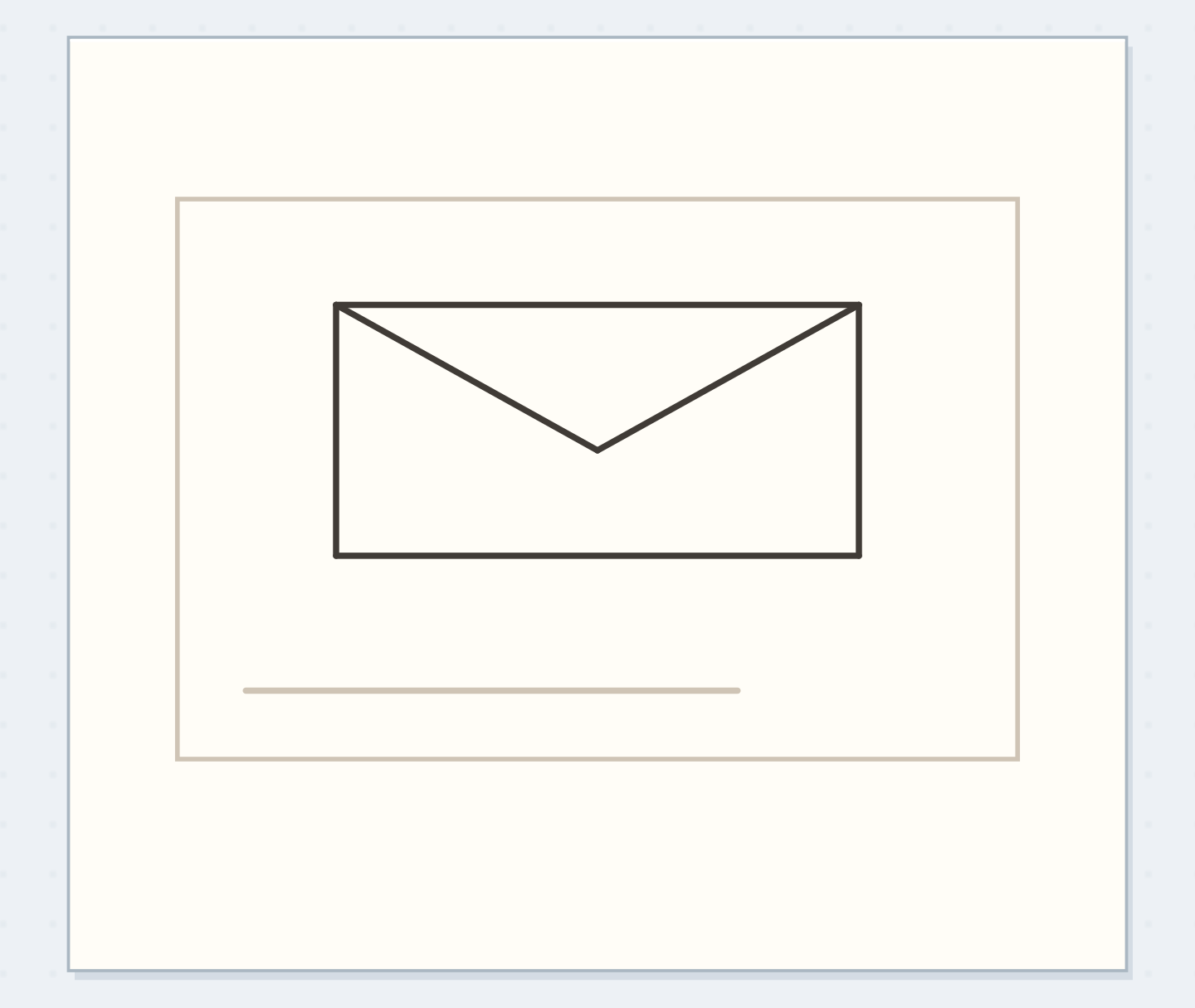
Place an envelope partly open on a plain surface, with its flap and outer corners visible. Choose one viewpoint and keep the object still. Use ordinary paper and a pencil or pen; a large sheet isn't necessary. Wisconsin Union's blind-contour activity asks the drawer to observe the subject while avoiding the paper. We begin with a modified version that permits occasional glances, then offer a blind variation. That distinction matters: continuous means the drawing line stays connected, while blind refers to where you look. They are related choices, not identical terms.
Follow a visible edge route
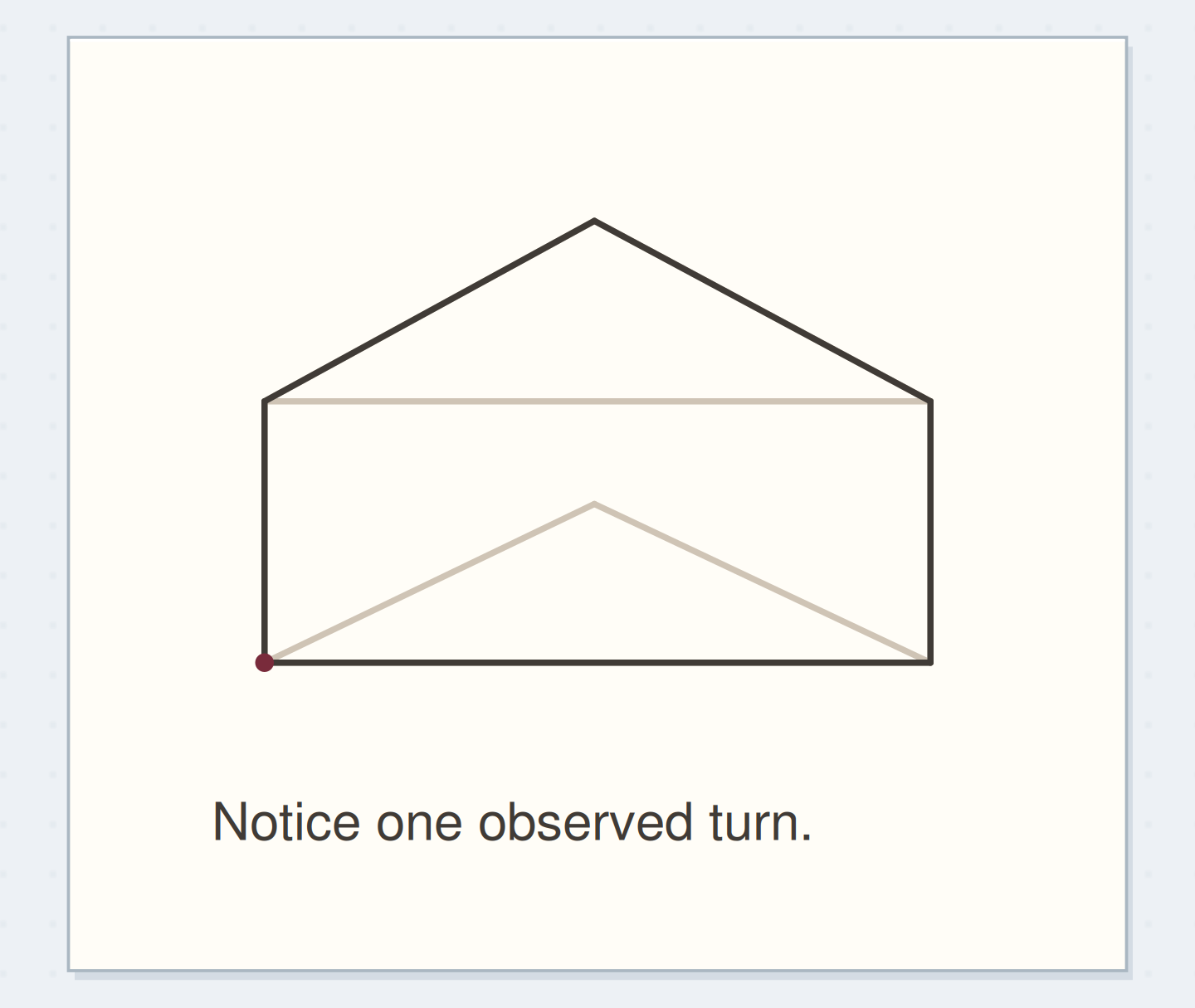
Watch the connected outer route grow from one starting corner.
Begin at a chosen visible corner
The pale envelope is the reference; the darker trace begins at the lower-left corner.
Find a start and a natural stopping point
Choose an outer corner as the start. Before drawing, follow the visible outline with your eyes until you return to that corner or reach an edge that disappears behind another surface. Name a few turns quietly if helpful: long edge, small angle, flap point, short edge. Don't invent hidden edges to complete a remembered envelope diagram. If the route becomes ambiguous at an overlap, choose the visible continuation you can actually see and note the decision. This preparation gives the continuous line somewhere specific to travel.
“Stop after one modified contour and one short optional blind contour, or sooner once you have a useful observation.”
Move as the observed direction changes
Place the pen on the paper and begin the route. Let your eyes move along a short section of the object while your hand records its direction. Slow down at corners and shallow bends. Keep the line connected, but don't race to prevent the pen from pausing. Glance at the paper only when you need to locate the growing drawing, then return to the object. If proportions drift, continue the selected route instead of repeatedly erasing. You can investigate the drift afterward with a second small attempt.
Observe rather than substitute
Move the reveal control to inspect this specific change.
Remembered envelope symbol
The familiar closed-envelope symbol ignores the selected flap outline.
Read the envelope drawing as observations
Finish the chosen route and lift the pen. Put the sketch beside the envelope and identify one turn you noticed accurately and one you simplified too much. Perhaps the flap edge met the body at a shallower angle than you drew, or the long edge occupied more of the silhouette than expected. Write those observations beside the drawing. Community contour discussions ask how to assess improvement when a blind drawing looks distorted; a specific observation is more informative here than rating the whole image as either beautiful or bad.
Try a short route without watching the page
For a second exercise, choose only the flap's visible edge and its nearest corner. Keep your eyes on that section of the envelope while drawing the connected route. Stop at the predetermined corner, then look at the paper. Don't expect the line to land exactly where you imagined. Compare the sequence of directional changes instead. This short blind version follows the observation principle in the Wisconsin activity without requiring a long portrait or a full page. You can return to occasional glances if that better serves your next drawing.
Write your contour observation
A continuous route and a blind drawing are different choices.
Route start and stop:Lower-left corner around the outer edge
Observation to keep:The flap angle was shallower than my first sketch.
Your words have a place now.
A continuous route and a blind drawing are different choices.
- Words on this card
- 22
Narrow an exercise that becomes confusing
If you lose the route, stop and point to the last edge you clearly observed. Begin a fresh small drawing of just that section. If the object has too many overlapping surfaces, close the envelope more or choose a single folded scrap with fewer turns. If you keep drawing interior details automatically, place a note beside the paper saying “outer route” and use it as a reminder. The line doesn't have to stay unbroken across several unrelated contours. Choose one continuous visible journey rather than connecting disconnected details with invented marks.
Before evaluating the contour
Order the preparation before the operation that needs its result.
One workable order
- Choose the visible edge routeA continuous observation exercise needs a chosen visible edge route.
- Follow that route in one lineFollow the selected route before declaring its finish or deliberate stopping point.
- Finish or deliberately stop the routeCompare the completed observation with the object instead of correcting midway from memory.
- Compare a specific turn with the objectStop after one modified contour and one short optional blind contour, or sooner once you have a useful observation.
Which check needs to come first?
The example shows one workable order. A continuous route and a blind drawing are different choices.
Save one discovery for the next sketch
Stop after one modified contour and one short optional blind contour, or sooner once you have a useful observation. Keep a note such as “flap angle shallower than expected” with the sketches. Then make an ordinary drawing if you want, applying that one observation without preserving the exercise's restrictions. Continuous contour is a practice choice, not a rule for all drawing. A journal page can contain both a wandering study and a cleaner sketch, each showing something different about what you noticed in the same small object.
Where this idea began
Want to follow the idea further? These community discussions and maker references are a good place to start.
- How do I know if I’m getting better at observation via blind-contour drawing?
The search excerpt asks how to evaluate contour practice when the finished drawing is distorted.
- Blind Contour Drawing Instructions
Provides a primary art-studio exercise in drawing while looking at the subject instead of the page.