Gather a few things See what you’ll need
- A notebook
- A pen
- Your usual hobby materials
- A small practice sample if useful
Choose a skill smaller than the finished project
Write a target you can recognize during one session: “keep the spacing between these letters more even” rather than “improve my lettering.” For music, it might be one transition; for knitting, it might be understanding a particular instruction using a suitable practice swatch. Keep the target within work you already know how to attempt safely. A finished object can remain the larger purpose, but the log needs a smaller feature to describe. If you're practicing with a teacher, preserve their actual instruction rather than replacing it with a target that merely sounds easier to measure.
Choose the note that helps you restart
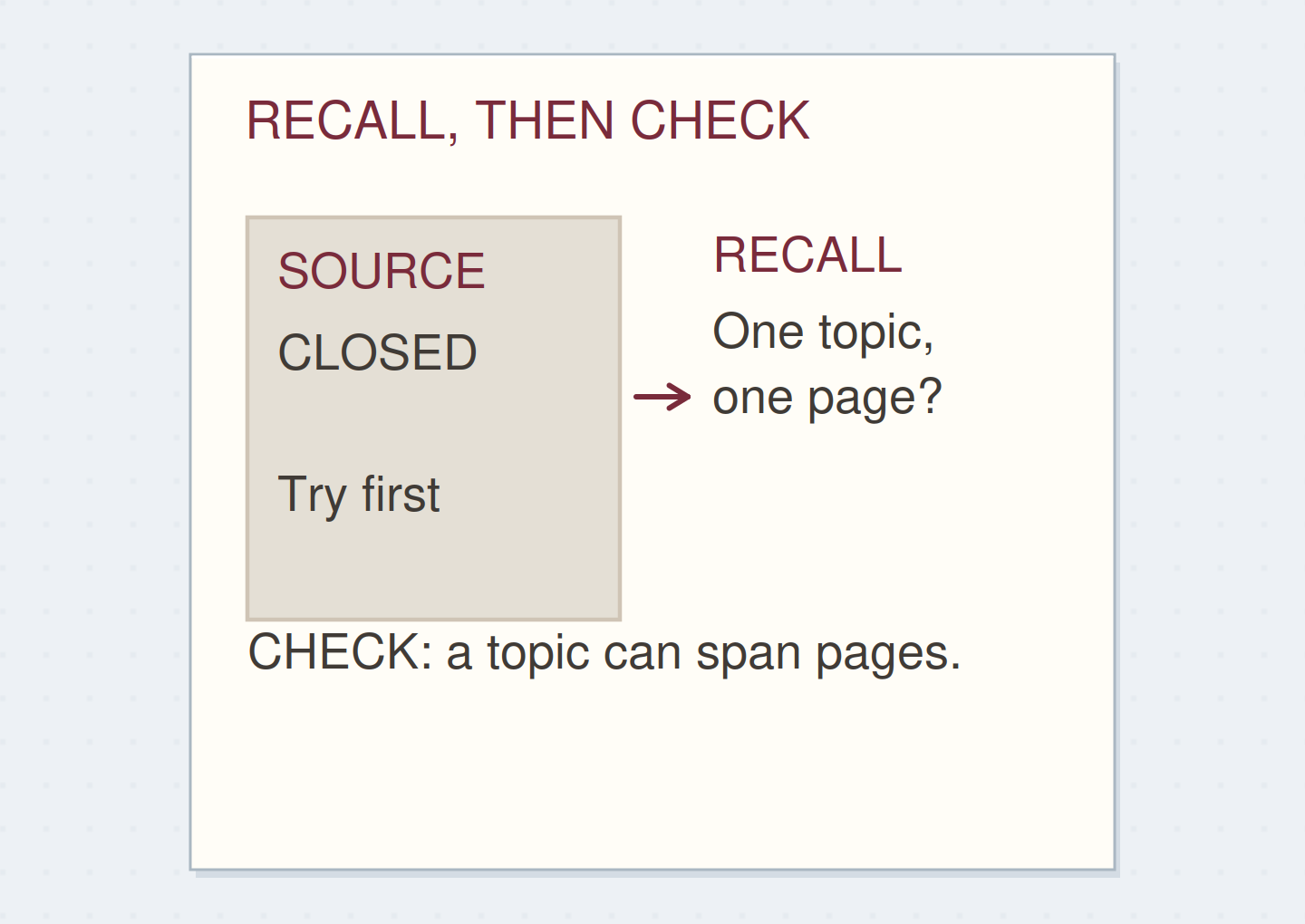
Choose a situation and notice how the example changes. Each choice gives a different useful next move.
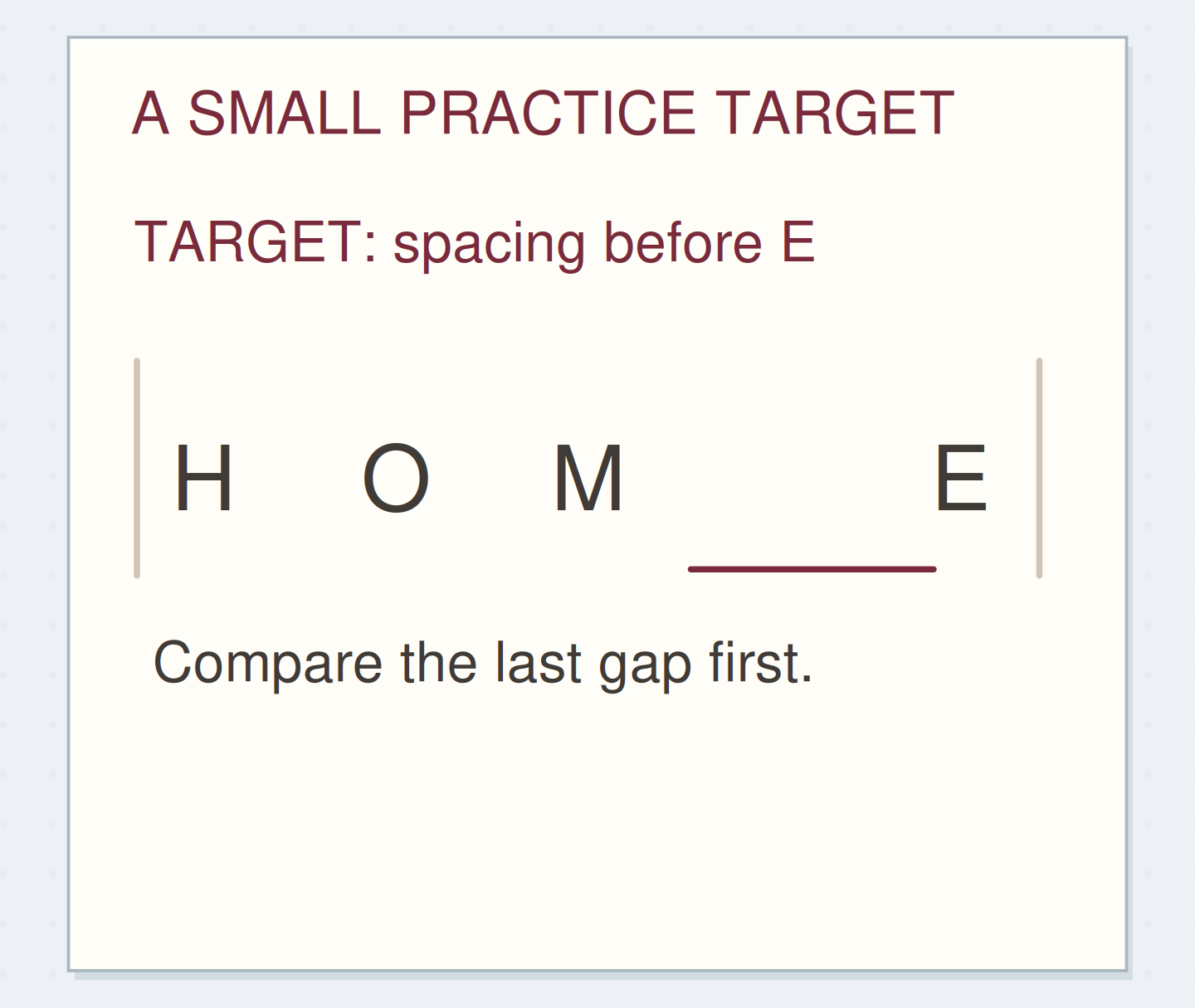
Name the gap that needs attention.
The practice word has a wide gap before its final E. Recording that feature gives the next session somewhere to begin without turning a vague assessment of the whole page into a score.
Name the approach before repeating it
Write one sentence about how you'll work on the target: compare two spacing guides, isolate a transition, or slow down enough to notice the next movement. Berklee's practice guidance includes planning and documenting practice; this notebook uses that broad idea without imposing a daily schedule. A plan can be brief and adjustable. If you change it during the session, record the reason in a few words. That helps you distinguish an approach that didn't suit the problem from a session that was interrupted. You don't need to predict how much progress will occur before you begin.
“Stop the logging when you have named the attempt, one observation, and an optional next action.”
Record something you could point to
After a short attempt, describe what happened in concrete terms. “The gap before the last letter widened in all three words” tells you where to look next. “Bad practice” offers little guidance. You can record enjoyment, frustration, or concentration separately if you want, but avoid treating those impressions as a measure of ability. Keep a small sample or a page reference when it supports the note. If you record a number, explain what it represents. Minutes tell you how long the session lasted; they don't, by themselves, describe what you understood or what changed in the work.
A feature I can act on
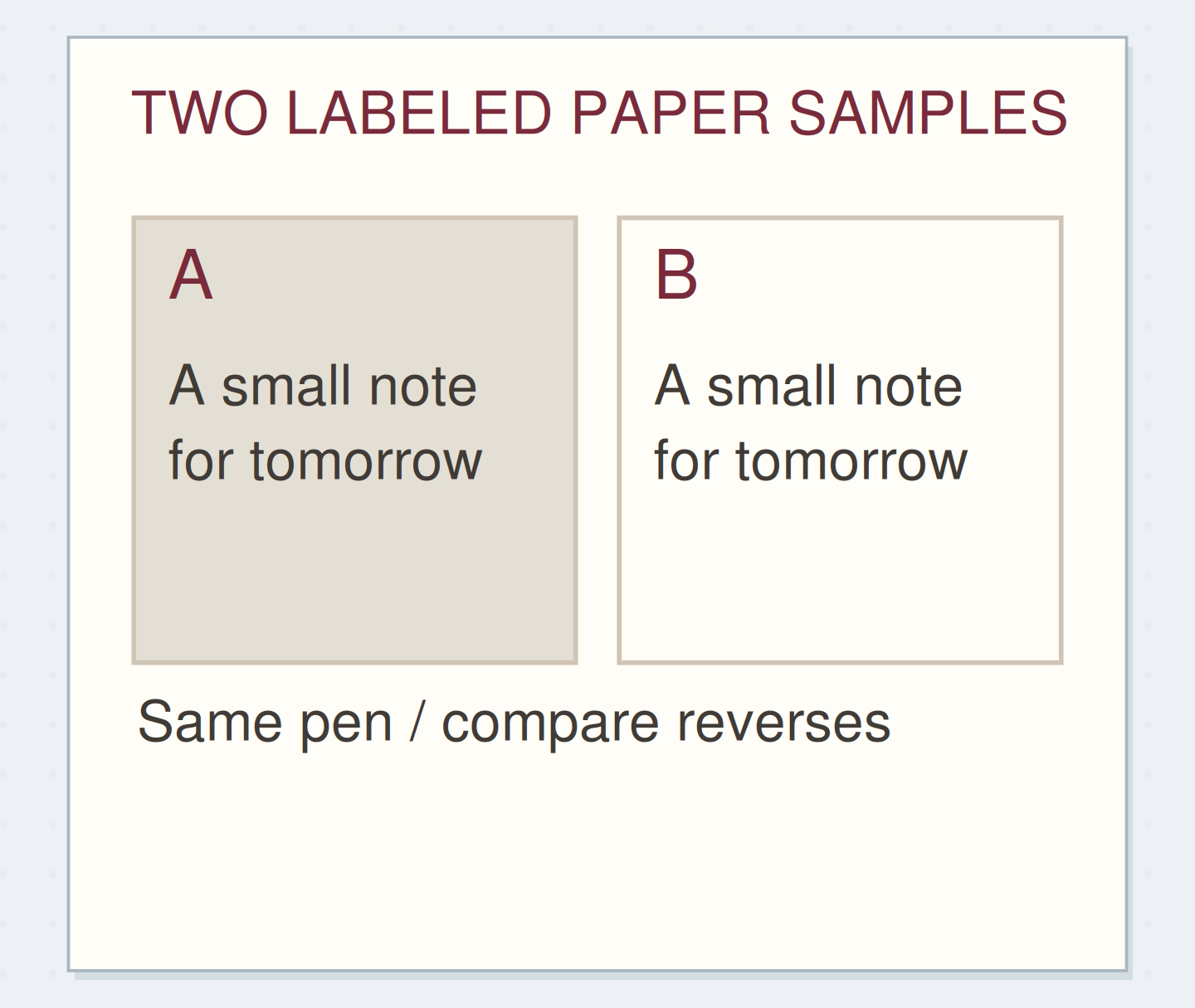
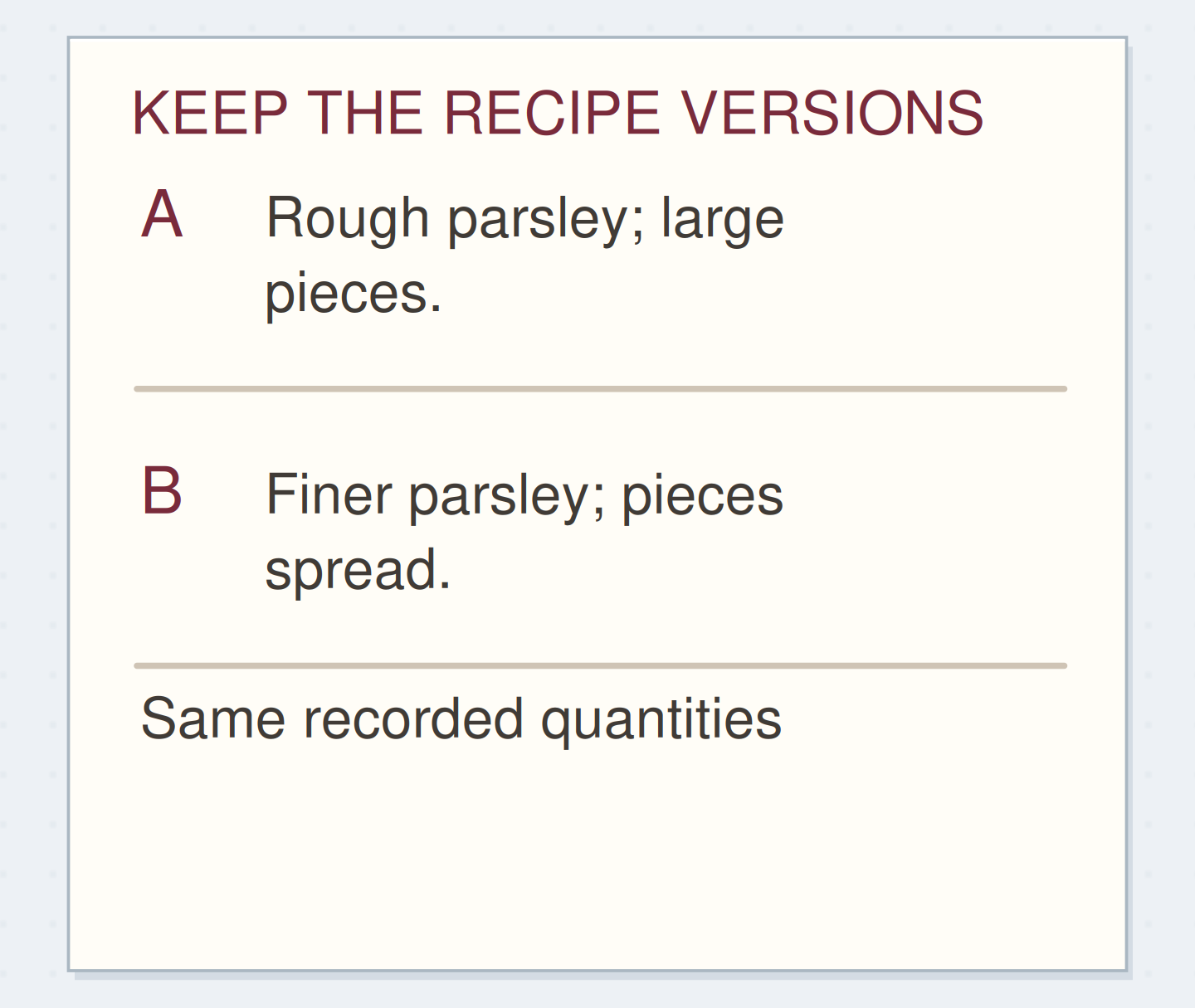
Move the reveal control to compare the two written examples. Read what the changed detail allows you to understand.
The note before revision
A verdict on the whole attempt hides the small practice target.
Log an invented lettering session
A practice entry could read, “Target: space the word HOME more evenly. Approach: write three versions between penciled start and end marks. Observation: the first two versions leave a wide gap before E; the third is closer after I compare each gap before continuing. Next time: begin with one slow version using the same marks.” This is an invented record, not a promise that the approach produces a particular result. The note keeps the specific adjustment rather than announcing that the whole skill has improved. Your own example can be much messier while still preserving the same useful relationship.
Draft: Leave Your Next Practice Session a Useful Starting Point
Edit the practice words to make a note you can use in your own notebook. Keep any uncertainty visible.
Small targetSpace HOME more evenly.
Approach and observationThree versions between pencil marks; early attempts widen the gap before E.
Next useful startBegin with one slow version and check the gap before E.
Your words have a place now.
The initial words are an invented practice example. Edit only the details you want to keep; your entry can stay short.
- Words on this card
- 35
When the log becomes a report card
Replace a score with a description of the feature behind it. If you wrote “two out of five,” explain what you noticed in the attempt and what you want to change. If nothing stands out, write “No clear difference today” and choose whether to try again or move to a different task. A gap between sessions doesn't require catch-up practice in the notebook. Begin at the actual date and read the last useful note. Community practice-journal discussions often distinguish notes by piece or project from notes by day; use the arrangement that helps you find the relevant instruction quickly.
Keep the return route beside the project
For a few ongoing projects, list their names and notebook page numbers near the front. Each dated entry can then live wherever there is space. Alternatively, keep one page per project while it fits, and add a continuation reference when it doesn't. Avoid reserving many blank sections before you know how often you will use them. At the next session, read the previous “Next time” line before choosing today's target. You can discard that suggestion if the project has changed. The note is a saved starting point, not an instruction from your past self that must be obeyed.
End with a next action you still want
Stop the logging when you have named the attempt, one observation, and an optional next action. The action should be small enough to start without decoding the previous session: “check the gap before E” is better than “do better.” If you are satisfied, write “Continue with the project” and let the practice exercise end. Keep the hobby's pleasures available, including sessions when you simply make or play without recording. A useful log helps you resume a chosen piece of work, and it can stay brief enough that closing the notebook leaves room for that work itself.
Prepare to choose the next adjustment
Move the steps and check the dependencies. Only the stated preparation relationships matter.
One workable order
- Choose a small targetThis tells you what to notice in the attempt.
- Try the chosen approachA practice record needs an attempt to describe.
- Record a visible resultThe description should come from the work you just made.
- Choose the next adjustmentUse the result to decide what you still want to try.
Which check needs to come first?
The example shows one workable order. This order keeps the required checks before the decisions that rely on them; other unconnected steps can change places.
Where this idea began
Want to follow the idea further? These community discussions and maker references are a good place to start.
- How do you organize your practice journal?
The post describes project-specific notes on what was tried, how problems were approached, and what needs attention next.
- Practice Journal
A reader asks what to record during practice sessions instead of assuming a fixed template.
- Planning for an Effective Practice Routine — Berklee PULSE
The lesson connects practice planning with written documentation of practice.