Gather a few things See what you’ll need
- A notebook
- A pen
- The media title and creator information
- A timestamp or scene description
Choose a small part worth staying with
Pick a transition, a pause, a recurring sound, a visual contrast, or a particular exchange. “The silence after the door closes” is a more workable heading than “Thoughts on the film.” If you're discussing something long, choose one segment and leave the rest for another time. You don't have to write during the work itself; a brief note afterward can preserve the moment without interrupting your experience. If the details are hazy, mark them as remembered until you can check. An honest partial response is more useful than a complete-sounding account assembled from uncertain recollection.
Follow the choice that shapes the scene
Choose a situation and notice how the example changes. Each choice gives a different useful next move.
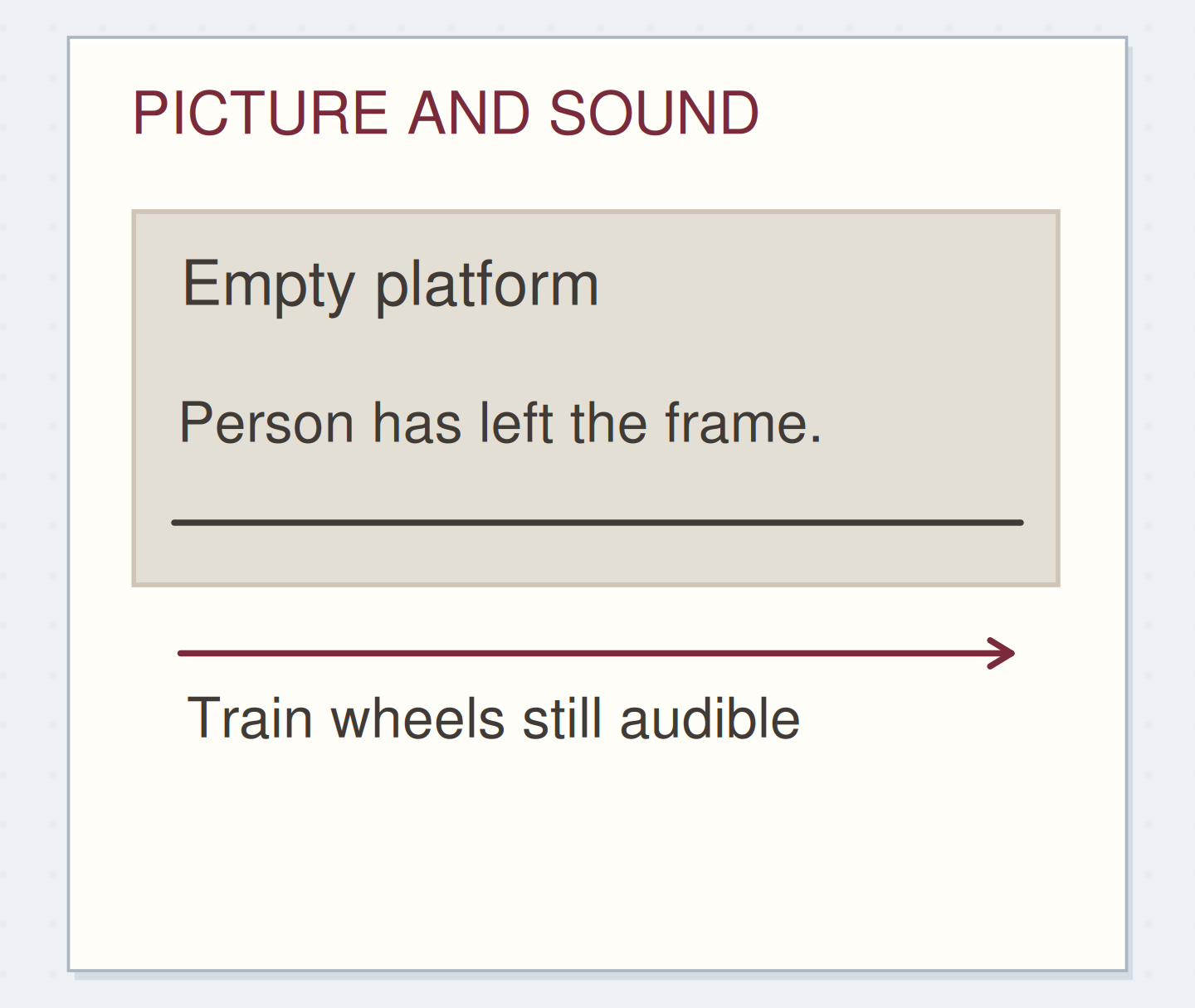
Keep the empty frame as evidence.
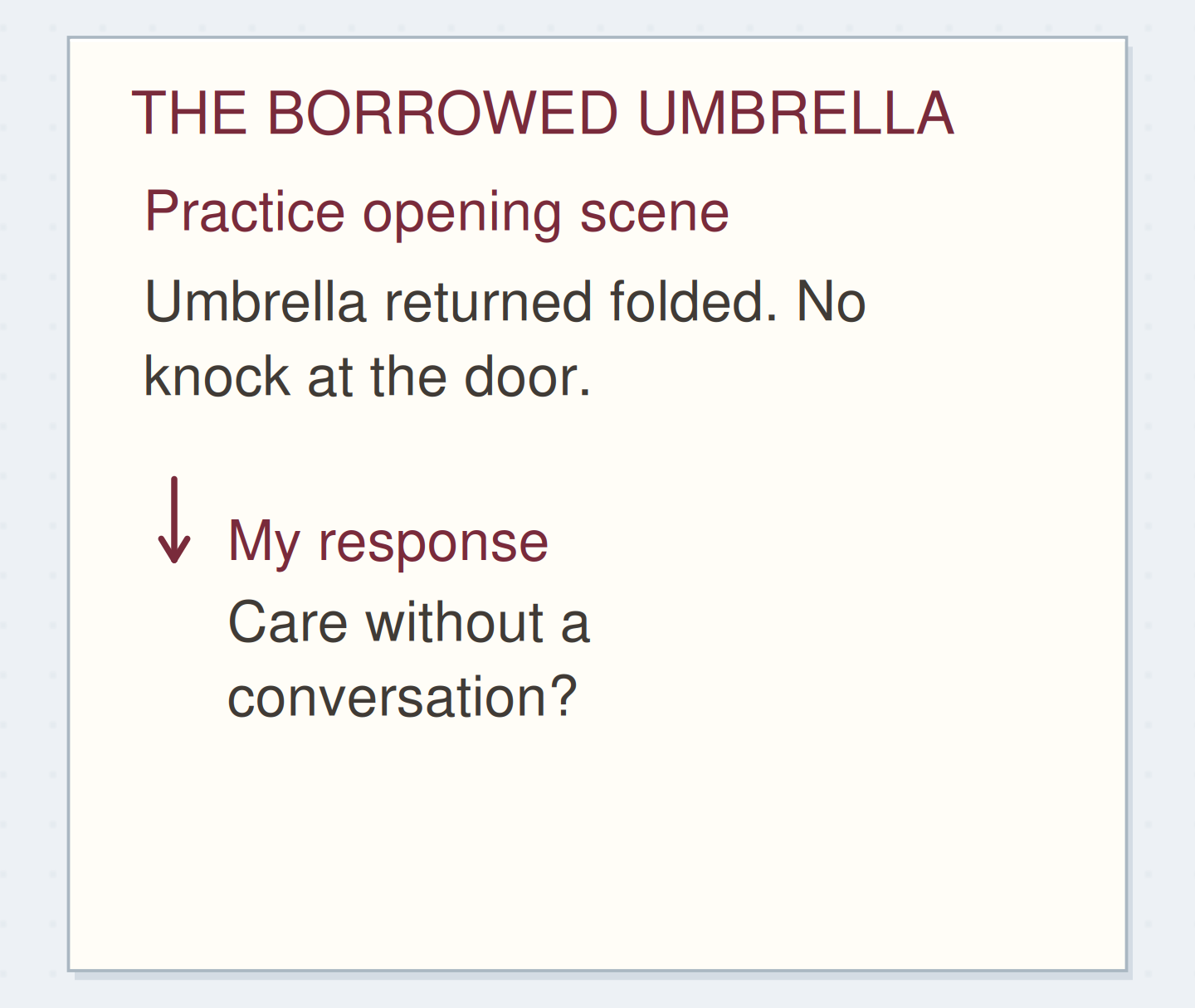
In the practice scene the person leaves the picture while the platform remains. Describe that visible choice first, then explain your response without supplying a director intention that the scene alone cannot establish.
Make the moment findable
Write the work's title, creator or program information, date experienced, and a timestamp or scene description. Different releases can shift timestamps, so a short description helps. Record whether this was a first encounter or a return. For a podcast, note the episode title as well as the show; a program name alone may lead to hundreds of entries. Keep spoiler-heavy notes labeled if you expect to share the page. Source and response journal methods can use time markers as well as page references, but your description remains valuable when a work's format makes precise timing inconvenient.
“The entry is complete when a future reader could locate the moment and understand why you singled it out.”
Separate the scene from your interpretation
Write an observation first: “The music stops before the character answers.” Then write what you think that choice does: “The pause makes the answer feel less certain to me.” Your interpretation is allowed to differ from another viewer's, but the observation should be something the work supports. Avoid turning your reading into a confident statement about the creator's intention unless you have a source for it. You can name what remains ambiguous. A media notebook is especially useful when it preserves the relationship between a detail and your response instead of recording a verdict with no scene attached.
My reading of a visible choice
Move the reveal control to compare the two written examples. Read what the changed detail allows you to understand.
The note before revision
A mood label gives no media moment or choice to return to.
Answer an invented station scene
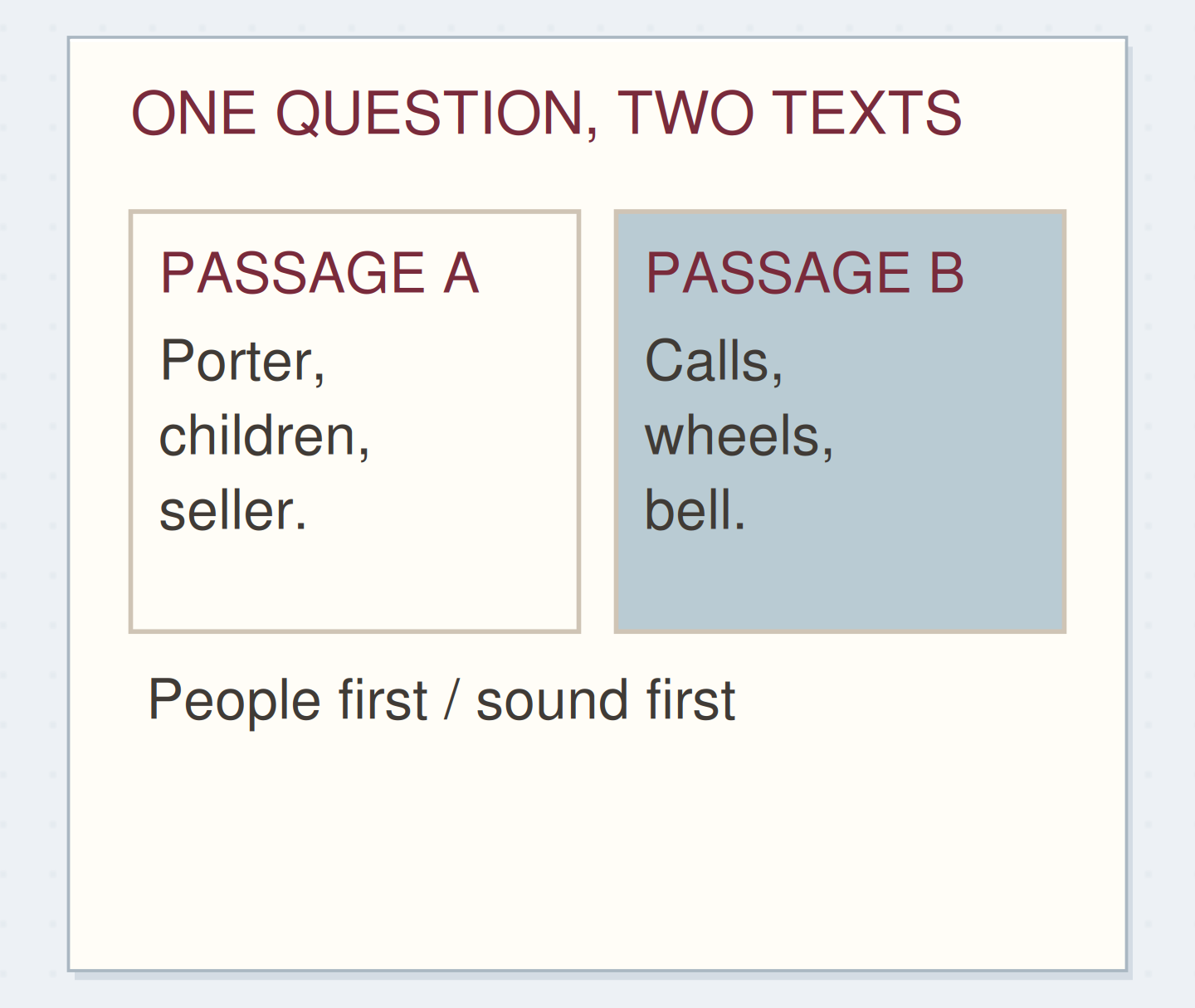
Imagine a practice scene in which a person reaches a station just after a train leaves. The picture stays on the empty platform while the sound of wheels continues. Your entry could read, “Observed: the person leaves the frame, but the train remains audible. My response: I stay with the departure rather than following the person. Question: would the scene feel more final if the sound stopped immediately?” This invented example gives you a way to write about sound and framing without copying dialogue. It doesn't require technical vocabulary beyond describing what the picture and sound are doing in relation to each other.
Draft: Keep the Scene You Are Still Thinking About
Edit the practice words to make a note you can use in your own notebook. Keep any uncertainty visible.
Work and locationInvented station scene; add a real title and timestamp for your own note.
Observed choiceThe person exits the frame; train wheels remain audible.
My responseThe continuing sound holds me with the departure.
Your words have a place now.
The initial words are an invented practice example. Edit only the details you want to keep; your entry can stay short.
- Words on this card
- 37
When the entry becomes a recap
Look for the detail your opinion depends on and remove plot information that doesn't help locate or interpret it. If your only response is “I loved it,” add what you would show someone to explain that feeling: a pause, a color relationship, a performance choice, or a particular exchange. You can keep enjoyment simple rather than manufacturing criticism. If you watched with others, distinguish their comment from your own response and avoid recording personal remarks they wouldn't want preserved. The page can remain a private note, but it should still make clear which voice or observation belongs to whom.
Let a rewatch ask a different question
On a return, read the old entry and choose whether to follow the same detail or a new one. Film-journaling community discussions describe noticing sound, structure, and other details differently on repeat viewings. Write what you actually notice this time rather than assuming the rewatch must reveal something deeper. A changed response can sit below the first with a date. If another review influences your interpretation, name that source separately. You can compare two versions of a scene, but make sure the version information is clear before concluding that your memory alone accounts for the difference.
Keep one supported response and stop
The entry is complete when a future reader could locate the moment and understand why you singled it out. One scene description, one observation, and a short response are enough. You don't need a rating, a watched-everything tracker, or a page for media that didn't leave you wanting to write. Add a question for a future viewing only if it interests you, then close the notebook. The page has kept a specific encounter with a work, leaving room for the rest of your viewing or listening to remain an experience rather than an ongoing recording assignment.
Prepare to check what the claim assumes
Move the steps and check the dependencies. Only the stated preparation relationships matter.
One workable order
- Locate the media momentThe response needs a findable scene or segment.
- Describe an observed choiceRecord the picture, sound, or wording before interpreting its effect.
- Write your interpretationAttach your reading to the observed detail.
- Check what the claim assumesReview the interpretation after writing it, keeping unsupported intention claims out.
Which check needs to come first?
The example shows one workable order. This order keeps the required checks before the decisions that rely on them; other unconnected steps can change places.
Where this idea began
Want to follow the idea further? These community discussions and maker references are a good place to start.
- I want to create a movie journal, but I have one question
The thread asks whether repeat viewings belong in a film journal and discusses noticing different details.
- What do you write in a Film Journal?
Readers discuss the content of film response pages and paper versus digital journal formats.
- The Response Journal — Rebecca Barrett-Fox
The author distinguishes a source passage, a page or time reference, and a reader’s response.