Gather a few things See what you’ll need
- Old notebook
- New notebook
- Pen
- Calendar
- Two temporary bookmarks
Create references that will remain distinct
Give each notebook a short identifier, such as Blue-2 and Blue-3, and write it where you can find it again. Page numbers alone are ambiguous once several books sit on a shelf. If the pages are unnumbered, number the pages you need to reference consistently.
Choose the point when new captures will go into the new book. You might finish today's notes in Blue-2 and start tomorrow in Blue-3. Record the boundary in both. A community question about moving notebooks highlights the practical problem of maintaining two active books; a clear intake boundary removes that uncertainty.
Look for live work before copying favorite pages
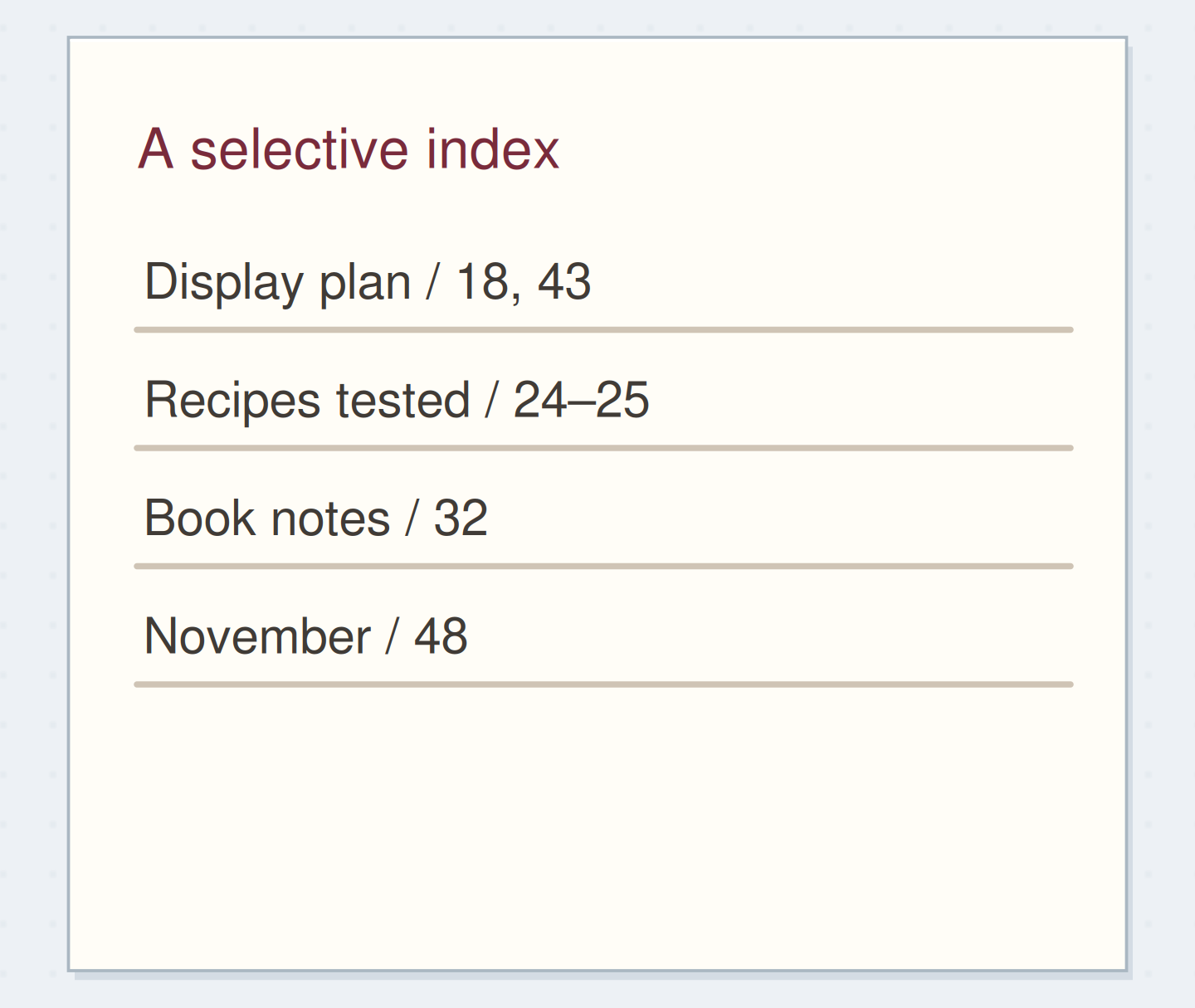
Check your current action pool, waiting-for list, calendar-related notes, active project pages, and any inbox captures you have not processed. Use the old index to find collections that hold commitments. Do not assume the last written page contains every unfinished obligation.
For each open item, decide whether it is still relevant, already completed elsewhere, genuinely deferred, or ready to move. Clarify ambiguous entries while their context is nearby. The handoff is a review of current meaning, not a mechanical copying exercise. Preserve actual dates and agreements exactly when you move an obligation.
See what moves and what remains
Which handoff record would you like to inspect?
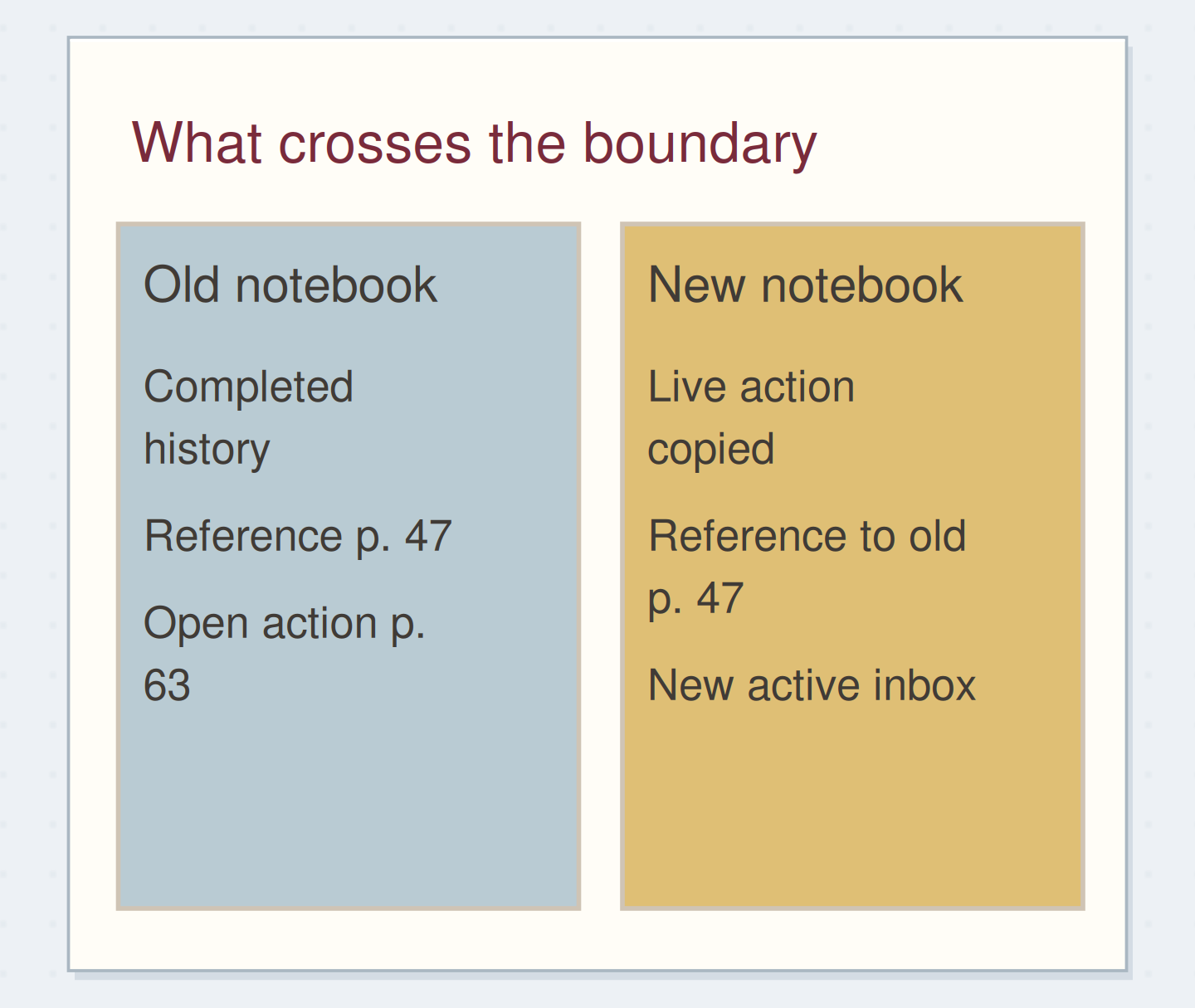
Active work crosses; history can remain.
Reference links keep the two books connected.
“Stop when current obligations have a clear home and the references you chose still work.”
Give each transferred item a usable new home
Write the live action or waiting entry in the appropriate new list. Include enough context to recognize it and a reference back to the original project or conversation if needed. “Confirm pickup time — display; Blue-2 p. 63” is more useful than “pickup.”
Create the new entry before marking the old one as moved. Then add the new book and page reference beside the original. This order prevents an item from looking safely transferred when its destination does not yet exist. The old record can remain readable as history without continuing to be your active action list.
Write a complete transferred action
Edit the worked example into a note you can use.
Live action:Confirm display pickup time
Old reference:Blue-2, pp. 47 and 63
New destination:Blue-3, p. 4
Your words have a place now.
Keep real dates, agreements, and useful supporting references with the live work.
- Words on this card
- 18
Keep one obligation and one reference connected
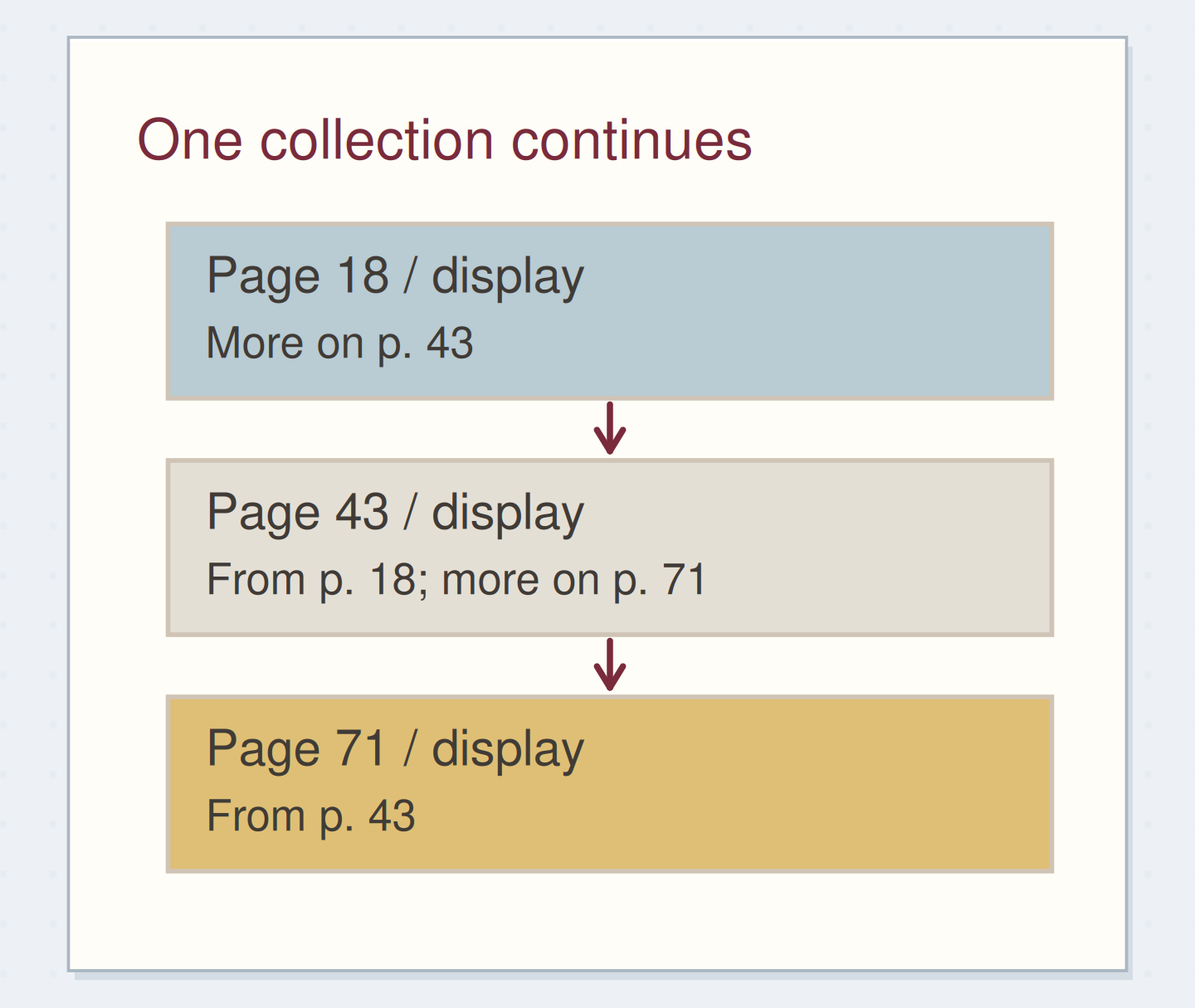
Imagine Blue-2 contains a display measurements page at 47 and an unfinished pickup request at 63. In Blue-3 page 4, write the current action and reference both old locations if they serve different purposes. You do not need to redraw the entire measurements page merely because the notebook changed.
On Blue-2 page 63, mark the action as moved to Blue-3 page 4. In the new index or project page, add “display measurements — Blue-2 p. 47.” The obligation now has an active home, while the supporting information remains in its original context and can still be found deliberately.
Copy only what needs to be near current work
Some references deserve a fresh copy because you consult them constantly or need them when the old book will be unavailable. Others can stay behind with an index pointer. Consider your actual access: an old notebook at home cannot help during an off-site setup unless you bring the needed information.
When you copy a reference, label its source and check important details against the original. If you revise it, note that the new version is current. Avoid leaving two slightly different checklists that both appear authoritative. A reference pointer is sufficient only when you can reach and interpret the material it points to.
Choose a pointer or a checked copy
Move the reveal control to inspect the specific change.
A reference you can retrieve
A reference link works only when its target is available.
Choose one active intake and a short remaining queue
If you have been writing in both books for a week, pick one for all new captures now. In the other, mark the remaining pages that may hold live work. Process those pages as a finite handoff queue instead of continuing to add new notes among them.
Check for duplicates before copying again. An action may already exist in the new book under different wording. Keep the clearest active entry, preserve useful context, and mark the duplicate appropriately. You do not need to erase the evidence of the messy transition; you need a reliable current location for each obligation.
Test the route before shelving it
Find one transferred action in the new book, follow its reference to the old support page, then follow the old forward link back. Check your waiting entries and real deadlines against their original records. Finally, mark the old book's intake as closed and store it somewhere you can retrieve by its identifier.
Stop when current obligations have a clear home and the references you chose still work. The old notebook can remain a useful archive without remaining a second active inbox.
Close the handoff in a safe order
Move the steps so the necessary checks happen before the actions that depend on them.
One workable order
- Create the live entry in the new bookA destination must exist before the old entry is marked moved.
- Add the forward link in the old bookThe old record should point to the current location.
- Test both directions before shelvingThe reference must work before the old book leaves active reach.
Which check needs to come first?
The example shows one workable order. Other steps can move freely; these checks protect the information you need.
Where this idea began
Want to follow the idea further? These community discussions and maker references are a good place to start.
- Moving to a New Notebook
A reader asks which lists to transfer and when to stop operating from two notebooks.
- Yearly Migration
The official migration article discusses reconsidering content and referencing useful collections in earlier notebooks.