Gather a few things See what you’ll need
- Notebook
- Pen
- Pencil for page numbers
Index for a future search
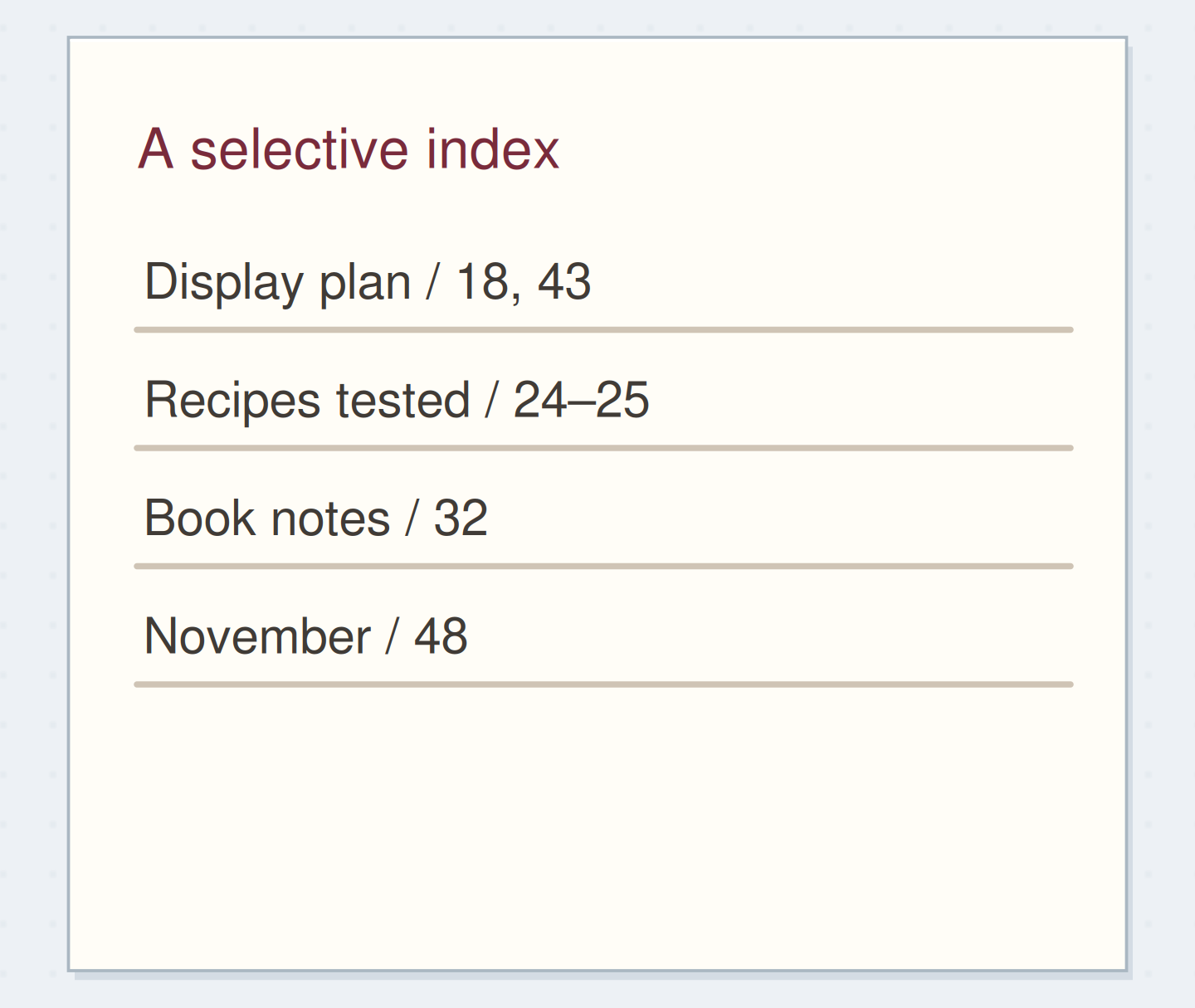
Ask what you are likely to look for after the date has faded from memory. A project plan, a recipe test, a reading collection, or a list of borrowed items may deserve an entry. An ordinary daily note may already be easy enough to find from its date. The official Bullet Journal index variations distinguish core collection entries from indexing every daily log.
Community readers disagree about how much to include, which is a useful reminder that the right level depends on retrieval. Start by indexing five things you have actually tried to find. You can expand the index when a real search reveals a gap.
See what an index label changes
Choose the index you would use to find the captions.
The page numbers have no useful names.
“Notes” describes the activity, not the contents you want.
Name the contents, not the act of writing
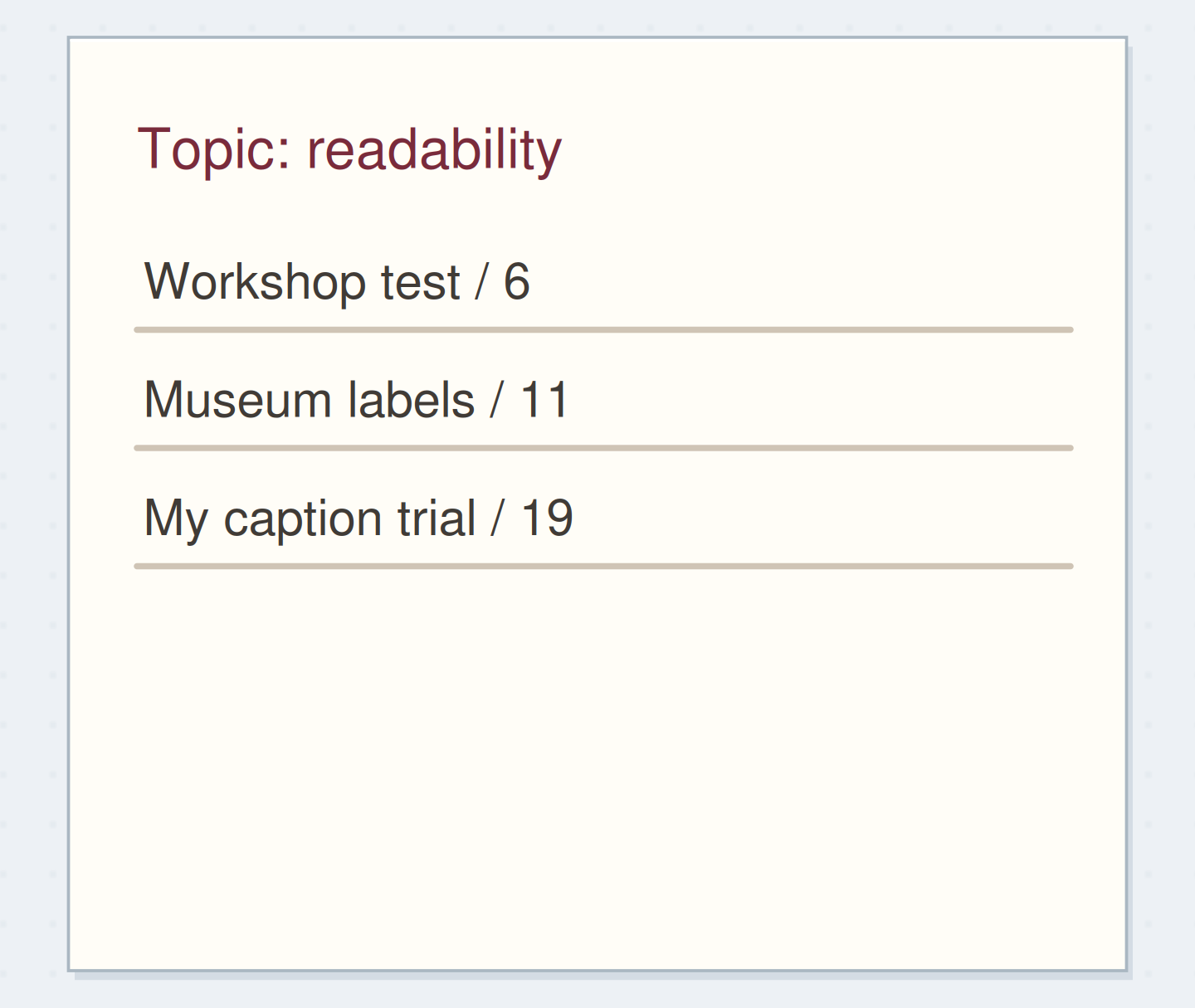
Prefer “Display captions” to “notes” and “Recipes tested” to “ideas.” A useful label answers what the page contains or what question it helps resolve. Include a date only when the date distinguishes similar collections, such as “Hall visit, October” and “Hall visit, December.”
Keep wording consistent enough to scan. If the project is called “Photo display” on its main page, use that name in the index rather than inventing a different title. You are building a small personal map. It can use your ordinary vocabulary, provided that the same label continues to point to the same subject.
Improve one index entry
Edit the worked example into a note you can use.
Current label:Notes
Searchable label:Display captions
Exact pages:43, 71
Your words have a place now.
Use separate page numbers when unrelated pages sit between the notes.
- Words on this card
- 11
“Stop after your selected collections have clear labels and accurate addresses.”
Leave room for growth without predicting the whole book
Use the first available page for the index if your notebook has no built-in one. A title column and a narrow page-reference column are enough. For an A5 trial, leave roughly two-thirds of the writing width for titles, but test several real labels before fixing the line.
You do not need to prewrite a line for every numbered page. Leave several blank index lines and use the next available page for a continuation if the index fills. Add “index continues p. 60” where you will see it. Stable page numbers matter more than having all index pages at the front.
Work through one collection that expands
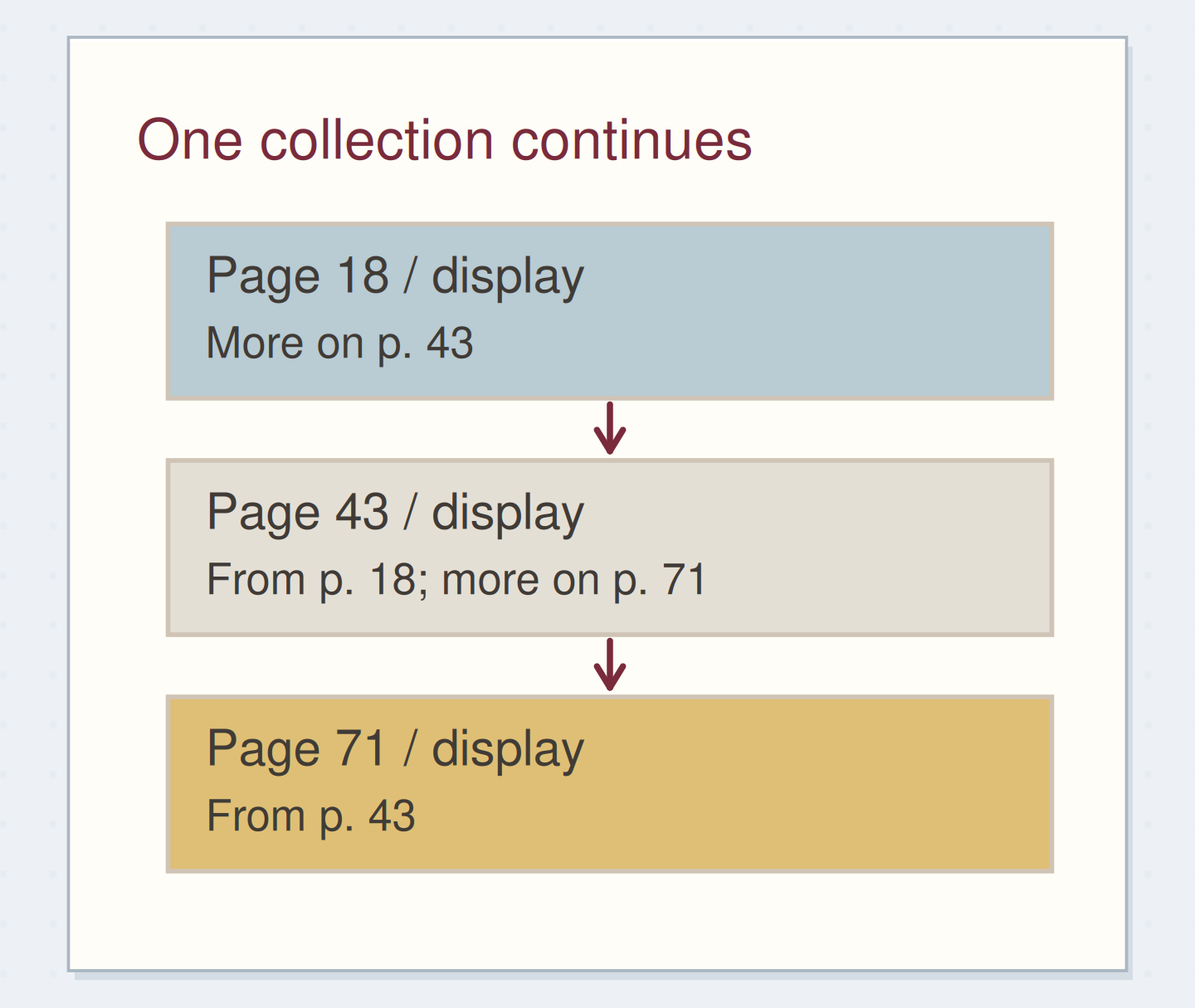
Imagine “Photo display” begins on page 18, continues with captions on page 43, and gains a printing check on page 71. The main index entry can read “Photo display: 18, 43, 71.” If you frequently search for captions specifically, add “Display captions: 43” as a separate retrieval route.
Do not write “18–71” unless the entire continuous range belongs to the collection. A range would send you through many unrelated pages. Separate page numbers accurately describe separated locations. The collection may also use threading, but the index should not imply that the intervening pages are part of the project.
Distinguish a range from separate locations
Move the reveal control to inspect the specific change.
An inaccurate range
A range suggests continuous coverage.
Add the entry while the destination is obvious
When you begin a collection, give it a title and page number, then add the index entry before moving on. When you continue it, append the new page address. This short update is easier while the relationship is clear than after several unnamed collections have accumulated.
If indexing during writing interrupts you, leave a small “index this” note in the margin and resolve those notes during a review. Use one temporary cue rather than a different sign for every type of page. The cue is finished when the index points to the collection; it does not need to become a permanent decorative mark.
Improve one failed search at a time
If you cannot find a page through the index, locate it once and add the wording you expected to search under. You might change “Hall” to “Display venue” or add a second entry. There is no need to rewrite the whole index into a perfect alphabetical order.
When an entry becomes too long, create a small collection contents page. “Photo display contents: 18” can lead to a page listing captions, measurements, and printing checks. Use this extra level only when it makes retrieval easier. Three page numbers rarely need a dedicated directory; thirty separate notes might.
Test the index against something you want
Close the book and ask a concrete question, such as “Where did I record the caption size?” Open the index and follow the entry you would naturally choose. If it leads to the right page without a long detour, the index is doing its job even if some daily pages remain unlisted.
Stop after your selected collections have clear labels and accurate addresses. Add more detail only when a search calls for it. The index is complete enough when it helps you find the notes you actually return to.
Create a usable index entry
Move the steps so the necessary checks happen before the actions that depend on them.
One workable order
- Title and number the collectionThe index needs a stable destination to describe.
- Write its label and address in the indexA retrieval route must be recorded before it can be tested.
- Find the collection from the indexThe test checks both the label and the address.
Which check needs to come first?
The example shows one workable order. Other steps can move freely; these checks protect the information you need.
Where this idea began
Want to follow the idea further? These community discussions and maker references are a good place to start.
- Do You Put Everything in Your Index?
A reader asks whether indexing every page would improve retrieval or consume too much space.
- The Basics of Bullet Journal Indexes and Ways to Modify It
The tutorial discusses selective indexing, expanding collections, and different index arrangements.