Gather a few things See what you’ll need
- Notebook
- Pen
- Book, article, or handout
- A place to save long URLs
Record what a future search will need
For a book, begin with the author, title, and edition or publication details when editions may differ. For a handout, keep the title, author or organization, date if shown, and page. For a web article, record its author or organization, exact title, URL, and the date you accessed it if the content may change.
This is a practical personal record, not a promise that every source will remain available. A useful location within the source matters too: a chapter, section heading, page, or timestamp. Choose the smallest reference that gets you back to the relevant material without reading everything again.
Inspect three parts of a source trail
Which record would you like to follow?
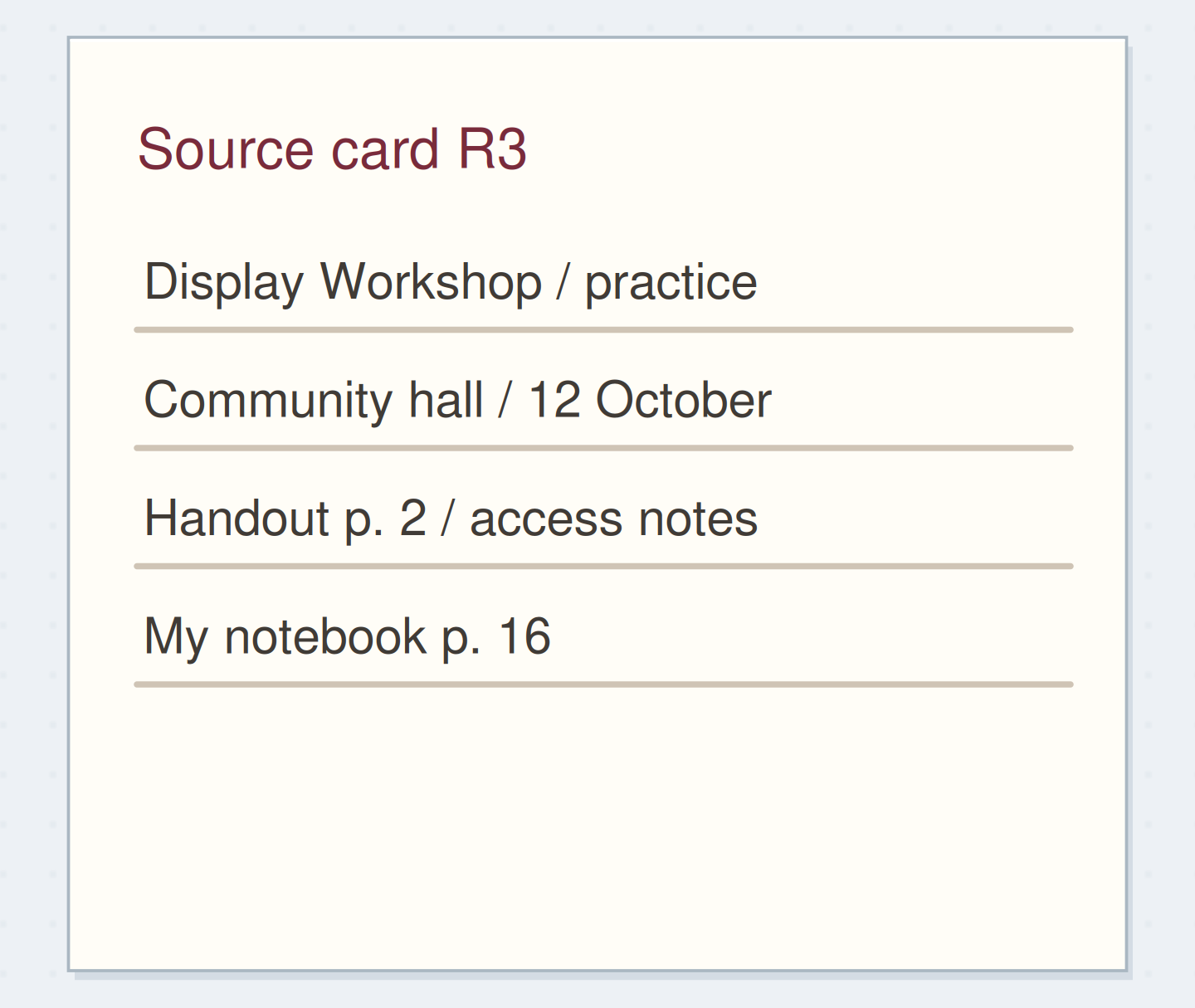
R3 identifies the full practice source.
The source page and notebook page are labelled separately.
Label source pages and notebook pages separately
Write “book p. 42” when you mean the page in the book, and “notes p. 16” when you mean your own record. If your notebook already has a printed page number, the source label near the note still needs its own prefix. Small explicit labels are easier to interpret than relying on where a bare number happens to sit.
For an ebook with changing page positions, a chapter and a short section identifier may travel better than a screen page. Use a location number if the edition supplies one, but retain the title and edition context. A precise-looking number is only useful inside the system that produced it.
Write two unambiguous locations
Edit the worked example into a note you can use.
Source:R3: practice workshop handout
Source location:Handout p. 2
Notebook location:Notes p. 16
Your words have a place now.
A bare page number should not have to serve two books.
- Words on this card
- 15
“Stop when the source and the location are recoverable and the voices are clear.”
Shorten repeated references without hiding them
When several notes come from the same source, create a small source list and assign an identifier such as R3. Put the full details there. Begin each related note with “R3, handout p. 2” or another source location. The code saves rewriting the title while the page reference keeps individual notes distinct.
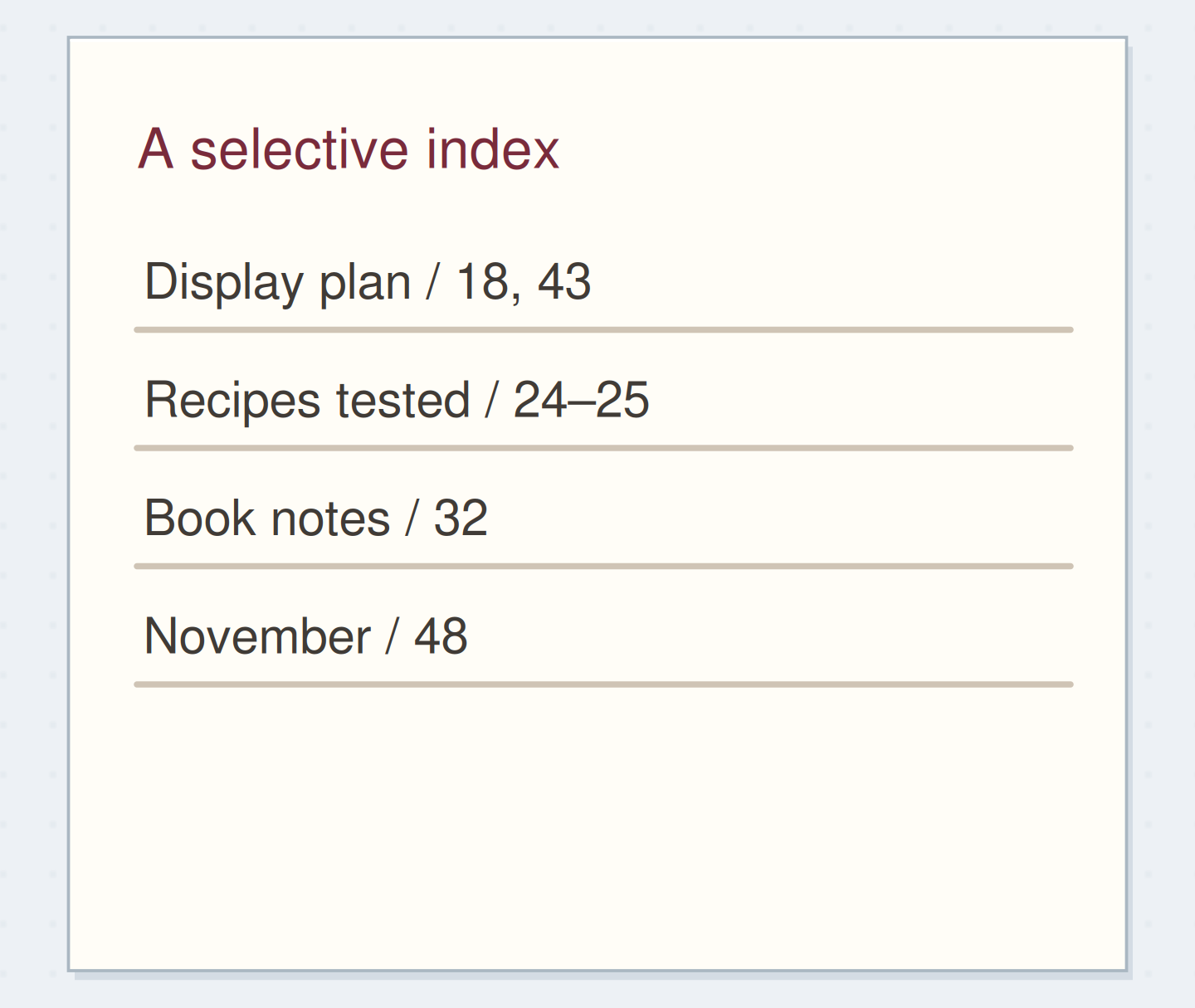
Do not create source codes for a single short entry unless they help you. Writing the full title once above a page may be simpler. Community commonplace discussions describe using both source and topic indexes; those are separate retrieval routes, and neither requires the other to be elaborate.
Make a complete original example
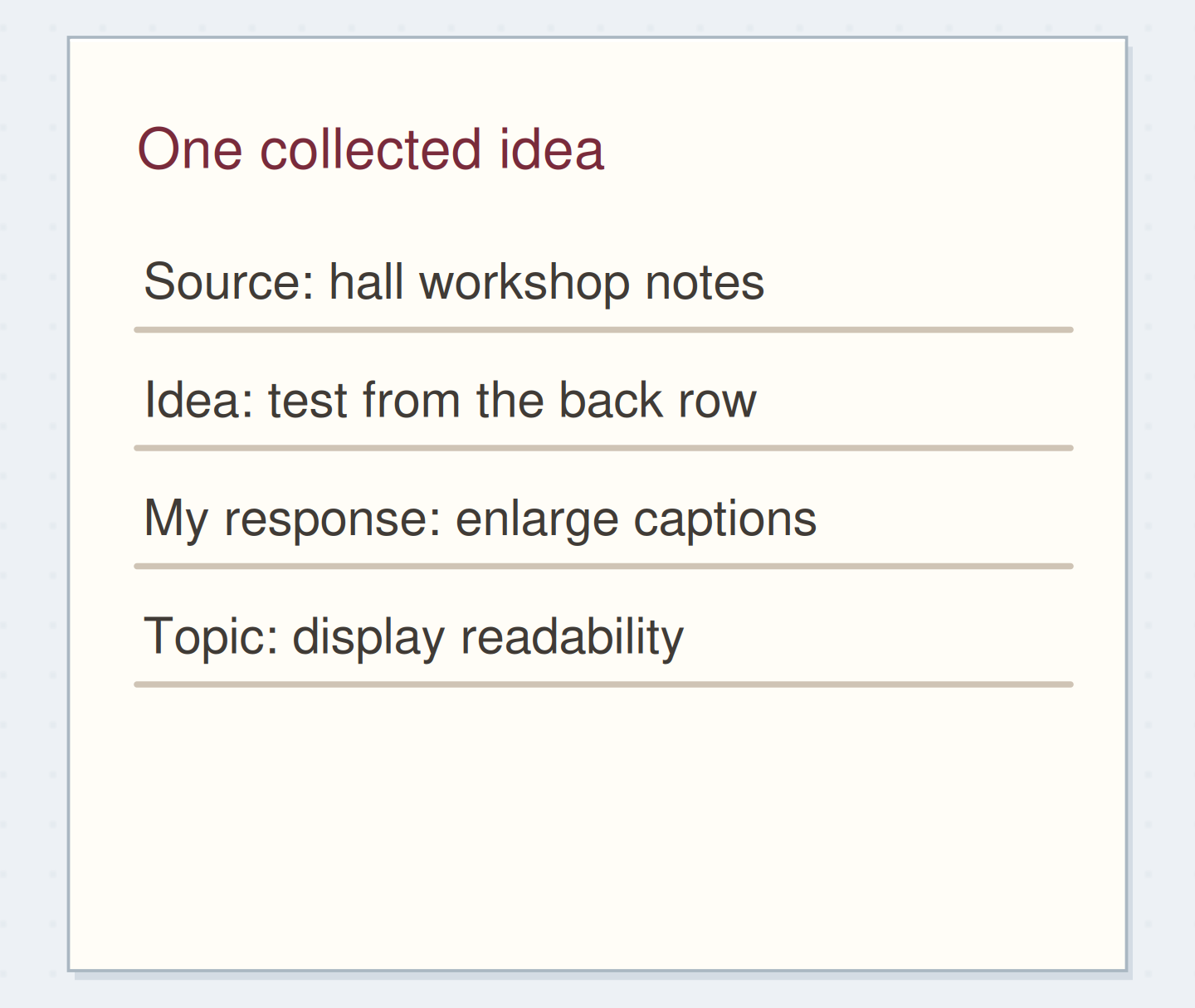
For practice, imagine an invented handout called “Community Hall Display Workshop,” dated 12 October, with access notes on page 2. Your source list assigns it R3. On notebook page 16, write “R3, handout p. 2,” followed by “Summary: test a caption from the back row.” Add “My note: enlarge the sample before testing.”
The example now has two clear addresses: the source's page 2 and your notebook's page 16. Its summary is not presented as a verbatim quote. When you try this with an actual source, replace every invented bibliographic detail with what the document really says, leaving unknown information explicitly unknown.
Decide what kind of note you are making
Use quotation marks only around wording copied exactly. If you omit or alter part of a quotation, make the change visible according to the needs of your work. For an informal personal notebook, a brief paraphrase with a source reference is often enough. Keep your interpretation in a separate sentence or paragraph.
If you expect to publish or submit the material, check the citation requirements for that destination rather than assuming your personal shorthand is sufficient. The notebook's immediate job is to preserve the trail and the distinction between voices. It should not make later verification depend on your memory of how you wrote the note.
Separate a summary from a response
Move the reveal control to inspect the specific change.
One mixed paragraph
The reader cannot tell which thought belongs to the source.
Preserve a usable route when the URL is awkward
A long web address can live in a saved reference list, with a short identifier written on paper. Record the exact article title and site on the notebook page too, so a missing digital list does not leave only an unexplained code. Test one saved link after recording it.
If a page later disappears, note that fact and keep the information you can verify. Do not replace the source with a different page that merely sounds similar. Your note can say “original page unavailable” while retaining the earlier title, date, and your own response. A visible gap is more honest than an invented replacement.
Check the trail before closing the source
Point to one sentence in your note and use its reference to find the corresponding place in the original. Then locate the full source record if you used a code. If both steps work, the note is ready to keep. Add a topic index entry only if that will help you find the idea by subject later.
Stop when the source and the location are recoverable and the voices are clear. You are preserving a route back, not copying the entire source into your notebook.
Verify the note while the source is open
Move the steps so the necessary checks happen before the actions that depend on them.
One workable order
- Record the source detailsThe reference must exist before you can test it.
- Record the passage locationThe full source alone may still be too broad.
- Return to the passage using the noteThe test reveals missing or ambiguous details.
Which check needs to come first?
The example shows one workable order. Other steps can move freely; these checks protect the information you need.
Where this idea began
Want to follow the idea further? These community discussions and maker references are a good place to start.
- First 100 Pages of My Commonplace Book
A contributor considers separate source and topic indexes after a color classification proved unsatisfactory.
- The Book Log
The official book-log tutorial connects reading notes and references to particular places in a book.