Gather a few things See what you’ll need
- A notebook or loose sheet
- A pen
- A pencil for rough notes
Choose a span you can handle
Begin with the past year, a period in one home, or a particular chapter such as your first job. A whole-life list is possible, but a smaller window often produces clearer memories. Write the scope at the top so you do not feel required to include everything that came before it.
Choose whether the page will hold experiences, things learned, or moments of participation. “Went to a concert alone” and “learned to mend a pocket” can live together. You do not need to rank them by difficulty or compare your list with anyone else’s.
Pair the event with a trace
Make three loose columns headed Experience, When, and What stayed. The last should be widest because it holds the memory. On a narrow notebook page, use three lines per entry instead. Dates can be broad: “the winter in the upstairs flat” is more honest than an invented day.
Use past-tense verbs. “Learned the bus route” belongs here; “learn the bus route” is still a plan. If an entry is partly finished, describe the part that happened. “Attended two pottery sessions” does not need to become “mastered pottery” to deserve a line.
Give a completed experience a trace
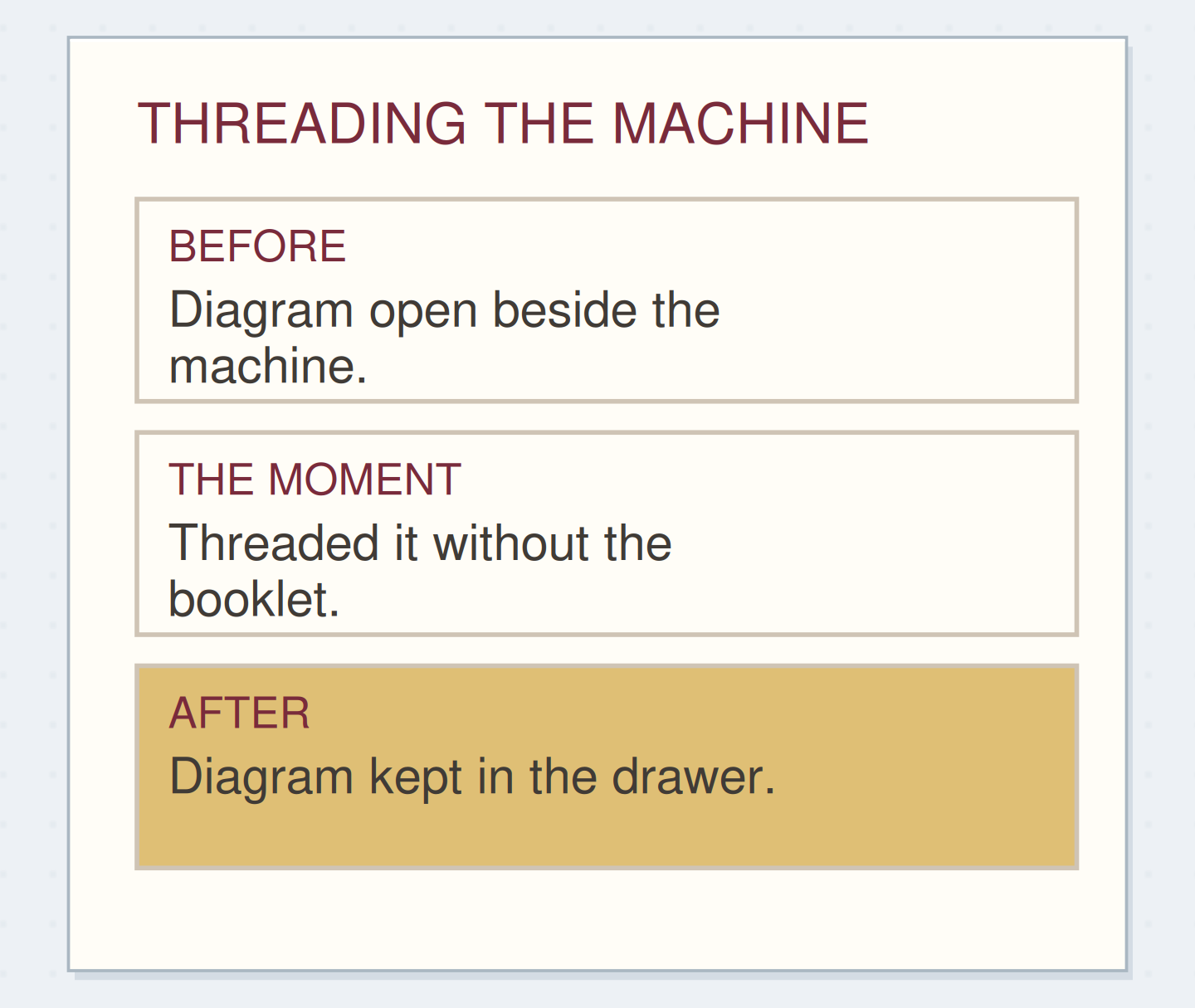
The list moves from headlines to occasions you can picture.
Past-tense actions belong to things that happened.
An unfinished intention needs different wording.
“A reverse bucket list is finished when it shows a few things you have actually lived through.”
Give three ordinary experiences their detail
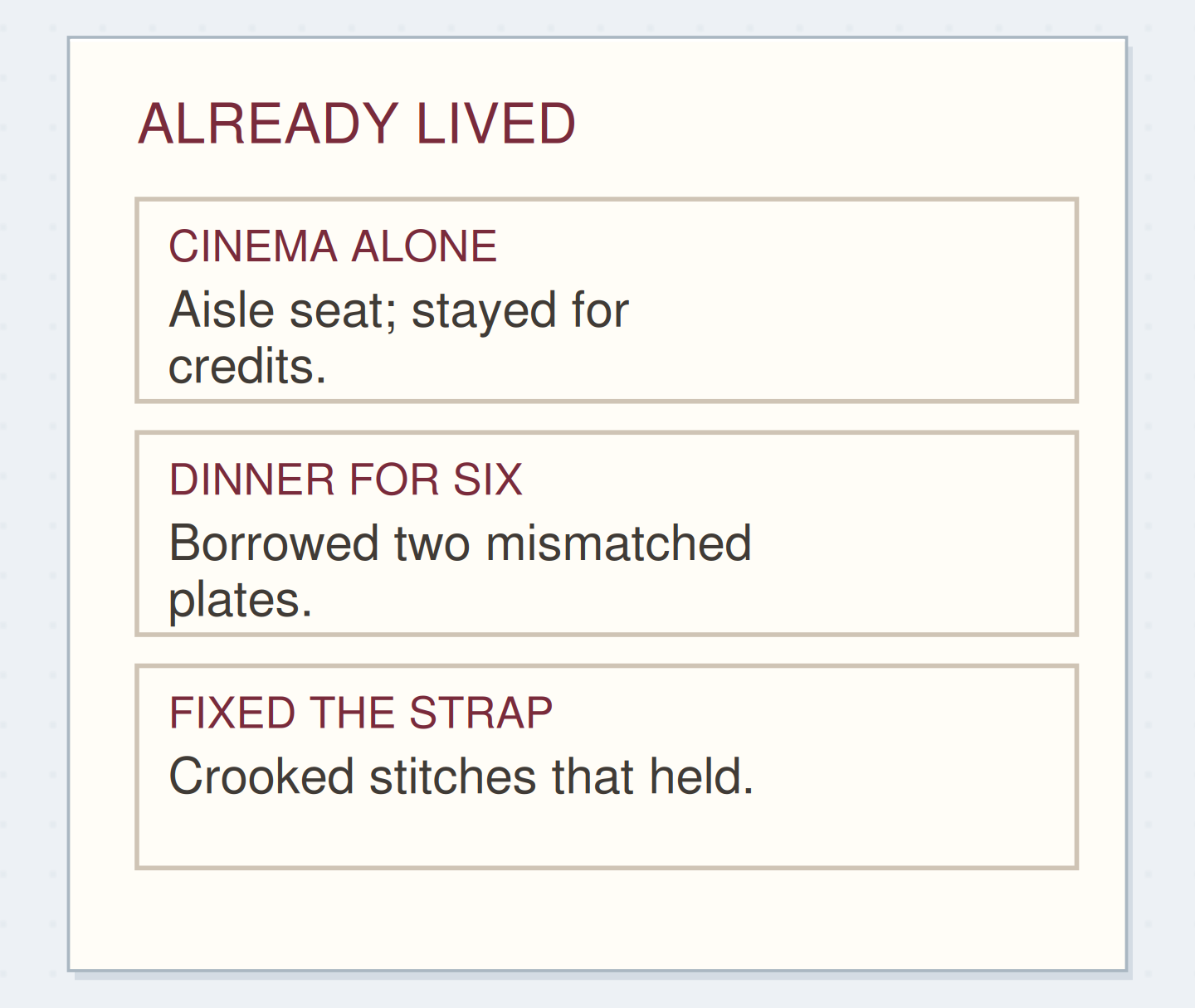
An illustrative list might read: Went to the cinema alone, late spring, chose the seat at the aisle and stayed through the credits. Made dinner for six, August, borrowed two mismatched plates from next door. Fixed the loose bag strap, last winter, the first stitches were crooked but held.
Each final detail makes the entry more than a headline. The borrowed plates and crooked stitches also keep the list from looking like a polished résumé. You are preserving lived situations, including the bits that were improvised, rather than proving that the year met a standard.
Keep one experience without inflating it
Edit the example into a record of your own. Leave out anything you do not know.
What happened:Made dinner for six
When:August
What stayed:Borrowed two mismatched plates from next door.
Your words have a place now.
Ordinary experiences do not need to become major achievements.
- Words on this card
- 17
Look for experiences without trophies
If only large events come to mind, try categories that invite quieter memories: a first attempt, a place you navigated, a person you showed up for, or something you made usable again. A repeated act can qualify if you describe a particular occasion or a clearly bounded period.
Do not turn someone else’s achievement into your own entry. You can write “helped Noor rehearse before the school play” instead of claiming the play as your accomplishment. Shared experiences become clearer when you name your part and leave room for the other people’s work.
When the list starts feeling competitive
Remove numbers, scores, and categories such as “major” or “minor.” Write the entries in the order they come to mind, or group them by setting. Then choose one modest experience and expand its sensory detail. The aim is to recover a scene, not to argue that it is important enough.
If the exercise feels unhelpful, change the heading to “Things I remember doing” or stop after one entry. You do not have to feel proud of everything on the page. Curiosity about the way an experience unfolded is sufficient reason to keep it.
Remove the ranking and keep the scene
Move the reveal to see which information changes the record.
Before the revision
The categories rank experiences without adding a memory.
Let one item become a fuller page
Circle the entry that still has a scene behind it. Add a page reference and write the story elsewhere if you want. The cinema entry might become a short account of choosing to go, the walk home, and the person you called afterward. The original list stays brief and easy to scan.
A small-milestone log is useful when you want to record experiences as they happen. This list works backward over a chosen period. Keep those jobs separate so the reverse list does not become another ongoing tracker you feel obliged to maintain.
Choose how far one item needs to go
Try the form that matches the evidence or space you have.
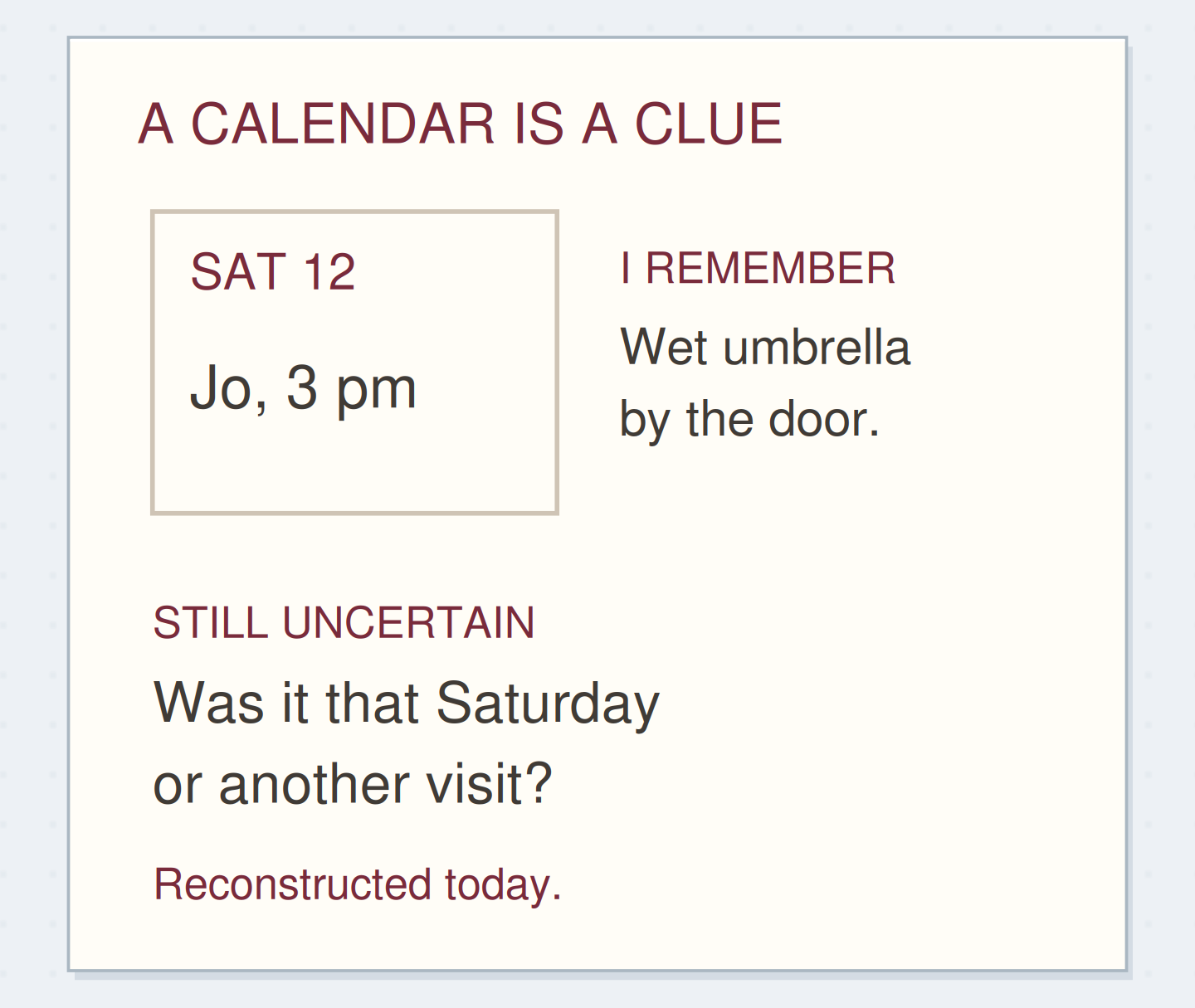
A complete trace can remain one line.
Do not expand a record just to fill space.
Close it with enough examples
A reverse bucket list is finished when it shows a few things you have actually lived through.
You can stop at five entries, the bottom of a page, or the end of one good writing session. Add a date to the list itself and retain the rough dates within it. Later additions can carry their own note. There is no need to discover every forgotten achievement before you are allowed to close the notebook.
Where this idea began
Want to follow the idea further? These community discussions and maker references are a good place to start.
- Favorite non-traditional collections and spreads
A participant describes a reverse bucket list of things already accomplished.
- Happy 100 days of daily journaling
Comments discuss small journaling milestones, including finishing a notebook.