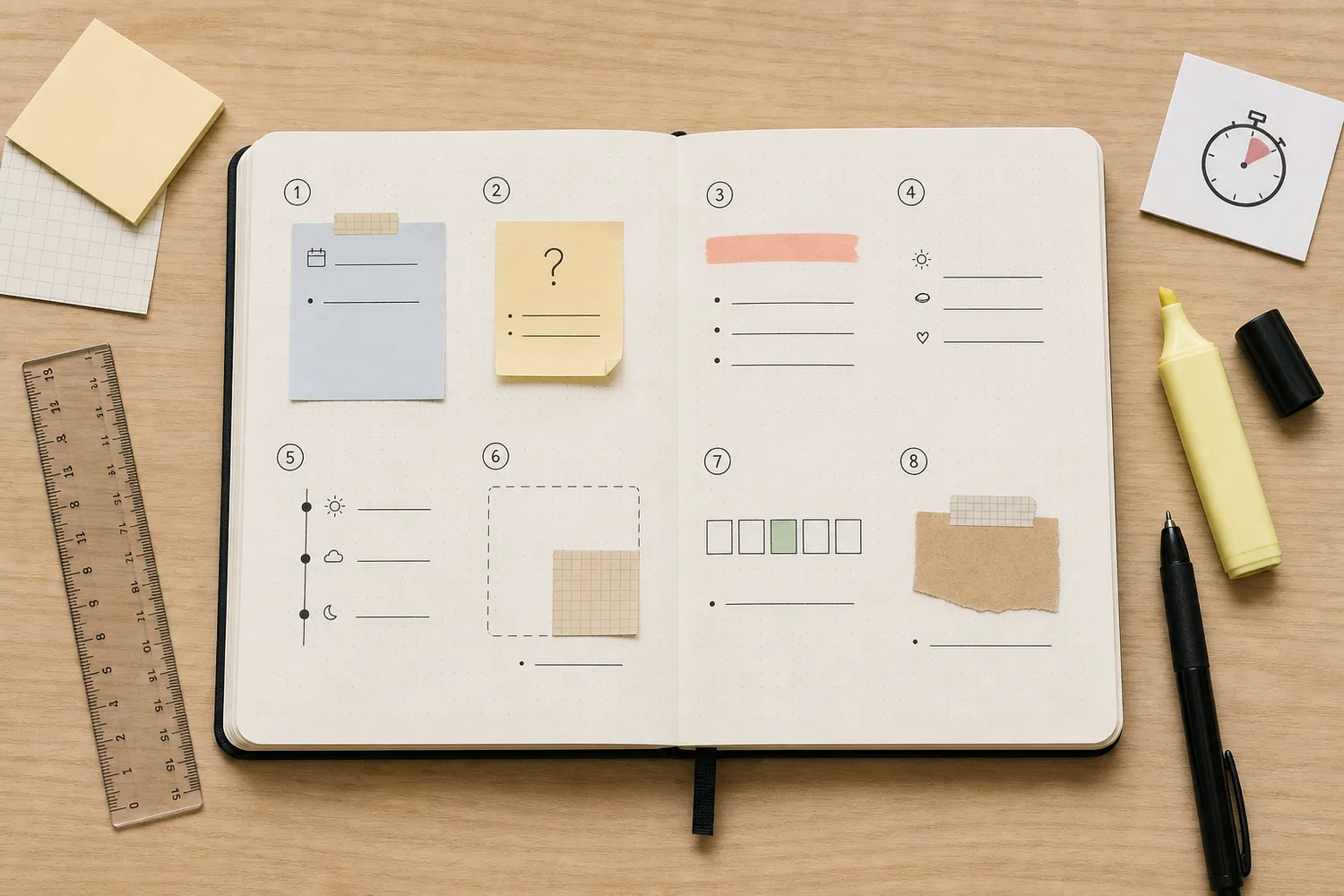
Gather a few things See what you’ll need
- A notebook or loose sheet
- A pen
- A pencil for rough notes
Name the change in plain language
Choose an observable shift: you tried something for the first time, completed a bounded piece of work, or handled a familiar situation differently. Write it as a sentence that describes what happened. “Made the call myself” is clearer than “became confident,” which asks the page to prove much more.
A milestone can be shared. Name your part without taking over someone else’s story. “We finished hanging the curtains after three attempts” is enough. You do not need to turn an ordinary household success into a statement about your whole character.
Use three short positions
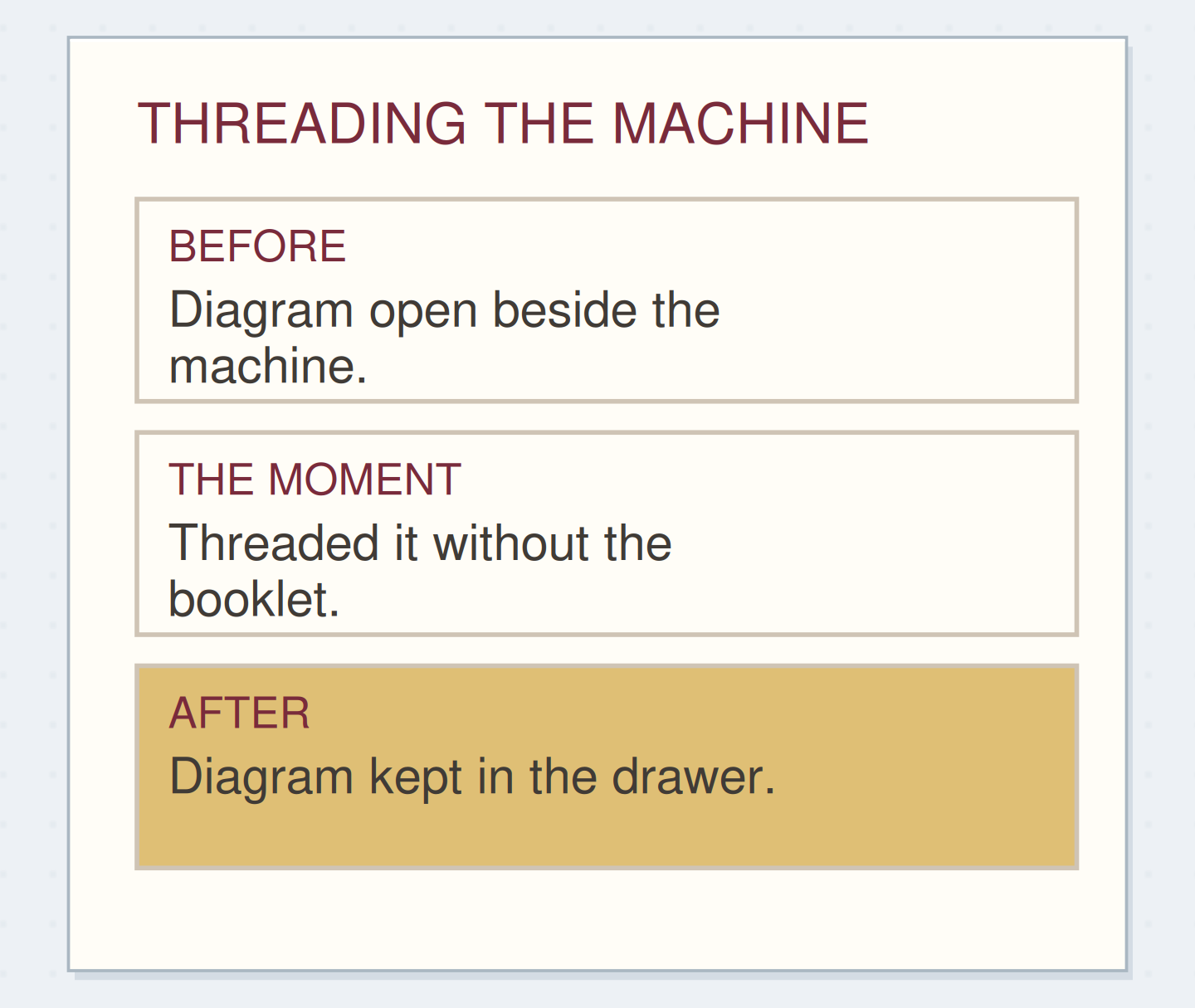
Leave room for Before, The moment, and After. Before explains what made the event noticeable. The moment records the actual scene. After says what is different now, without predicting that the change will be permanent. Three little paragraphs are usually easier to read than a row of tiny boxes.
Date the event as well as the entry if you are writing later. If the milestone happened gradually, choose a recognition date: the day you noticed you no longer needed the instructions. Label it that way rather than searching for a first moment you cannot identify.
Name the change without making it permanent
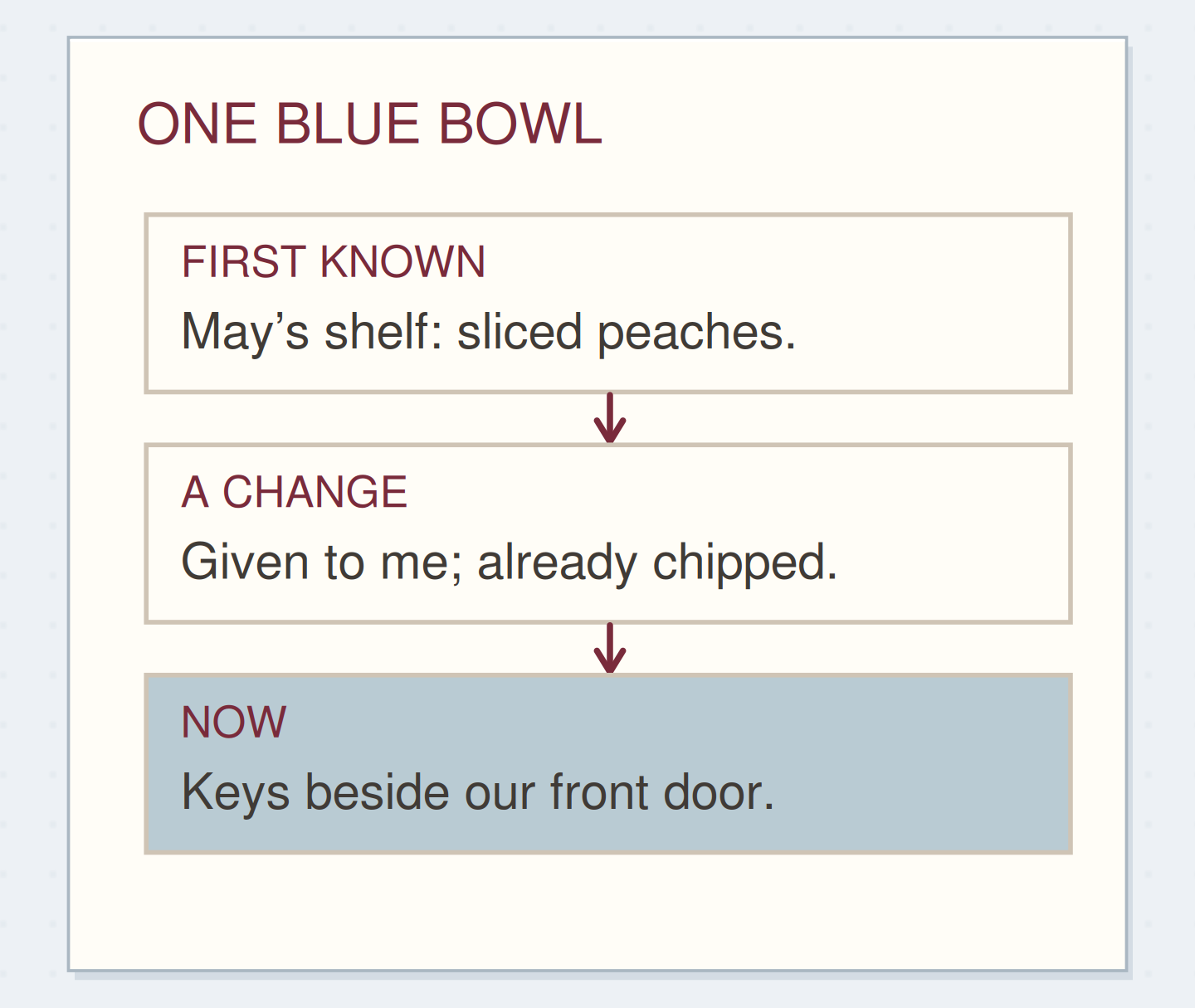
Follow one modest first from its preparation into a dated occasion.
The open diagram explains what made this moment noticeable.
A milestone needs a point of comparison.
“The entry is complete when you can see what changed and remember the moment you noticed it.”
Keep a small sewing success
A fictional example: Before: I kept the threading diagram open beside the machine. The moment: Saturday afternoon, I followed the thread path without reaching for the booklet and noticed only when the needle was ready. After: I put the diagram back in the drawer, where I can still find it.
The last clause matters. You can keep support available after a successful attempt. Add one detail from the setting, such as the scrap of striped fabric used for the test seam. The page records a real change without claiming that every future attempt will be effortless.
Keep a small milestone scene
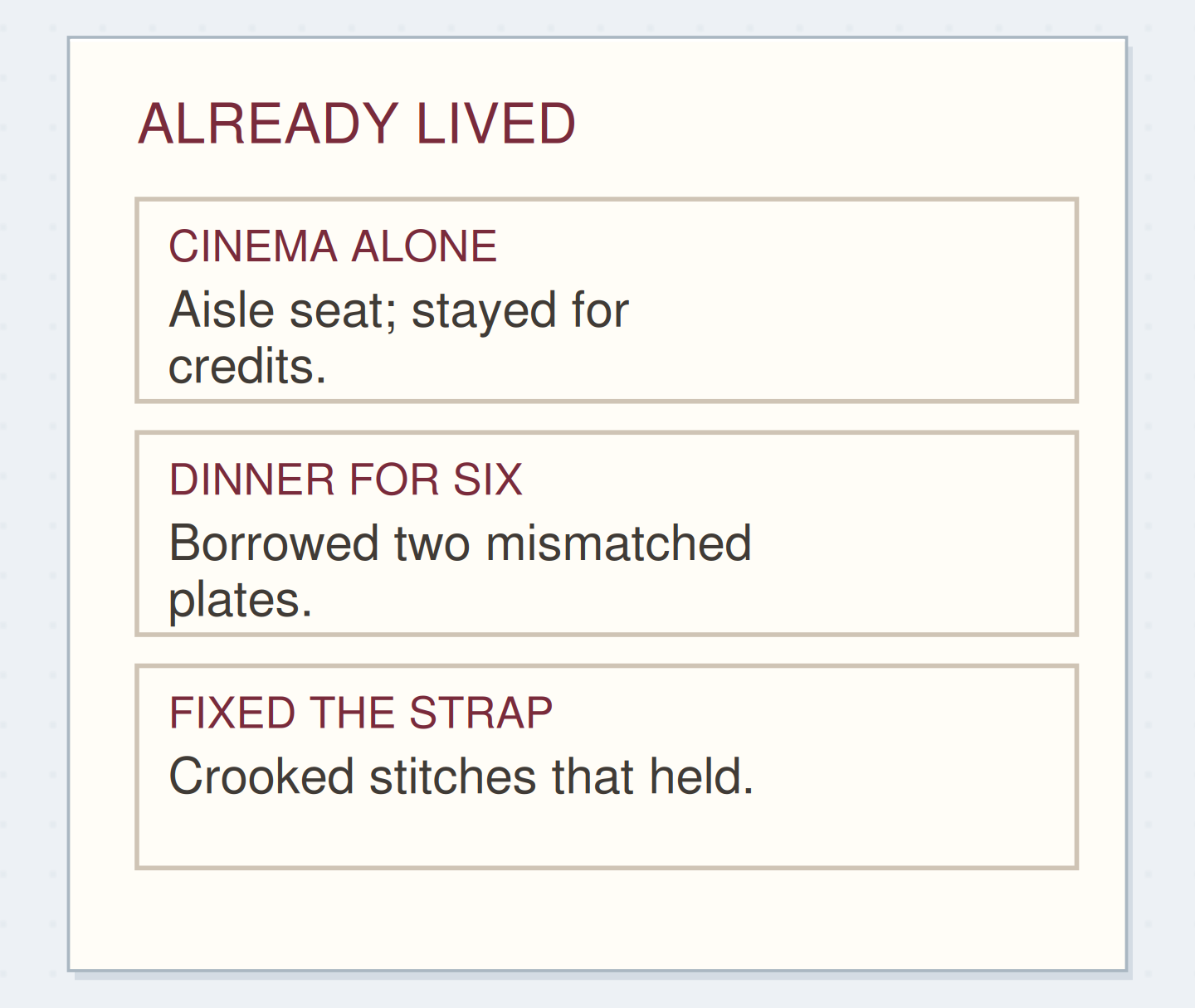
Edit the example into a record of your own. Leave out anything you do not know.
Before:The threading diagram stayed open beside the machine.
The moment:On Saturday I threaded it without looking.
After:I put the diagram in the drawer, where I can still find it.
Your words have a place now.
An uneven next attempt does not erase this occasion.
- Words on this card
- 32
Include what made it possible
Write one line about the preparation, help, or circumstance behind the moment. A patient explanation, several rough attempts, a better light, or simply having enough time may belong in the story. This makes the record more useful than a headline that suggests the result arrived by itself.
If another person helped, name their contribution accurately. You can keep a phrase they said if you remember it, or summarize the advice in your own words. There is no need to create a complete learning history. Choose the piece of support you want to remember with this occasion.
When the next attempt goes badly
Add a later note rather than crossing out the earlier milestone. “Needed the diagram again on Tuesday” can sit beside “did it unaided on Saturday.” Both can be true. The original event does not become false because your experience is uneven.
If the page begins to feel like a performance record, stop counting consecutive successes. Change the heading from “progress” to the actual event, and keep the scene. You can also leave the log alone for a while. A useful memory format does not have to become a daily obligation.
Add the setback without erasing the first
Move the reveal to see which information changes the record.
Before the revision
A later difficulty does not make the earlier event false.
Decide whether this needs a series
Some milestones belong on their own page. Others form a small series around one project, such as learning to repair a bag or settling into a new route. Keep the shared subject as a heading and add occasional dated entries beneath it. Leave the frequency open.
A reverse bucket list works better when you want to look back over many completed experiences at once. This log catches a moment while it still feels new. Link the two later if useful, but do not rewrite every milestone simply to populate another spread.
Choose the right size of record
Try the form that matches the evidence or space you have.
A single first can stand alone.
No ongoing log is required.
Finish without raising the bar
The entry is complete when you can see what changed and remember the moment you noticed it.
You can add a small drawing of the object involved or leave the words alone. Stop before setting a new target just to give the page a dramatic ending. The next milestone does not have to be larger. It only needs to be another real occasion you decide is worth keeping.
Where this idea began
Want to follow the idea further? These community discussions and maker references are a good place to start.
- Happy 100 days of daily journaling
Comments discuss small journaling milestones, including finishing a notebook.
- Favorite non-traditional collections and spreads
A participant describes a reverse bucket list of things already accomplished.