Gather a few things See what you’ll need
- A notebook or plain text document
- A pen or keyboard
- A timer you already have
Choose a duration you can actually give
Start with four minutes if you want a small experiment. Two minutes or seven can work just as well; the number is a practical boundary, not a special formula. Decide before starting whether you want an open freewrite or a focused one with a subject such as “the walk home.”
UNC’s Writing Center describes freewriting as generating words without judging them while you write. Community conversations about Morning Pages also show that writers have different capacities for long sessions. This shorter exercise is timed freewriting; it doesn’t reproduce Julia Cameron’s specific Morning Pages practice or require its name.
Follow a freewrite’s change of subject
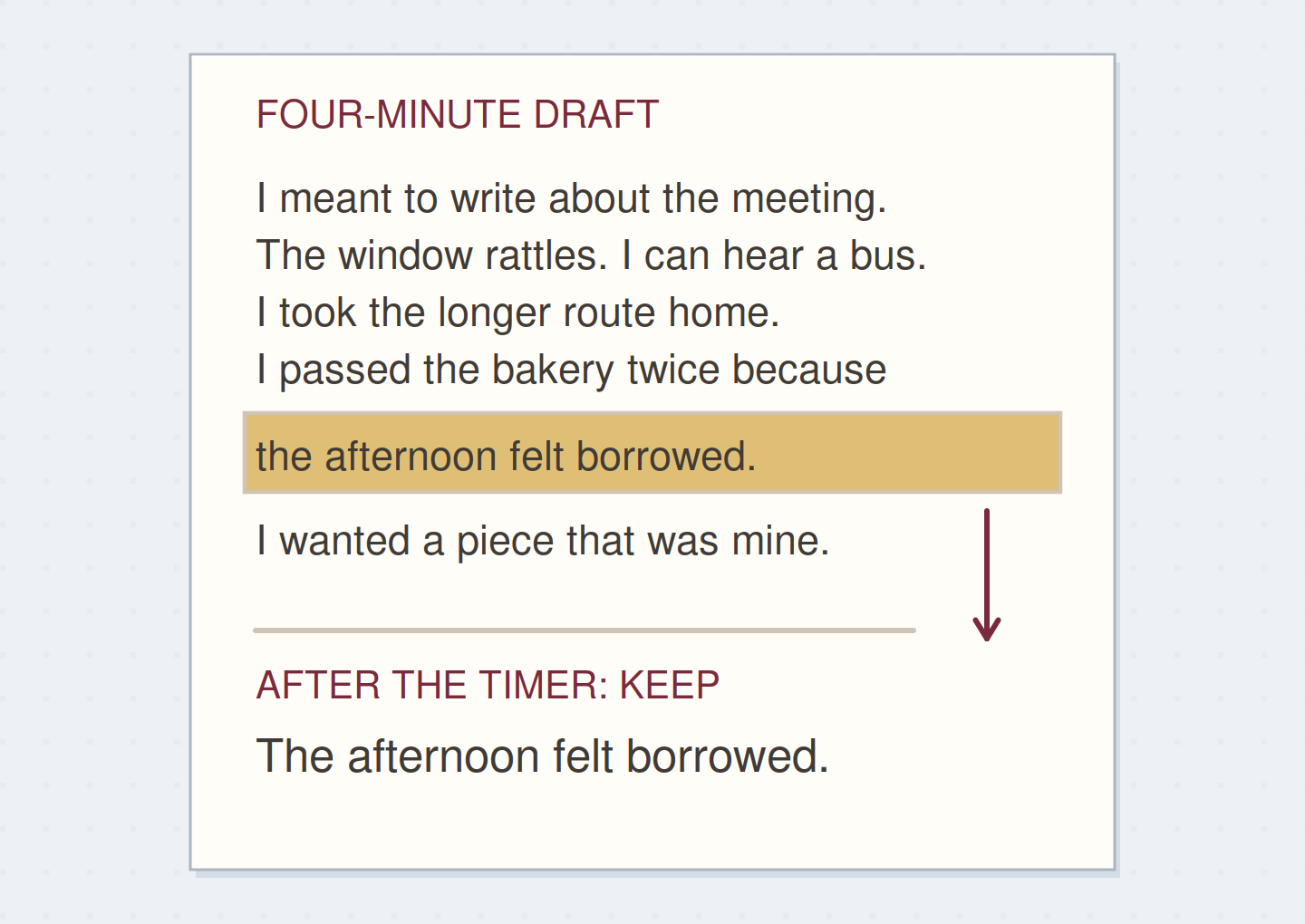
The example moves from an intended topic to a phrase worth keeping.
The draft begins with the topic the writer expected.
No title or perfect opening is required.
Make a temporary agreement with the editor
Date the page and write your chosen duration. For this interval, leave spelling, sentence order and the title alone. If you dislike a word, continue with the word you prefer instead of erasing the first one. Fragments, repetitions and abrupt changes of subject are allowed in a draft.
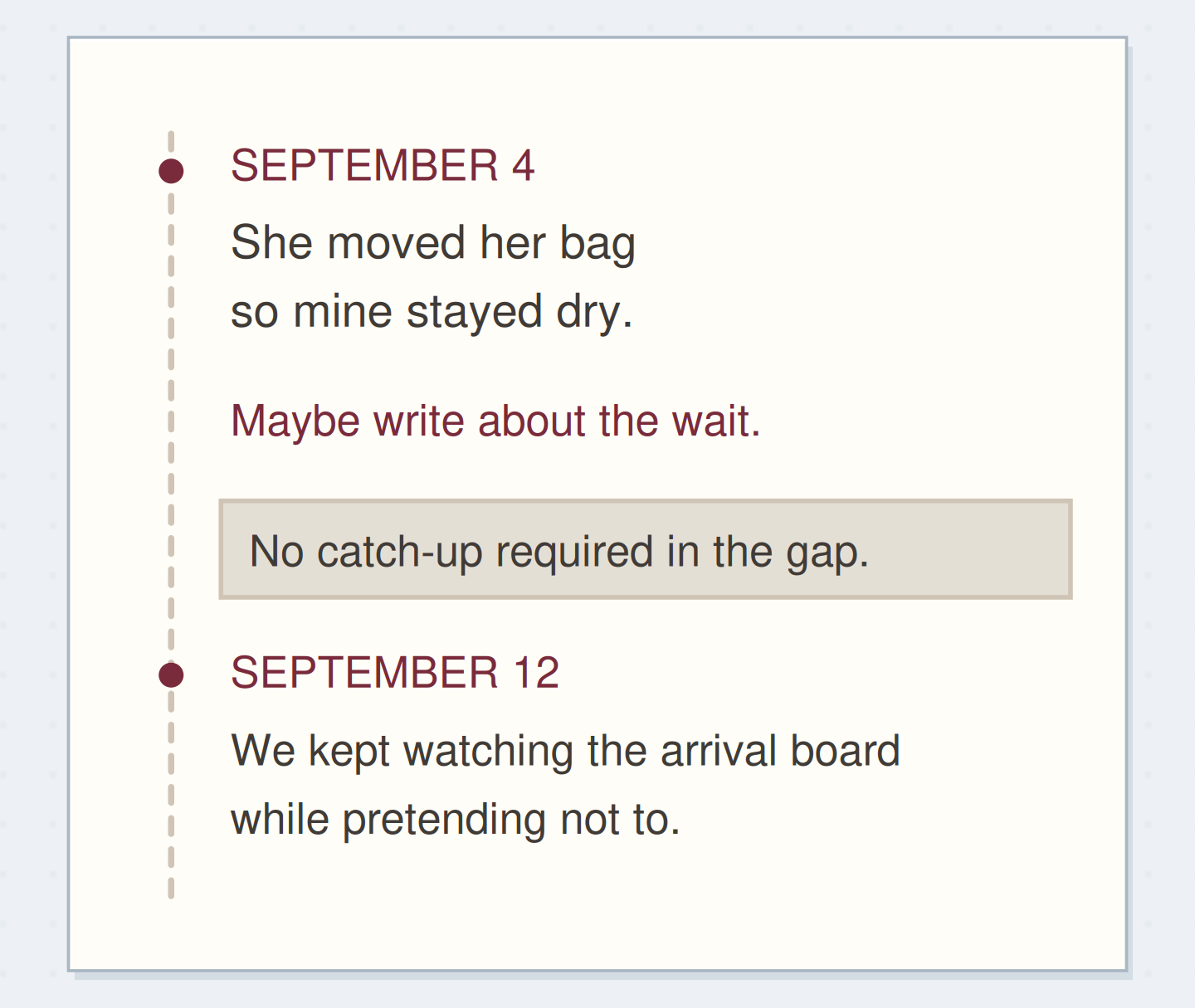
Keep your hand or keyboard moving comfortably, with ordinary pauses to think. You don’t need to force continuous motion or write through discomfort. The useful agreement is about postponing evaluation. If a notification interrupts you, return to the last few words and continue until the timer ends; an interrupted attempt still counts as an attempt.
“A freewrite is finished when the interval and the brief reread are finished.”
Use the sentence in front of you
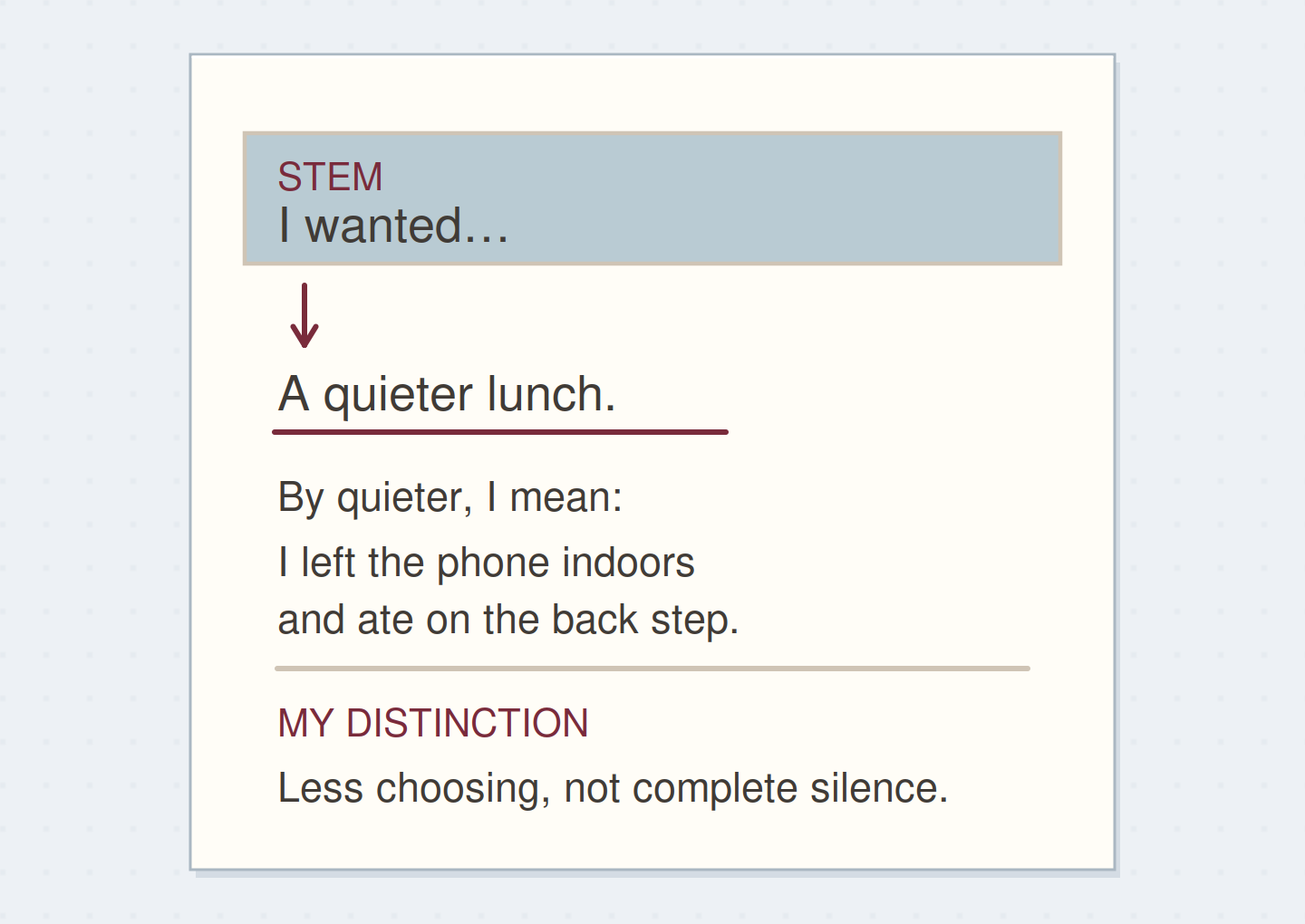
Begin with something available: “The thing taking up room in my head is…” or “I can hear…” Follow the thought that arrives after it. If the subject changes from your lunch to the neighbor’s bicycle, let it change unless you deliberately chose a focused freewrite.
When you stall, write a truthful bridge: “I’m stuck on the word…” or “What I haven’t described is…” Then answer it. Repeating “I don’t know” for a line is fine, but you can also describe the room or the movement of your pen. You’re generating material, so a modest observation has a useful job.
Try a beginning and a bridge
Draft a few sentences without polishing, then name what caught your attention.
I thought I would write about the meeting, but I keep remembering the walk home.
I walked past the bakery twice before turning toward home.
The last part of the afternoon felt borrowed.
Your words have a place now.
The keep field belongs after the writing interval; leave it alone until then.
- Words on this card
- 33
See a draft reveal its own subject
Imagine this opening: “I meant to write about the meeting but the window is rattling and I keep hearing the bus outside. I took the longer route home. That is probably the thing. I walked past the bakery twice because the last part of the afternoon felt borrowed and I wanted a piece that was mine.”
The original intention was a meeting report. The draft discovered the walk home. After the timer, the writer circles “the last part of the afternoon felt borrowed.” That phrase can stay as a journal sentence or become the opening of a more deliberate entry. The rest of the draft doesn’t need cleaning up.
See what early editing interrupts
The second version lets the draft reach an actual detail.
Starting version
The writer spends the interval judging the opening.
Give a repetitive draft one gentle turn
If the same complaint keeps returning, finish its sentence and ask for a scene: “The most recent example was…” Describe where you were and what happened. This changes the scale of the writing without demanding a different feeling about it. You can stay with the same subject and still find new detail.
If the timer itself distracts you, turn its display away or use a loose endpoint such as one small page. If the subject feels like more than you want to write about today, choose a neutral one or stop. Freewriting is an available writing exercise, not an obligation to pursue every thought that appears.
Read for a line, not a grade
When the interval ends, put down the pen briefly. Then read the draft once, looking for something that catches your attention: an unexpected phrase, a concrete image or a question you hadn’t known you were asking. Mark at most two places so the whole draft doesn’t become an editing project.
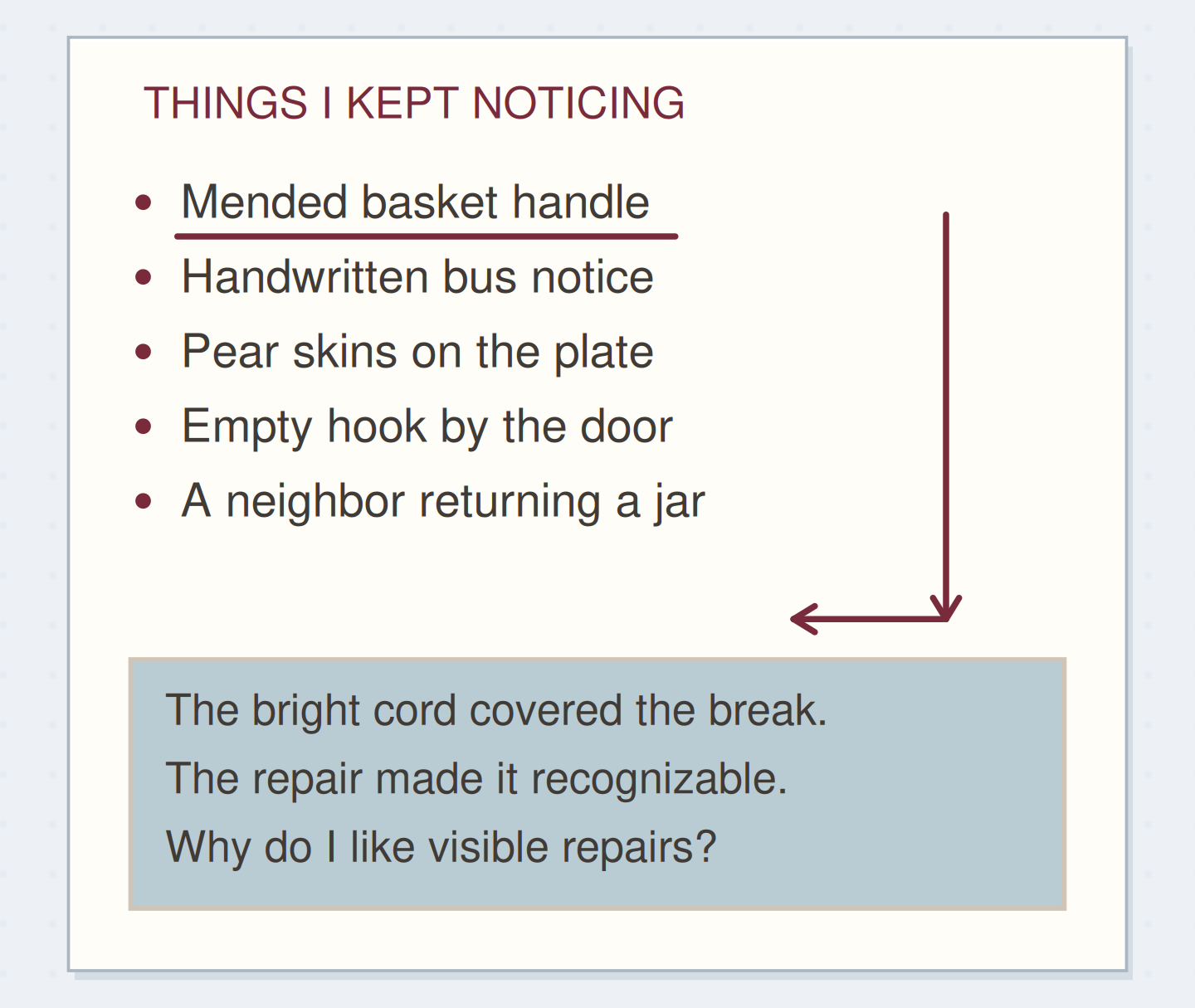
Ask what each marked line needs. A vivid image might need nothing. A question might need another page on a different day. A practical reminder might belong on your task list. The point is to notice what the draft contains, then choose what deserves a second job.
Choose the next job for a marked line
A useful fragment can lead to different kinds of follow-up.
An image can remain complete as it is.
No expansion is required.
Close the attempt on purpose
Write one closing line beneath the draft: “I’m keeping…” followed by the phrase, or “Today was a warm-up.” You can add a follow-up topic if you want an easy starting point next time. Don’t extend the session just to make the page look complete.
A freewrite is finished when the interval and the brief reread are finished. You can return to the useful line later without transcribing the whole page. If you try again, vary only one condition, such as time of day or focused versus open writing, so you can notice which version you prefer.
Where this idea began
Want to follow the idea further? These community discussions and maker references are a good place to start.
- Technique — The Artist’s Way — Morning Pages
Participants discuss stream-of-consciousness writing, the time needed for three pages and adapting their personal writing practice.
- Brainstorming — UNC Writing Center
Explains freewriting, listing and changing perspectives as ways to generate material before evaluating it.
- Brainstorming Techniques — George Mason University Writing Center
Describes timed, unedited writing followed by considering the scope and possible focus of the material generated.