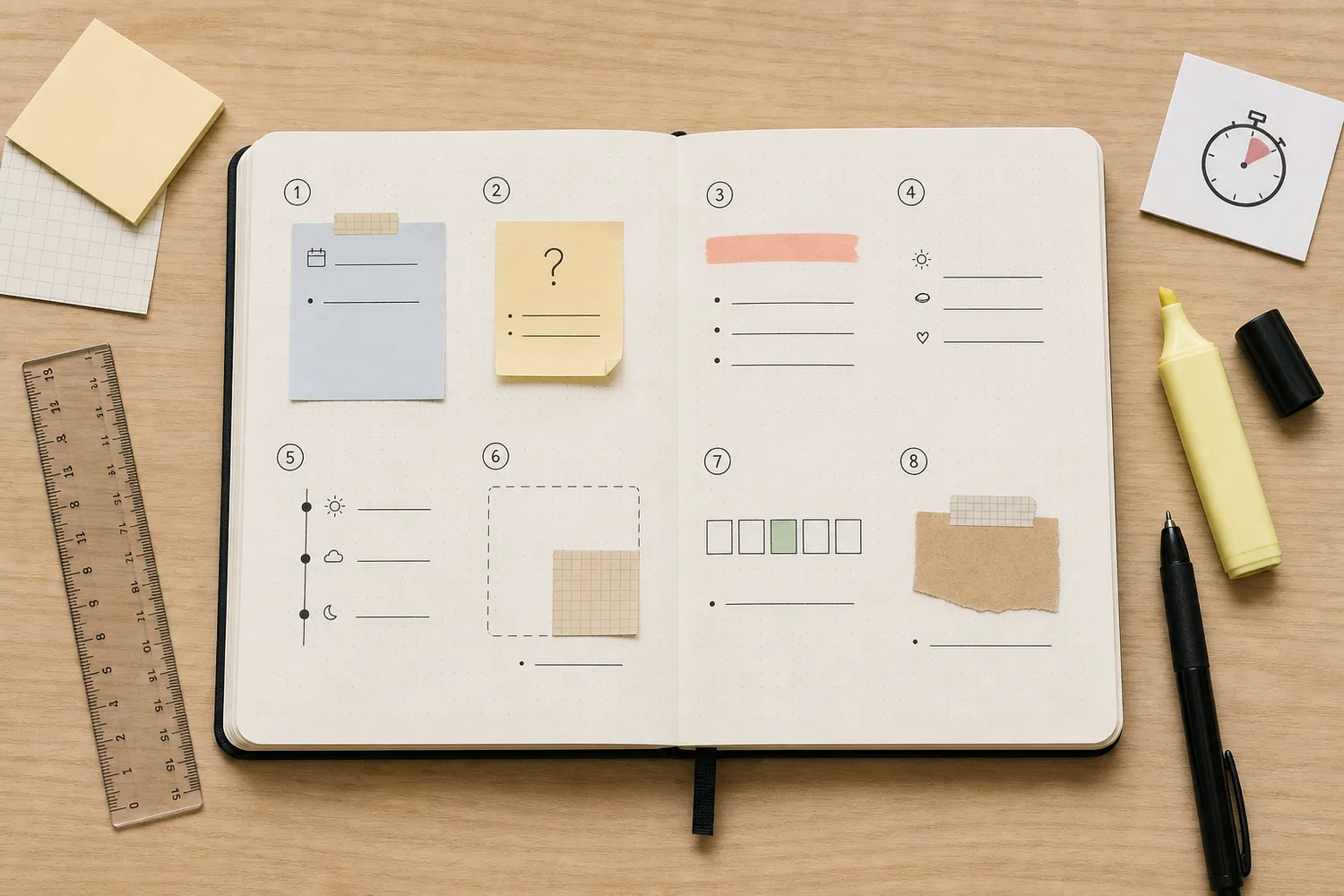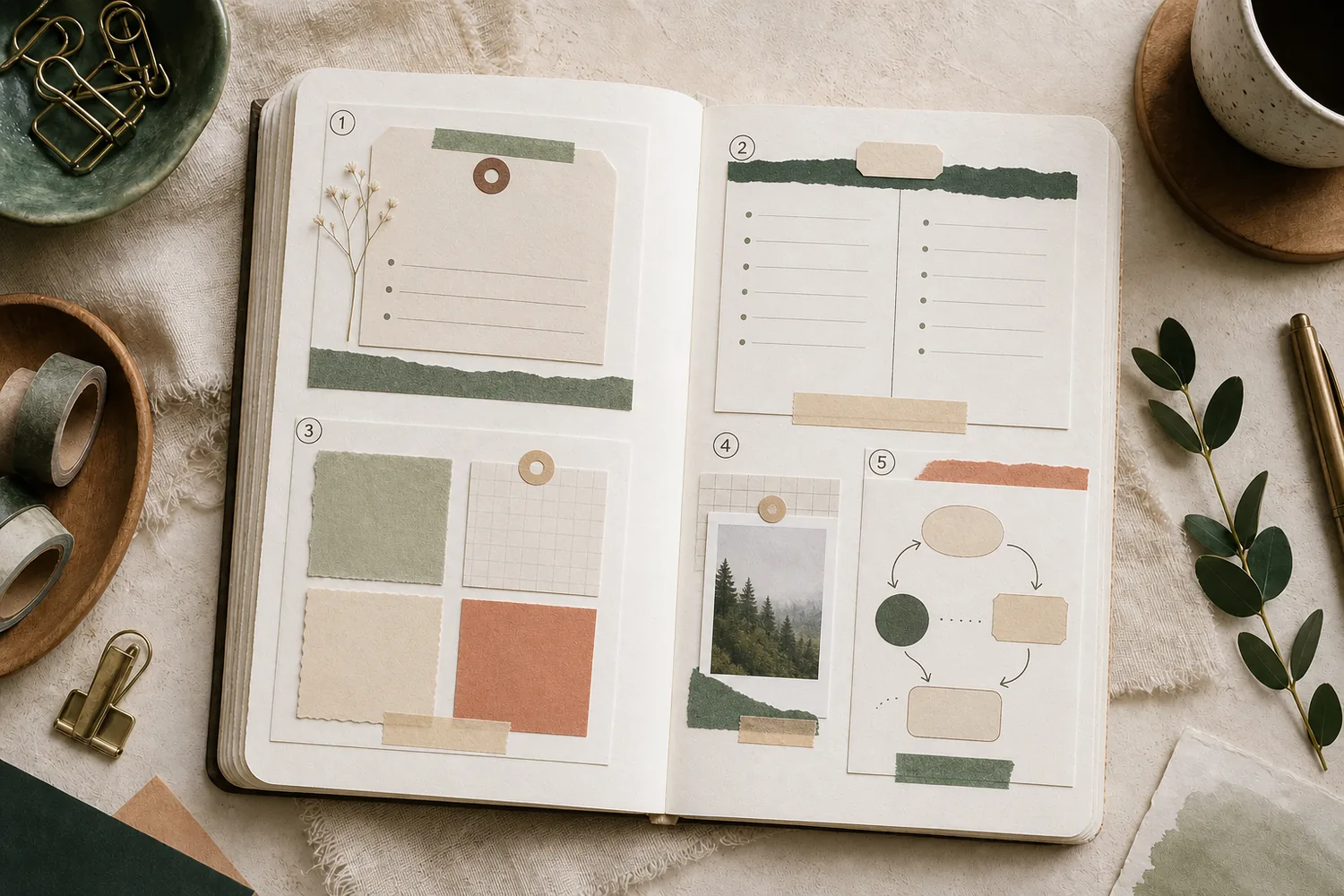
Gather a few things See what you’ll need
- Journal or a piece of paper
- Pen
- Optional: one scrap or colored pencil
When the day needs a little direction
Write the date and divide the page into a narrow left column and a wider right one. Put appointments or time-specific plans on the left. On the right, write the things you'd like to do around them. Circle the one task that would make the biggest difference today.
Leave some open space under the list. Real days tend to add things. If you don't have appointments, skip the column: one short list beneath the date works just as well. Stop planning when you know where to begin. You don't have to fill the page with tasks to justify using it.
Choose the kind of space that helps you start today
Try the arrangement that matches what you need from the page now.
Separate fixed times from the actions around them.
A narrow appointments area can sit beside a wider task list. Keep some open space beneath the list because the day may add things. If you have no fixed appointments, omit that column and let one short list give you a useful beginning.
When everything is asking for your attention
Leave most of the page open and begin with 'What's on my mind?' Write in fragments if full sentences feel slow. You might mix an errand, an unfinished conversation, a lovely idea, and something that has been bothering you. They can share the paper.
When you've said enough, draw a line below the writing and add 'For now…' Complete it with one action or one thing you're willing to leave alone tonight. You don't need to solve every thought you recorded. If the page fills up, continue on the next one instead of making the last lines tiny.
Let a thought end with one manageable for-now line
Edit the mixed thought first, then choose an action or something to leave alone tonight.
The unfinished message, tomorrow’s groceries, and an idea for the garden.
For now:I will write the grocery list and leave the message until morning.
Your words have a place now.
The filled card is a sample. Replace any part with your own words; leave a field empty if it does not help.
- Words on this card
- 25
“The next blank page doesn't need the same answer as this one.”
When one small moment is the whole entry
Put a small photo, scrap, or hand-drawn rectangle near the top of the page. Underneath, write what happened. Then add one detail you might otherwise forget: the song in the shop, the chipped mug, the exact thing someone said.
For example: 'We ate toast on the doorstep because the kitchen was too hot. The cat kept trying to sit on the plate.' That's already a memory page. You don't need a remarkable day or a printed photograph. A simple drawing of the plate can be enough if you'd like something visual.
When you want to tell both parts of the story
Divide the page across the middle. Label the top 'What happened' and the bottom 'How it felt.' Describe the event in the first space, then write your experience of it below. The second part can be shorter or longer; pencil the dividing line first if you're unsure.
You might write 'Had lunch with everyone' above, then 'I was glad I went, and I was ready for quiet afterward' below. Both can be true. If dividing the page feels fussy, use those two phrases as paragraph starters instead. The distinction matters more than the layout.
Keep the event and your experience of it side by side
Describe what happened in one field and how it felt in the other. They can tell different parts of the same day.
What happened:Had lunch with everyone.
How it felt:I was glad I went, and I was ready for quiet afterward.
Your words have a place now.
The filled card is a sample. Replace any part with your own words; leave a field empty if it does not help.
- Words on this card
- 21
When one line is what you've got
Write the date and finish one sentence: 'Today, I noticed…' You can also use 'I want to remember…' or 'Today was…' Pick the prompt that asks the least of you. The answer doesn't have to be positive, insightful, or beautifully phrased.
Leave the rest of the page alone. Tomorrow's date can go a few lines below today's entry. You aren't required to spend a whole page on each day, and you don't need to apologize to the journal for writing less. A few honest words are something you can come back to.
Change the page when it stops helping
If your task list turns into a story, let it. If a reflection becomes an errand you need to remember, put a small box beside that line. You can change direction halfway down the paper without redrawing the whole page.
Before adding decorations, ask whether you can read the entry comfortably and whether you've written what you came to say. If yes, you're finished. If you still want a little color, underline the date or shade one edge. The next blank page doesn't need the same answer as this one.
Let a task note grow into a story on the same page
Compare squeezing the thought into the list with continuing below it.
Story squeezed into a list
A fixed list can break a longer thought into awkward fragments while a larger area below remains unused. The format is now asking the memory to adapt to it.
Where this idea began
This guide grew from our original Instagram post. The examples and explanations here expand on that idea so you can try it at your own pace.