Gather a few things See what you’ll need
- Three pens already available
- Known paper
- Pencil and ruler
- Protective scrap
Choose what the grid needs to answer
Decide whether you want to compare several colors on one paper or one ink on several papers. Don't change both at once in your first grid. For this example, use three pens on the same sheet and ask which color suits a small date line. A community discussion about swatching on lined paper emphasizes the usefulness of testing on the paper someone actually writes on. Goulet's paper comparison similarly holds the pen constant to show differences between paper-and-ink combinations. Those examples support controlling the comparison rather than treating any swatch as definitive.
Build a useful swatch cell
Add identification, repeated marks, and real writing.
Reserve tool labels and sample cells
Reserve an identified cell for each tool before adding color.
Reserve labels before the color
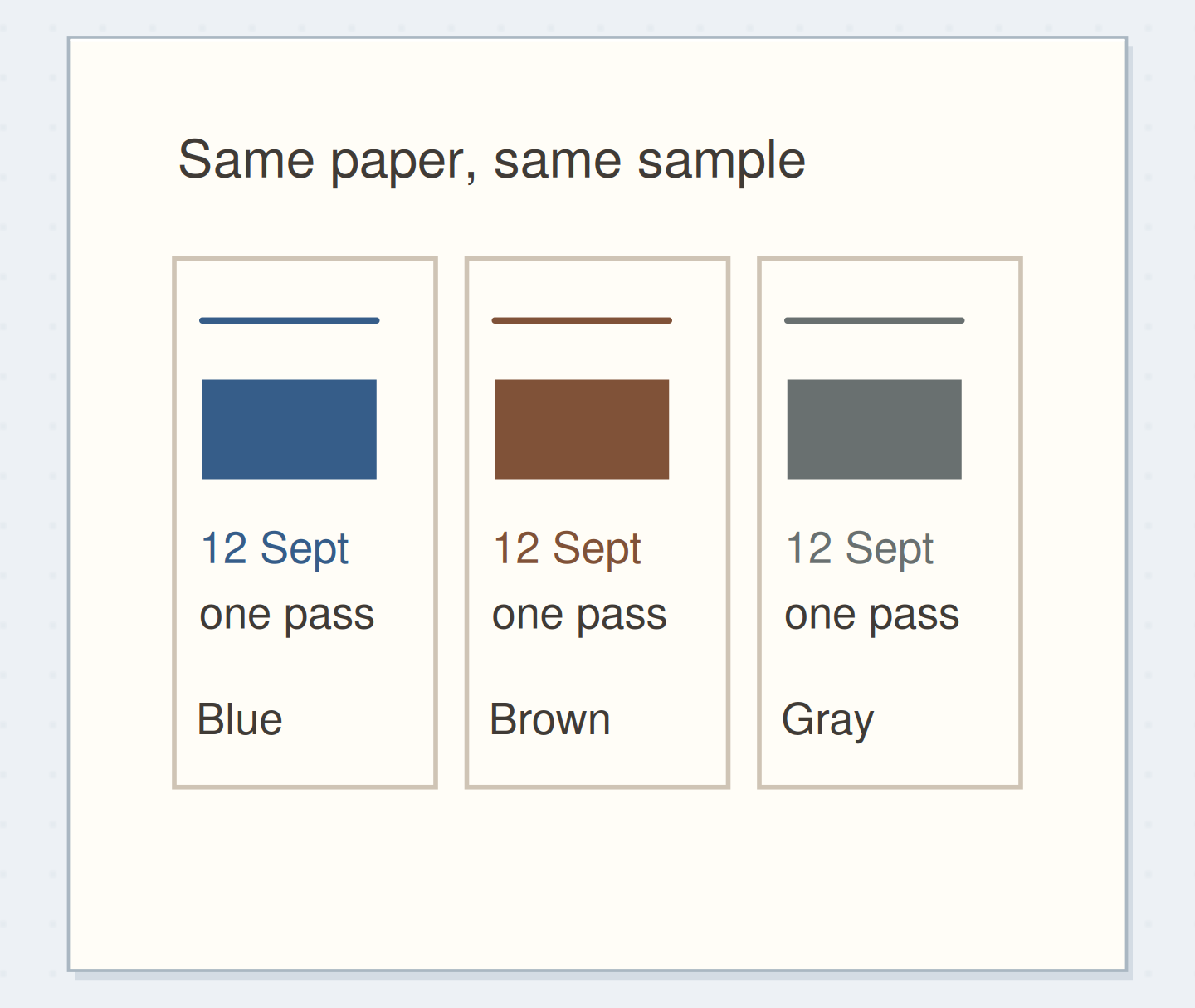
Pencil three cells, each about 30 mm wide and 45 mm high, with a 5 mm gap between them. Leave the lower third of each cell for identification and a note. Across the page top, write the paper name or a practical description such as “cream notebook, back test page.” Include the date if you expect to add more samples later. A grid drawn on ruled paper is perfectly usable; the existing lines simply become part of the tested surface rather than a defect you need to disguise.
“Stop when each cell has an identifiable tool, a dry writing phrase, and one observation relevant to your question.”
Repeat a small set of useful samples
In every cell, make a short horizontal line, a compact single-pass patch, and the same phrase: “12 September.” Use your normal writing pressure and speed for the phrase. If you want a second-pass patch, place it beside the first and label it clearly instead of darkening the original sample until it looks impressive. Keep different tools' samples distinct. A broad marker patch and a fine nib's writing won't deposit the same amount of ink, so their difference needs recording rather than silently attributing everything to the color itself.
Compare like applications
Move the reveal control to inspect this specific change.
Unequal loads
Different patch sizes and loads obscure the comparison.
Compare three date-line candidates
Label the cells “blue pen,” “brown pen,” and “gray pen,” replacing those descriptions with exact names if known. Let the marks dry before comparing them under the same light. Read the three date phrases at the distance you use your journal. For our example, choose the brown sample if it remains distinct yet sits quietly beside your usual black body writing. Your actual choice can differ. The worked outcome is a documented decision about a small date line, not a prediction that every brown ink will behave similarly.
Record only what you actually observed
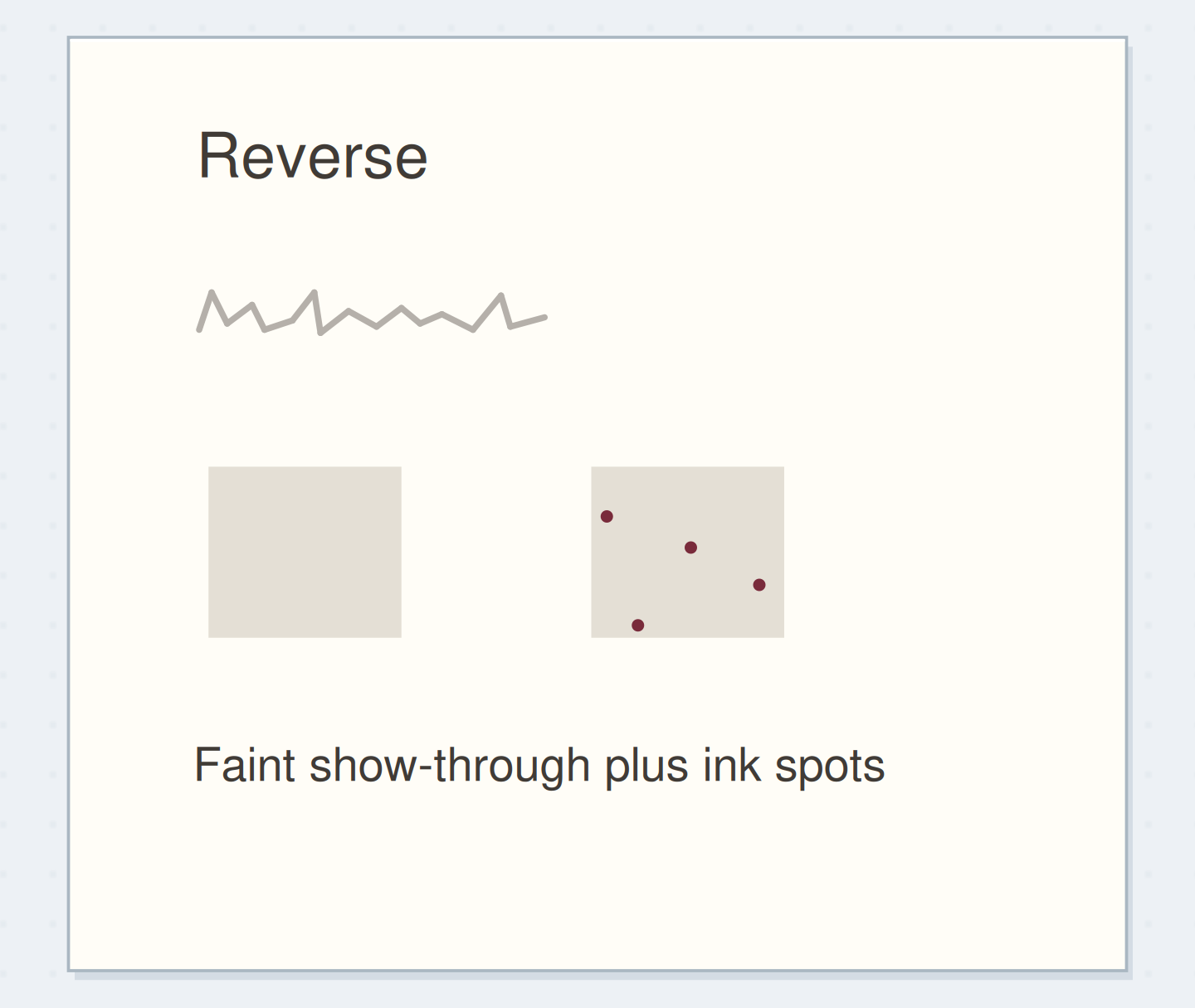
Write a brief note such as “one pass; crisp phrase,” “patch darker than writing,” or “reverse shows through.” If you perform a timed smear test, use separate marks and record the tested intervals; don't infer a dry time from looking at a shiny patch. A missing observation can stay blank. Avoid claims about permanence, waterproofness, or archival quality based on this grid. Those questions require different information and tests. The value of this page is that another version of you can understand the ordinary conditions under which these samples were made.
Write your swatch record
Record actual observations and unknown identities honestly.
Paper and tools:Cream notebook; blue, brown, gray pens
Question:Which color suits a small date?
Observation:Brown phrase stays distinct; patch is darker.
Your words have a place now.
Record actual observations and unknown identities honestly.
- Words on this card
- 24
Recover an overfilled or mixed-up cell
If a patch becomes saturated, label it “multiple passes” and make a fresh normal-writing sample below or on a second sheet. Don't compare it as though it matches the single-pass cells. If you forget an ink's identity, write “unknown” and keep any useful visible observation; guessing makes the reference less trustworthy. If the page bleeds, protect the sheet beneath it and switch to smaller writing samples. You can still learn which combination needs a lighter application without trying to turn the damaged patch into an attractive display.
Before comparing ink samples
Order the preparation before the operation that needs its result.
One workable order
- Label the paper and toolsSample labels identify which paper and tools made the marks.
- Make matched writing samplesA dry comparison requires samples that have first been made.
- Let the samples dryRead the phrases after drying, because the wet appearance can differ.
- Compare the dry phrasesStop when each cell has an identifiable tool, a dry writing phrase, and one observation relevant to your question.
Which check needs to come first?
The example shows one workable order. Record actual observations and unknown identities honestly.
Bring the grid back to a real page
Stop when each cell has an identifiable tool, a dry writing phrase, and one observation relevant to your question. Add the chosen date line to a normal entry using the same pen and application. Keep the grid accessible with a page reference rather than recreating it for every entry. When a refill, paper, or pen changes, make a new labeled sample instead of assuming the previous result transfers exactly. A compact, readable comparison is more useful than a large collection of unlabeled color patches you cannot reproduce.
Where this idea began
Want to follow the idea further? These community discussions and maker references are a good place to start.
- Ink swatching on lined paper
The search excerpt discusses swatching on everyday writing paper and keeping comparisons useful.
- How Inks Look on Different Papers
Demonstrates paper-and-ink comparisons using the same pen to hold one variable constant.