Gather a few things See what you’ll need
- An older journal entry you want to read
- A current pen, optionally a different color
- A little margin space or a separate page
Choose a page you actually want to revisit
Pick one entry rather than opening an entire notebook with a plan to review it all. A description of a trip, a making session or a small uncertainty can be a good starting point. You may skip any page. Rereading is an option within journaling, not a condition of having kept a useful journal.
In a community thread, a writer describes returning in a different pen color to answer earlier entries or note outcomes. Colorado State University’s double-entry assignment similarly keeps later responses beside earlier material. This personal version uses that separation to preserve two moments of writing without turning either into a final account.
Give an old sentence three possible companions
Each note adds a different kind of information to the display entry.
Context places the old uncertainty in its circumstances.
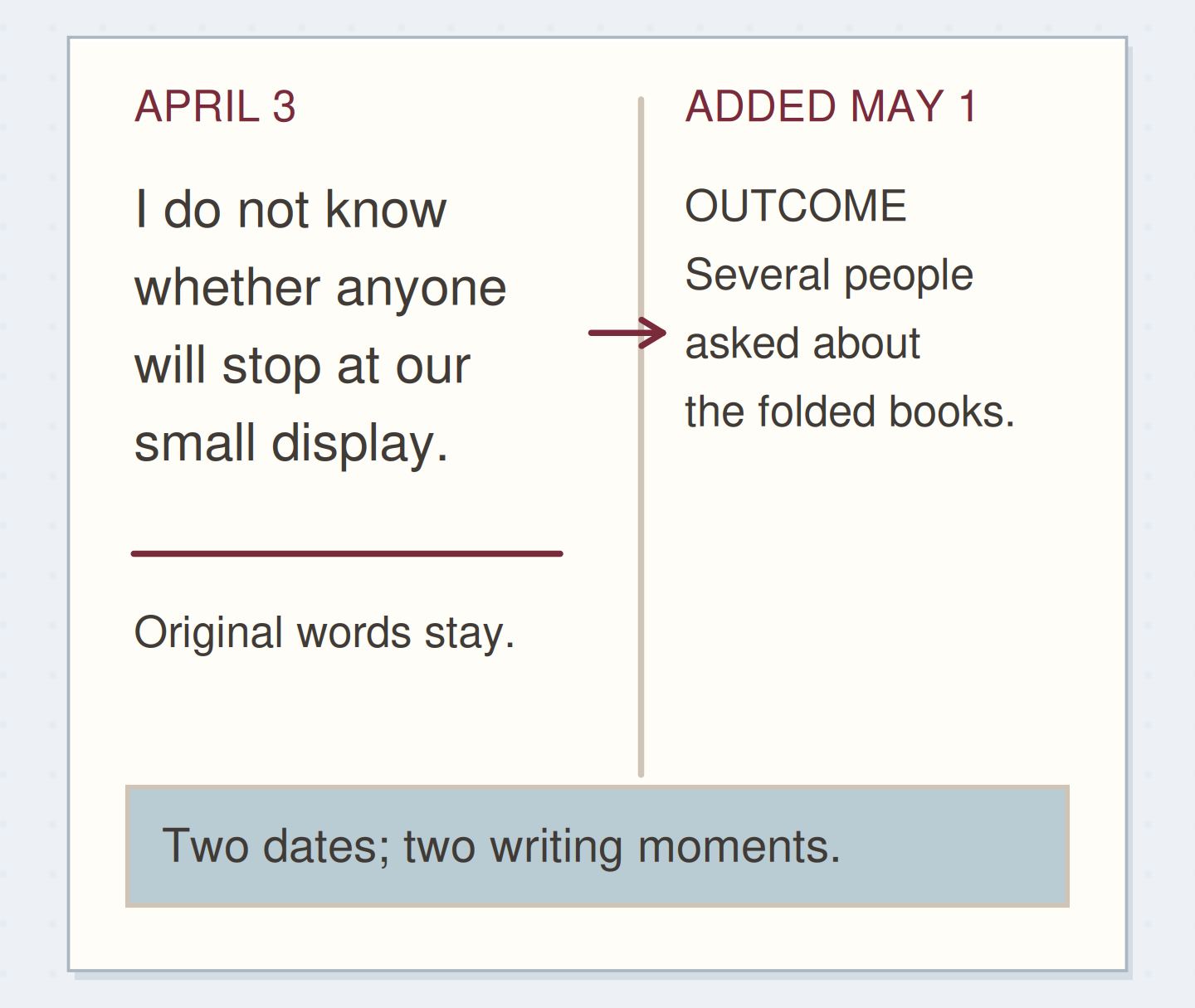
The note is clearly dated later.
Make the new voice visibly dated
Write today’s date before the first annotation. A different ink color can help you see additions, but the date does the essential work if the book is copied or viewed in grayscale. Use “Added later” if there’s any chance the note could be mistaken for part of the original entry.
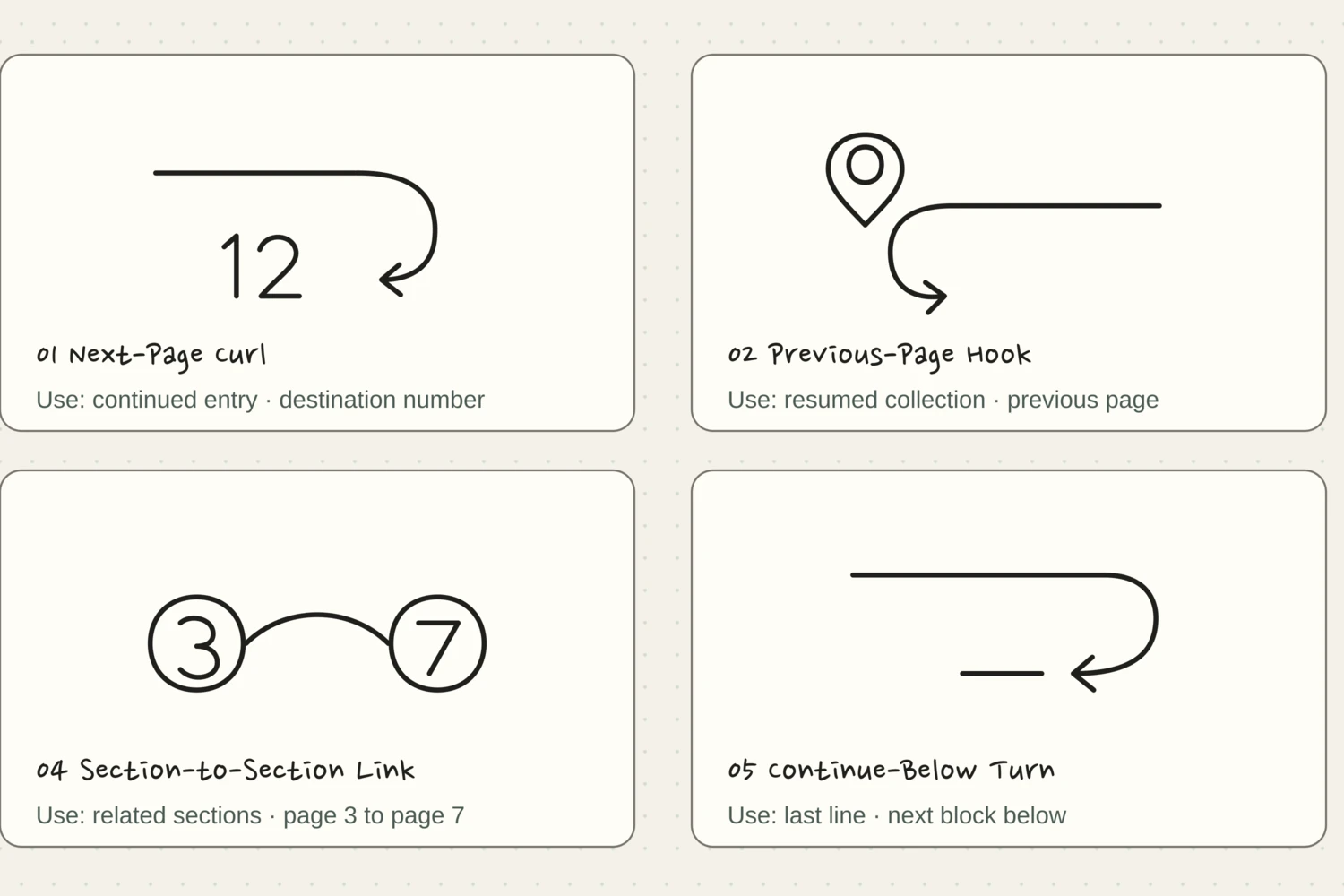
Leave the original words readable. If you want to correct a detail, write the correction beside it rather than erasing it. On a crowded page, add a small number beside the relevant sentence and put the matching number on a new page with the original page number or entry date. One simple reference is enough.
“A later note can accompany an old entry without replacing it.”
Give each annotation one clear job
A context note adds information that helps you understand the old sentence: “The room was still being painted that week.” An outcome note records what happened later: “The package arrived on Friday.” A question note responds from the present: “Was I waiting for permission to begin?”
Keep those jobs distinct. A question is not an established explanation, and an outcome doesn’t show what you could have known earlier. If a sentence tries to do all three jobs, split it or choose the most useful part. The small size of a margin note can help you keep the addition focused.
Write a dated response beside an old line
Use a sentence from your own journal or the example provided.
April 3: I don’t know whether anyone will stop at our display.
May 1 — Outcome
Several people stayed to ask how the folded books were made.
Your words have a place now.
The new note should remain distinguishable from the original writing.
- Words on this card
- 27
Annotate one original uncertainty
Old entry, April 3: “I don’t know whether anyone will stop at our small display.” Added May 1: “Outcome: several people stayed to ask how the folded books were made.” A second note says, “Context: this was our first time using the community-room table.”
The writer could add a question: “What made me imagine that a small display needed to resemble a large exhibition?” That question is labeled as a current thought, not as the hidden truth of the April entry. The original uncertainty remains visible. The page now contains both the anticipation and information that arrived afterward.
Correct a detail without erasing the record
The later correction can be precise and visible.
Starting version
Silent replacement makes the writing dates unclear.
When every sentence seems to need a correction
Choose the one correction that changes your understanding most. Leave stylistic awkwardness alone unless editing old prose is the activity you actually want. A journal entry can contain exaggeration, incomplete context and a temporary opinion without needing a full rewrite at every rereading.
If you notice a factual overstatement, correct the specific part. “Everyone left early” might receive “Added later: three people left; two stayed.” A community reply about performing in a journal suggests marking exaggerated wording rather than secretly replacing it. The useful move is to keep the correction visible, not to punish the earlier sentence for being imperfect.
Use a response page when the margin is too small
Title a fresh page “Reading April 3 on May 1.” Copy only the short phrase you’re answering from your own entry, then write your response below it. Add a return reference on the original page if you want to find the response later. You don’t need a complicated annotation key.
For a longer reflection, use the new page freely and let the original margin hold only the reference. This keeps your handwriting comfortable and the old page readable. The point is a clear relationship between two pieces of writing; tiny writing squeezed into every available edge doesn’t improve that relationship.
Choose where the response will fit
Use the space that keeps both pieces of writing legible.
A short note can sit beside the relevant line.
Use a date even when changing ink color.
Finish with a limit you can see
After one to three notes, ask whether another annotation would add information or repeat the response already there. Stop when you’ve recorded the context, outcome or question that brought you back. You can date a future addition on another occasion if the page still has something to offer.
A later note can accompany an old entry without replacing it. Close the notebook with both voices intact. You don’t need to decide which version is the definitive one. The value of the annotation is that a future reader, including you, can tell what was written then and what became possible to say later.
Where this idea began
Want to follow the idea further? These community discussions and maker references are a good place to start.
- Do you reread your journal entries some time after writing them?
A reply describes returning with a different pen color to answer an earlier entry or note how events turned out.
- I can’t stop performing
A reply suggests marking exaggerated wording and adding a factual correction in the margin instead of silently rewriting the entry.
- Double Entry Journal Assignment Example — Colorado State University
Places a later reader response alongside earlier writing, keeping the material and commentary visibly distinct.