Gather a few things See what you’ll need
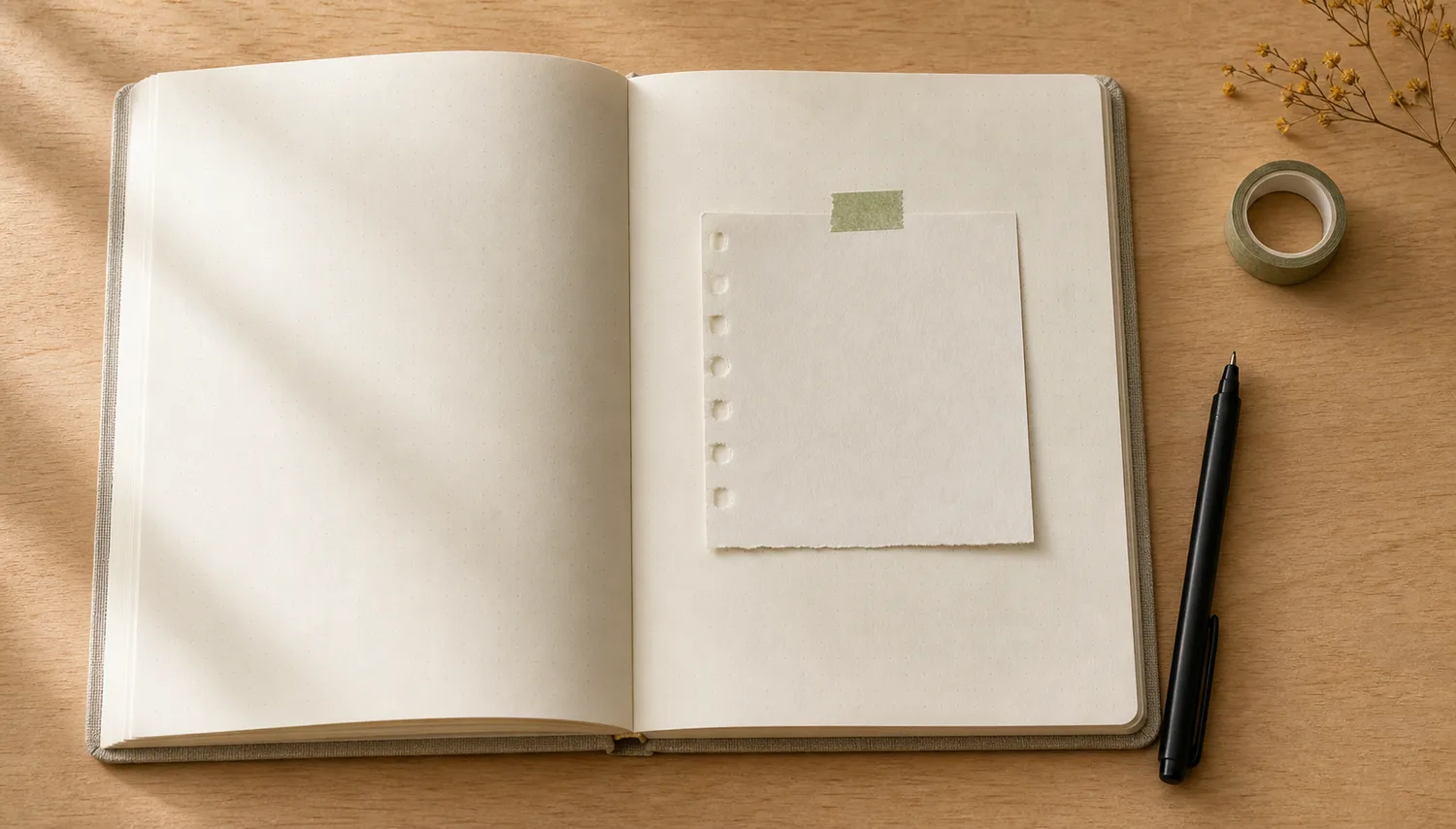
- Any small piece of paper
- A pen or pencil
- An envelope, clip, or folded sheet to keep it in
Choose paper you’re willing to use
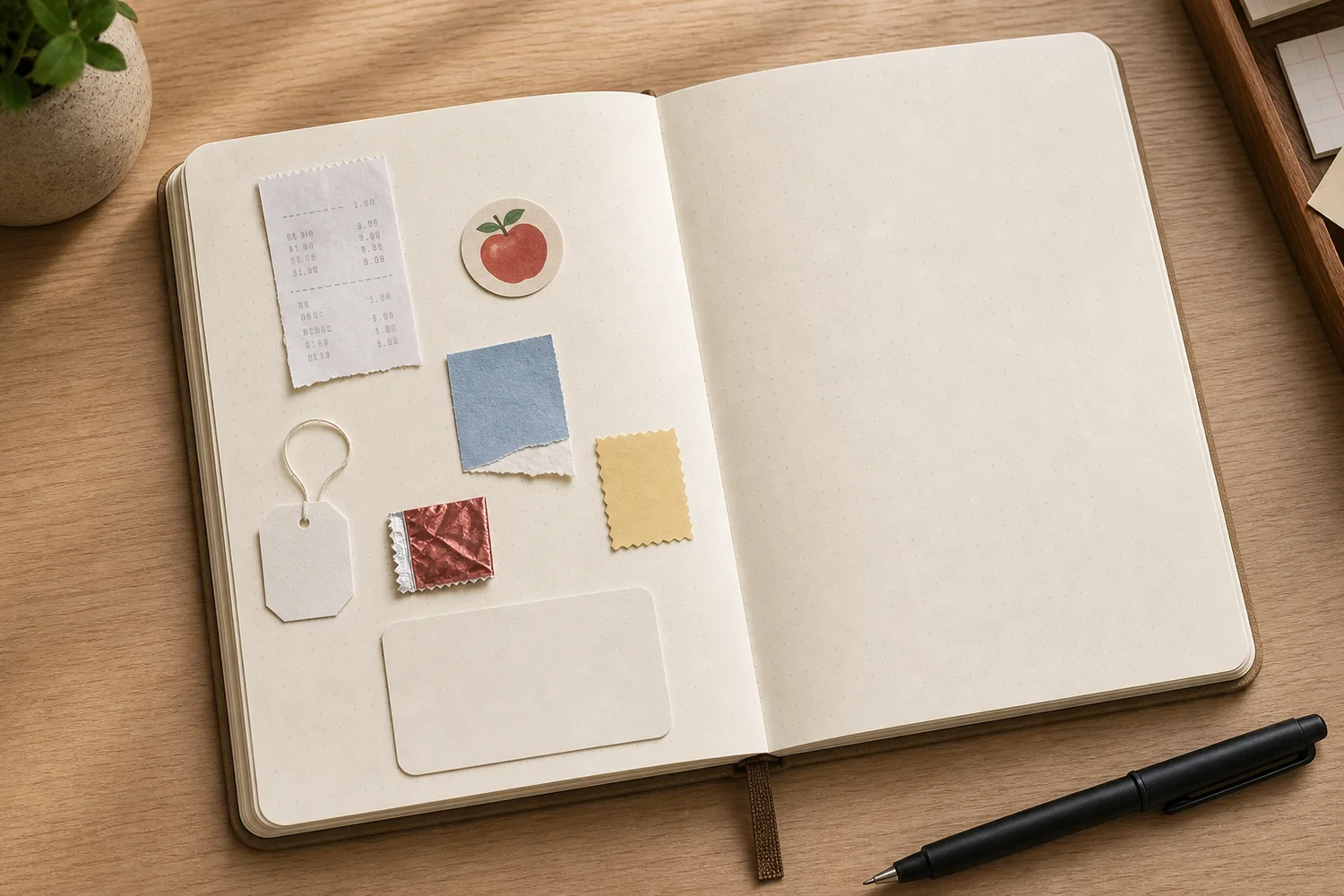
Look for enough blank space to hold the date and a couple of sentences. A piece roughly the size of your palm is plenty. Avoid anything you still need, such as a receipt for a return. If there’s printing on the other side, that’s fine.
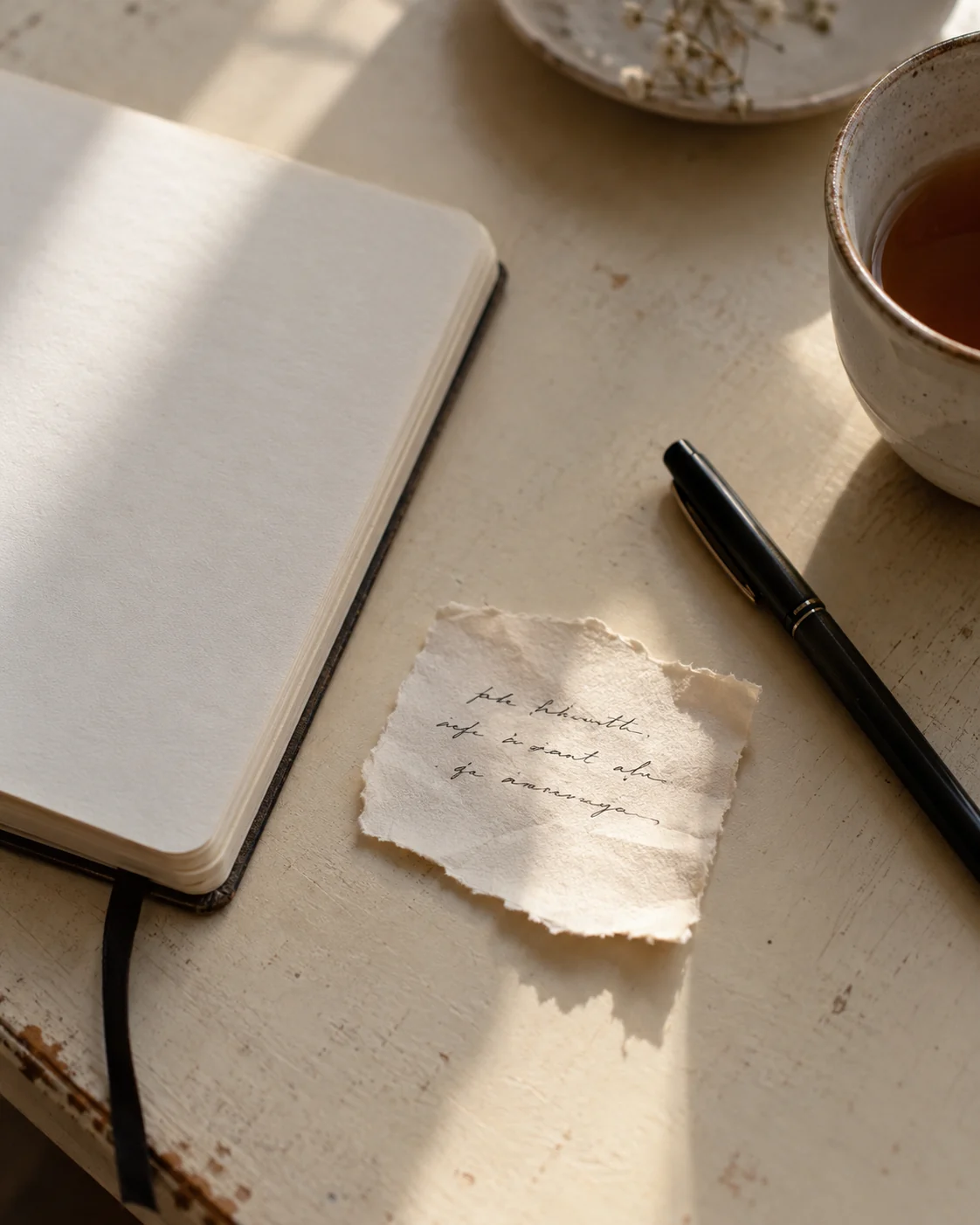
Write the date before you think about a title. This gives the little note a place in time and leaves you with one fewer decision. You can use a full date or write the month and day; choose whatever you’ll understand when you find it later.
What part of today would you like back?
You don’t have to describe your whole day. Try remembering a sentence someone said, a small change in the weather, or something you nearly walked past. The useful question is: what would disappear if I didn’t write it down?
Instead of ‘Had a nice walk,’ you might write, ‘The pavement was still warm, and someone was playing piano with their window open.’ Neither sentence is wrong. The second gives your future self something to picture. Use a detail you actually noticed; an ordinary true detail beats an impressive invented one.
Add the part that makes an ordinary walk yours
Switch the broad memory label for two concrete clues.
General impression
Had a nice walk is already a valid record. It preserves your broad impression but leaves out the sensory clues that would help you picture this walk later.
“You can keep an honest observation without making it uplifting.”
Write it the way you’d tell someone
Imagine someone asking, ‘Anything you want to remember from today?’ Answer in your own words. ‘We went out for bread and came home with peaches’ is already a journal entry. You don’t need to explain what it taught you about life.
If you can’t find the beginning, borrow a small opening: ‘I noticed…’, ‘Someone said…’, or ‘For a minute today…’. Finish the thought, then read it once. Add a name or a place only if you think you’ll need that clue later.
Nothing pleasant comes to mind? You can keep an honest observation without making it uplifting. ‘A difficult afternoon. Dinner was toast. I’m glad the kitchen is quiet now.’ You’re allowed to record the day you had.
Write the answer you would say aloud
Keep one moment in ordinary language, then add a clue only if a future you would need it.
We went out for bread and came home with peaches.
The small stall near the library, Saturday afternoon.
Your words have a place now.
The filled card is a sample. Replace any part with your own words; leave a field empty if it does not help.
- Words on this card
- 18
Give the scraps one place to land
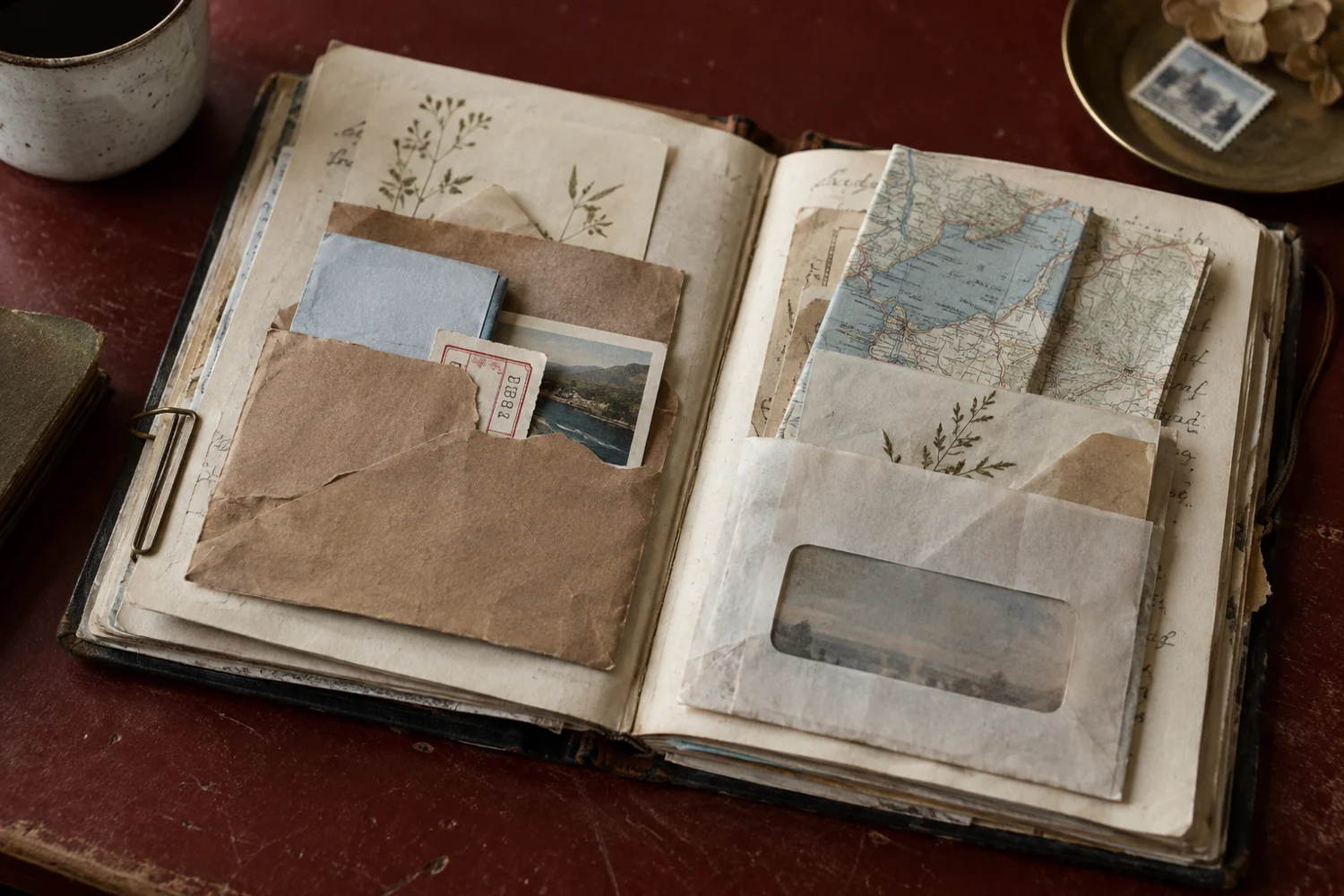
Put your note in an envelope, under a clip, or inside a folded sheet of paper. Write a month or a simple label such as ‘Small things I kept’ on the outside. Use a place you can reach easily, perhaps beside your usual pen.
The container doesn’t need decorating before it can do its job. If loose paper tends to vanish in your house, fold a larger sheet around it and put that in a drawer you open often. Keep all the notes together rather than making a new hiding place for each one.
Choose a home you can reach again
Pick the simple container already available to you.
One month label can make the collection findable.
Put the scraps in one envelope and give it a useful outside label such as September notes. Keep it near your usual pen or another place you return to. The envelope can do its job immediately; its front does not need decorating first.
You haven’t fallen behind
If you forget for a few days, put today’s date on the next scrap and continue. You don’t owe the missing dates an entry. If a memory from last week suddenly returns, you can write ‘Remembering Tuesday’ and record it now.
If every note is turning into homework, make the next one smaller. Keep a single sentence, a short list, or even a quoted phrase with a little context. You can also skip a day because you don’t feel like writing. These are your notes, not attendance records.
Date a returning memory without filling missing days
Separate when you are writing from when the memory happened.
Written:5 September 2026
Remembering Tuesday’s walk
Someone had left a bowl of water outside for passing dogs.
Your words have a place now.
The dates are sample context, not an attendance record. You can resume today without creating entries for the days in between.
- Words on this card
- 18
The notebook can join you whenever you like
When you’re ready, glue one scrap into the notebook or tuck a few into a pocket. You don’t have to rewrite them neatly. Crossed-out words and mismatched paper can stay; they belong to the moment when you wrote them.
For today, stop when you’ve dated one note, written one thing you want to keep, and put it somewhere findable. No envelope? Fold the note once and place it inside any book you use regularly. Starting can be this small.
Where this idea began
This guide grew from our original Instagram post. The examples and explanations here expand on that idea so you can try it at your own pace.