Gather a few things See what you’ll need
- A notebook or loose sheet
- A pen
- A pencil for rough notes
Name the date and the viewpoint
Write “Life as it looks today” with the full date. Add one sentence about where you are writing and what period you have in mind. This prevents a later reader from mistaking one week’s routine for a universal description of the year. A December page can describe December rather than all twelve months.
Choose a return point that makes sense to you, but do not backdate a late entry. If you write a birthday snapshot three weeks afterward, include both dates if useful. The actual recording date is part of the record, not a mistake to disguise.
Choose a few questions worth repeating
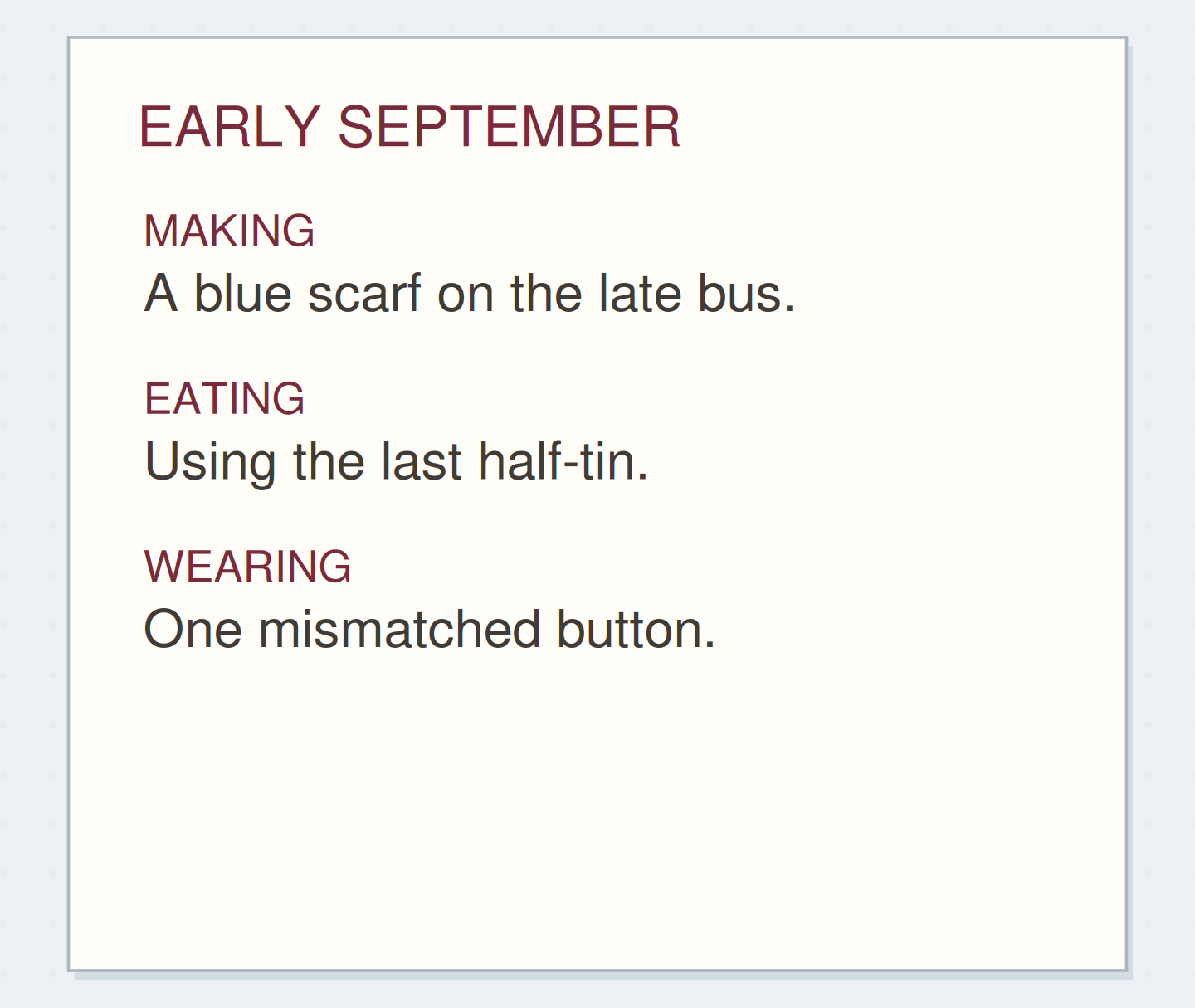
Try six fields: Home base, Usual route, Everyday company, Table or desk, Repeated meal, and Something in progress. These invite concrete answers without requiring private financial or medical information. Replace any field that does not fit your life; you do not need to create a household or commute to complete a form.
On a spread, put three fields on each page with several lines beneath each. On one A5 page, use short paragraphs instead of boxes. Keep the same labels next year only where comparison would interest you. The structure should make returning easier, not freeze your identity.
See how repeatable facts make a comparison
A dated viewpoint comes before the yearly contrast.
The date prevents a snapshot from claiming to describe every day.
Use the actual recording date.
“The annual page is finished when it preserves a recognizable arrangement of your ordinary life on a named date.”
Take a portrait of one small flat
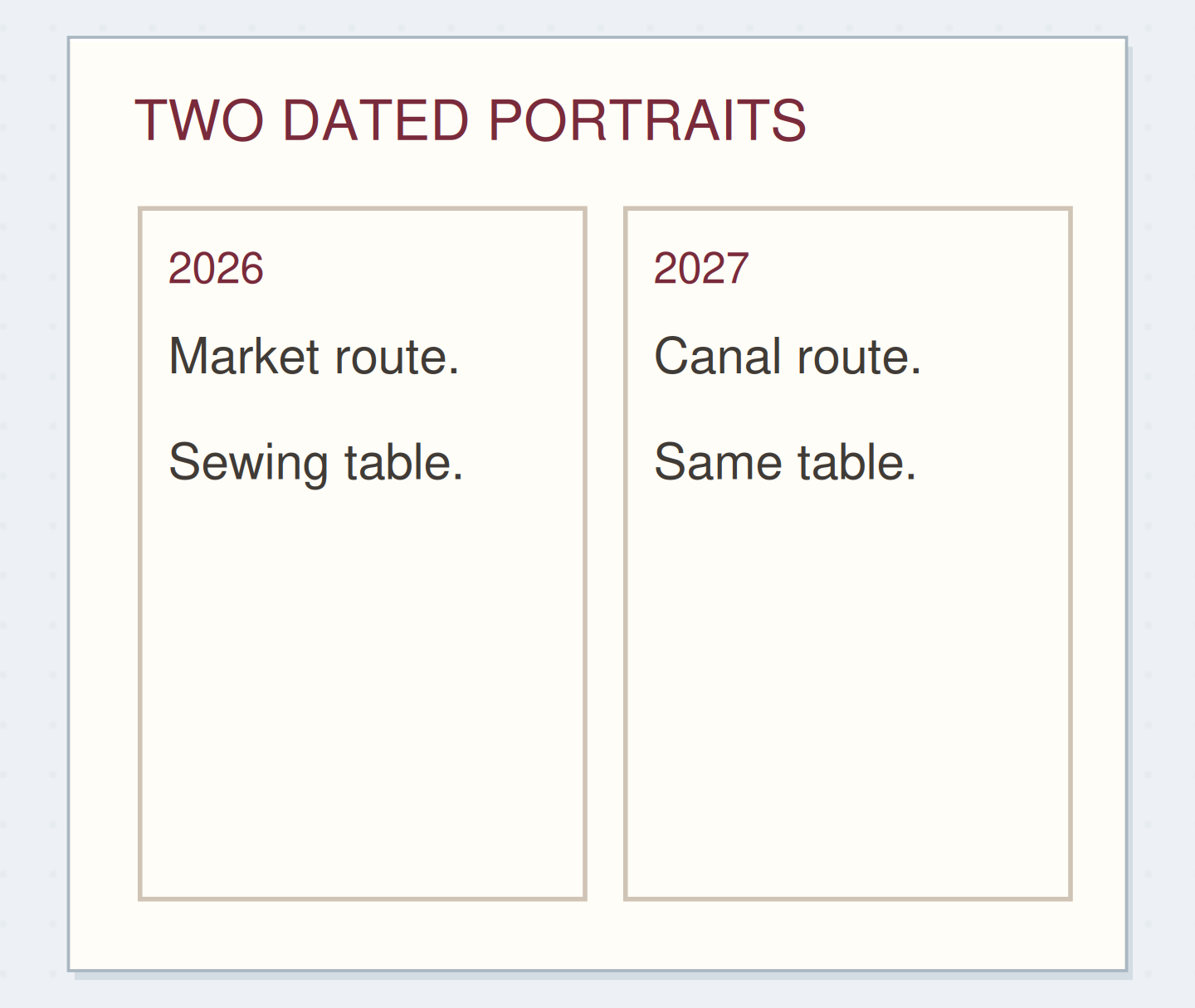
An illustrative snapshot reads: Home base: upstairs flat, the room with the low shelf. Usual route: through the covered market after work. Everyday company: Maya at lunch; the downstairs neighbor on bin night. Table: sewing machine at one end, dinner at the other. Repeated meal: rice with whatever needs using. In progress: a curtain that is still too long.
None of these lines announces a milestone. Together they describe the setting in which milestones and ordinary days happen. Add a little floor-plan rectangle or a view of the table only if it helps identify the scene; the words already make a complete portrait.
Write a dated ordinary-life portrait
Edit the example into a record of your own. Leave out anything you do not know.
As of:8 September 2026, upstairs flat
Usual route:Through the covered market after work
An everyday surface:Sewing machine at one end, dinner at the other.
Your words have a place now.
Your page describes a view of the year, not every day within it.
- Words on this card
- 27
Compare facts before drawing conclusions
When you have an earlier page, place the two beside each other. Note one thing that stayed, one thing that changed, and one answer you cannot compare. “Still eating at the sewing table” is a fact. “I have made no progress” is a much larger judgment that the page cannot establish.
You can enjoy differences without rating them. A shorter commute, a different housemate, or a missing favorite shop may carry mixed feelings. If you want reflection, add it in a separate paragraph beginning “Reading this now.” That keeps the current response distinct from the original portrait.
When you wish you had started earlier
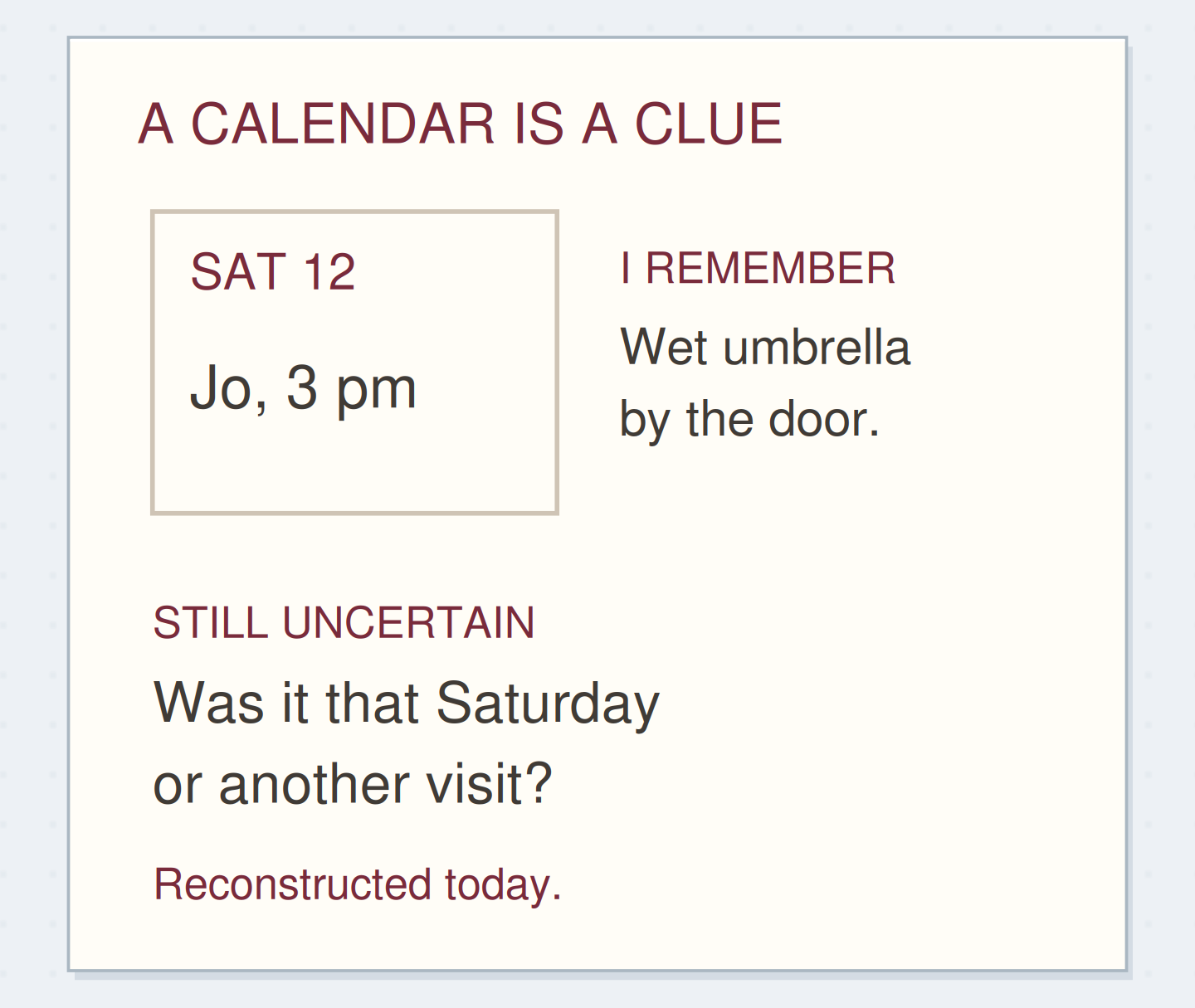
Make today’s snapshot first. If you want an older one, label it “Reconstructed now” and use only details you can remember or check. Old calendars, photographs, and notes may help, but leave uncertain fields open. An incomplete earlier portrait is more useful than a confident invention.
Do not try to produce ten identical pages in one sitting merely to make the series look established. Choose one earlier year with a clear setting and write what you know. The calendar-memory rescue guide can help you distinguish a planned event from something that actually happened.
Label a reconstructed earlier portrait
Move the reveal to see which information changes the record.
Before the revision
An unlabelled reconstruction can resemble a contemporary entry.
Give the portraits a simple route back
Keep an index line with the year, recording date, and page number. If you use a new notebook each year, add the notebook’s date range or label. A single reference in the next journal can connect the series without requiring you to move or copy the old page.
You can include a small photo of an everyday place rather than a formal portrait. If the photo was taken on a different date, say so. A currently list can sit nearby for more temporary preferences, while this snapshot keeps the wider arrangement of home, company, and routine.
Choose a route back to the yearly pages
Try the form that matches the evidence or space you have.
Year and page number may be enough.
Keep the reference where you would look for it.
Let it remain one view
The annual page is finished when it preserves a recognizable arrangement of your ordinary life on a named date.
Read for unexplained shorthand, add a place name where needed, and stop. You do not need a final lesson, a ranking of the year, or a resolution for the next one. The point is to leave a clear view that another version of you can encounter later.
Where this idea began
Want to follow the idea further? These community discussions and maker references are a good place to start.
- Unique things you add to an about me page?
The discussion describes repeated snapshots with changing everyday preferences.
- Ali Edwards: Currently storytelling prompts
Edwards describes present-tense everyday storytelling and credits Kristin Tweedale’s contribution.