Gather a few things See what you’ll need
- A notebook or loose sheet
- A pen
- A pencil for rough notes
Decide what “currently” means
Write a date and a useful window: this week, the start of a new job, or the first month in this apartment. Choose a period you can describe without research. A page about this morning can be just as complete as one about September. Avoid mixing childhood favorites with today’s routines unless you label the difference.
Choose five prompts from what is actually present: making, eating, wearing, listening, learning, noticing, or putting off. Five is an example-sized boundary, not a requirement. Leave out any prompt that asks you to perform a more interesting life than the one you have.
Give each answer a second line
On an A5 page, leave the upper two lines for the date and title. Below, write each prompt with enough space for an answer and a short explanation. You can simply skip a line between entries. A ruler is optional; comfortable handwriting matters more than perfectly equal gaps.
The first line identifies the thing. The second says where it belongs in your day. “Listening: the same piano album” becomes useful when you add “while I wash yesterday’s dishes before work.” This extra circumstance turns a preference into a small scene without demanding a paragraph.
Watch a list become a snapshot
Add an answer, then the circumstance that makes it this week.
Three prompts make room without deciding the answers.
Skip a prompt that does not describe your life.
“The page is finished when a few answers sound recognizably like your life this week.”
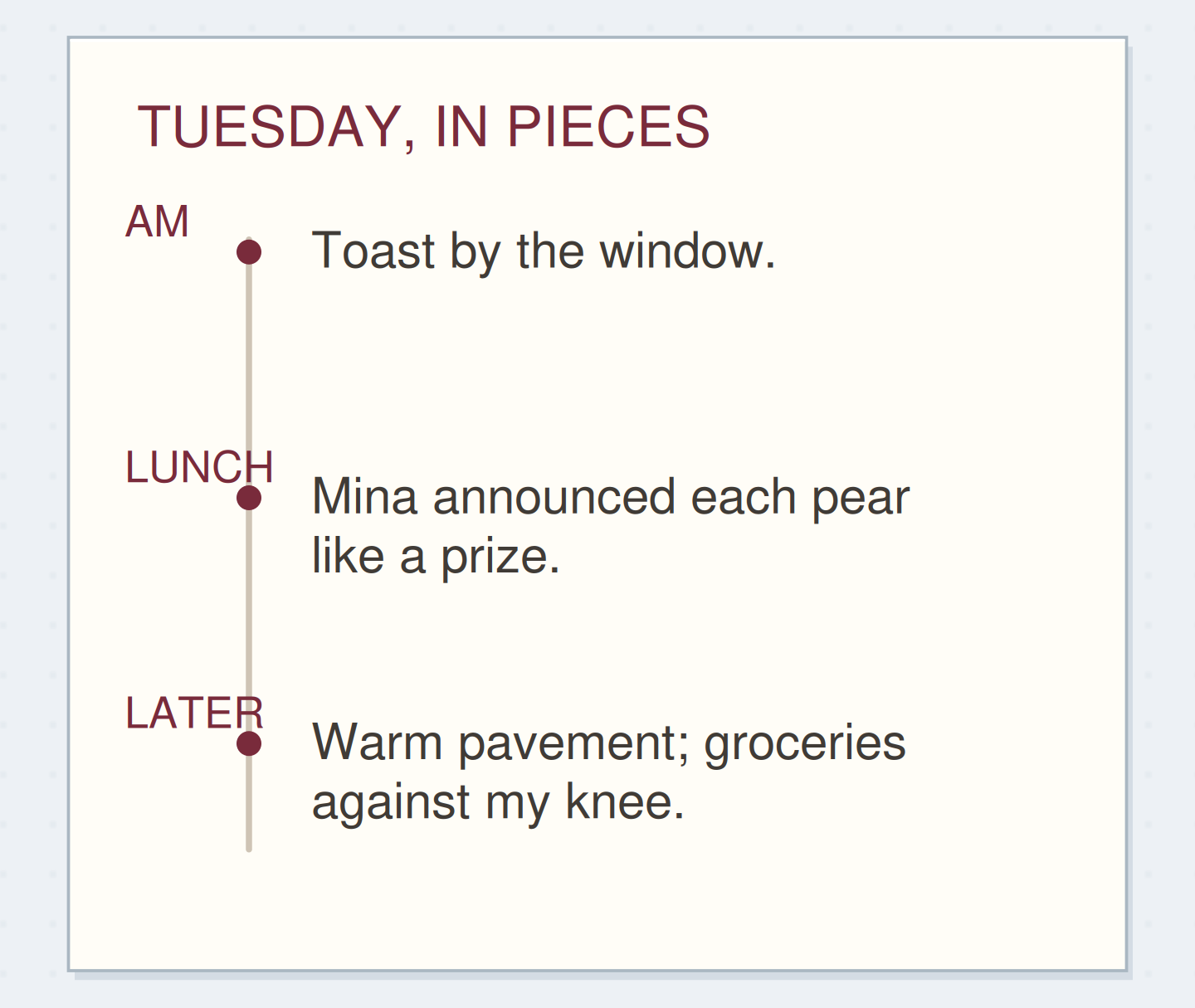
Try a Tuesday snapshot
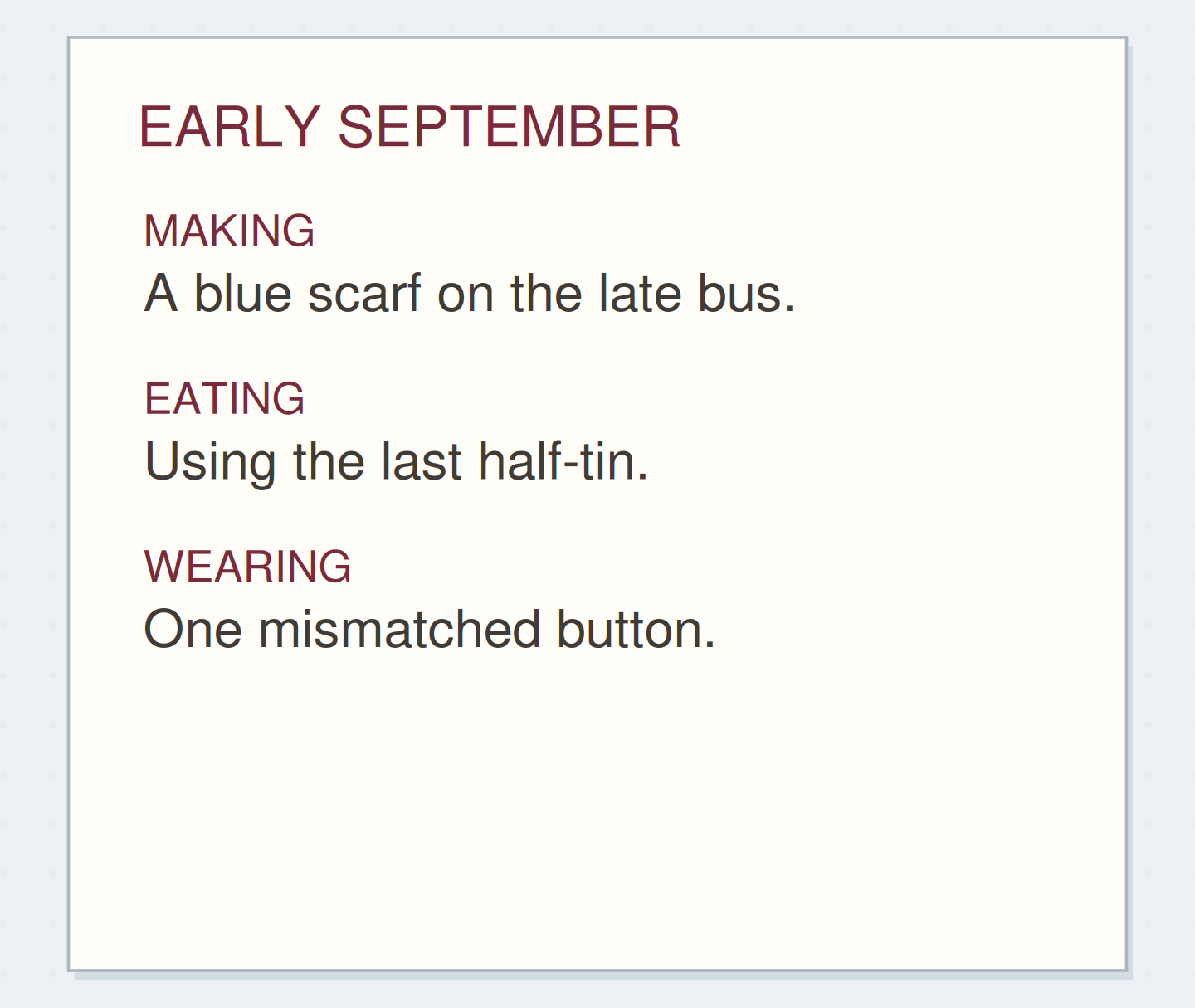
Here is an illustrative page: Making: a blue scarf, slowly, on the late bus. Eating: toast with lemony beans because there’s half a tin in the fridge. Wearing: the green cardigan with one mismatched button. Learning: the names of three neighbors. Putting off: choosing a frame for the kitchen print.
Notice how nothing needs to be impressive. The cardigan’s button and unfinished frame distinguish this particular week. Add “Recorded Tuesday evening, early September” above the list. If one answer suddenly becomes a longer story, give it another page and leave a page reference beside the original line.
Make your own currently pair
Edit the example into a record of your own. Leave out anything you do not know.
Currently making:A blue scarf
Where it happens:On the late bus
A detail:The loose wool catches on my coat button.
Your words have a place now.
A present interest can stay unfinished.
- Words on this card
- 22
Let a plain answer stay plain
Some prompts produce a quick factual answer and nothing else. Keep it. You don’t need to force a lesson out of lunch or explain why a color matters. A snapshot can contain pleasure, irritation, repetition, and uncertainty together. “Not sure yet” is a legitimate answer when you are between routines.
If you catch yourself listing what you intend to do, change the verb or move the line. “Wanting to learn pottery” describes a present interest; “taking pottery classes” describes an activity only if it is happening. That small distinction keeps the portrait honest when you return to it later.
Replace one vague word
If the page says “busy, tired, lots of work,” don’t start again. Pick one line and ask what a visitor could have noticed. Perhaps your lunch container is still beside the sink at nine, or your desk holds three half-finished lists. Write that detail underneath the general description.
If you cannot remember, move closer to the present. Look around the room you are in and complete “within reach.” A library receipt, knitting needle, or untouched glass of water is enough. This rescue works because it changes the question from an assessment of your life to an observation you can make now.
Replace a verdict with an observation
Move the reveal to see which information changes the record.
Before the revision
A general assessment offers little to picture.
Repeat the useful prompts
A later snapshot is easier to compare if two or three prompts repeat. Keep “eating” and “making,” for instance, then add one question that fits the new season of life. You are allowed to retire a prompt when it stops producing interesting details. The page is a record, not a fixed questionnaire.
For a broader yearly portrait, follow the annual ordinary-life snapshot guide. For one day in sequence, use an ordinary-day timeline instead. Those formats answer different questions: the currently list shows what surrounds you now, while a timeline shows how the day moved.
Choose what to keep next time
Try the form that matches the evidence or space you have.
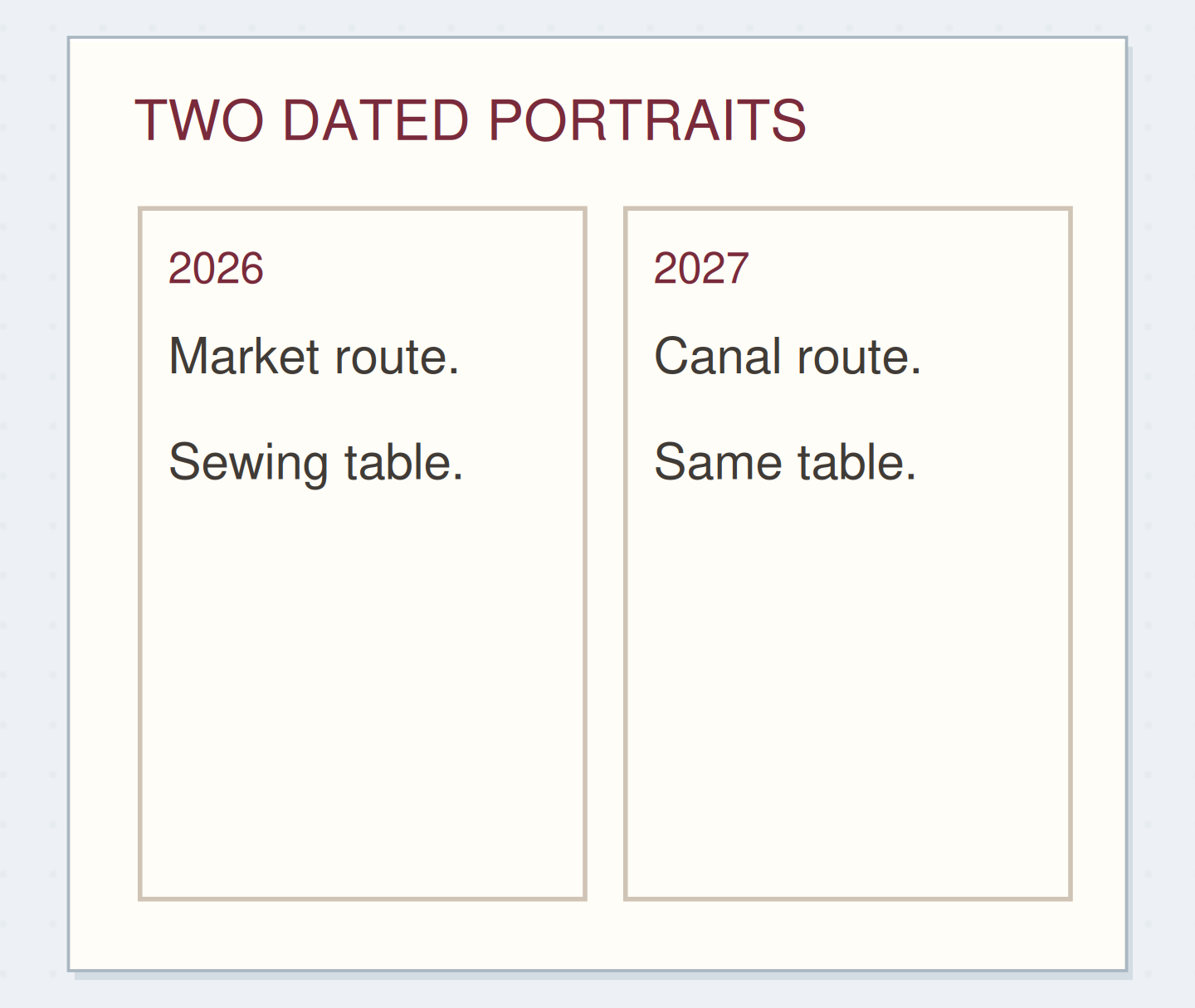
A repeatable question can show a changing routine.
Keep the prompt when the comparison interests you.
Stop while it is still a snapshot
The page is finished when a few answers sound recognizably like your life this week.
Read it once for missing context. Add a full name or location only where a future reader would otherwise be lost. Then close the notebook. There is no need to schedule every future list today. The next snapshot can happen when a routine changes, a notebook starts, or you notice that your usual mug has become a different one.
Where this idea began
Want to follow the idea further? These community discussions and maker references are a good place to start.
- Unique things you add to an about me page?
The discussion describes repeated snapshots with changing everyday preferences.
- Ali Edwards: Currently storytelling prompts
Edwards describes present-tense everyday storytelling and credits Kristin Tweedale’s contribution.