Gather a few things See what you’ll need
- A notebook or loose sheet
- A pen
- A pencil for rough notes
Choose the season you experienced
Write a period that makes sense where you live. It can be a named season, the school holidays, the rainy weeks, or the months of a particular work pattern. Add dates or an approximate range. You do not need to borrow another place’s weather or traditions to make the page recognizable.
Decide whether you are collecting notes during the period or looking back afterward. If you start midway through, label the span you can actually describe. A record of three weeks is complete on its own; it does not have to stand for the whole season.
Use firsts, repeats, and changes
Make three loose groups: First this season, Kept repeating, and Quietly changed. The first might hold the first indoor dinner after warm evenings. Repeats might include a weekend meal or a route. Changes can record something that disappeared from the routine or took a different place.
Leave room for short scenes rather than single nouns. “Cardigan” is less useful than “the spare cardigan stayed on the chair after dinner.” Use a list down one page, with a little space between the groups. A decorative seasonal border is optional and should not take the writing room.
See a season through the way a home is used
The same season can hold first occasions, routines, and quiet changes.
An indoor dinner marks a specific change in use.
Your season does not need someone else’s traditions.
“The seasonal page is finished when its entries describe the period you named at the top.”
Keep an early-autumn household
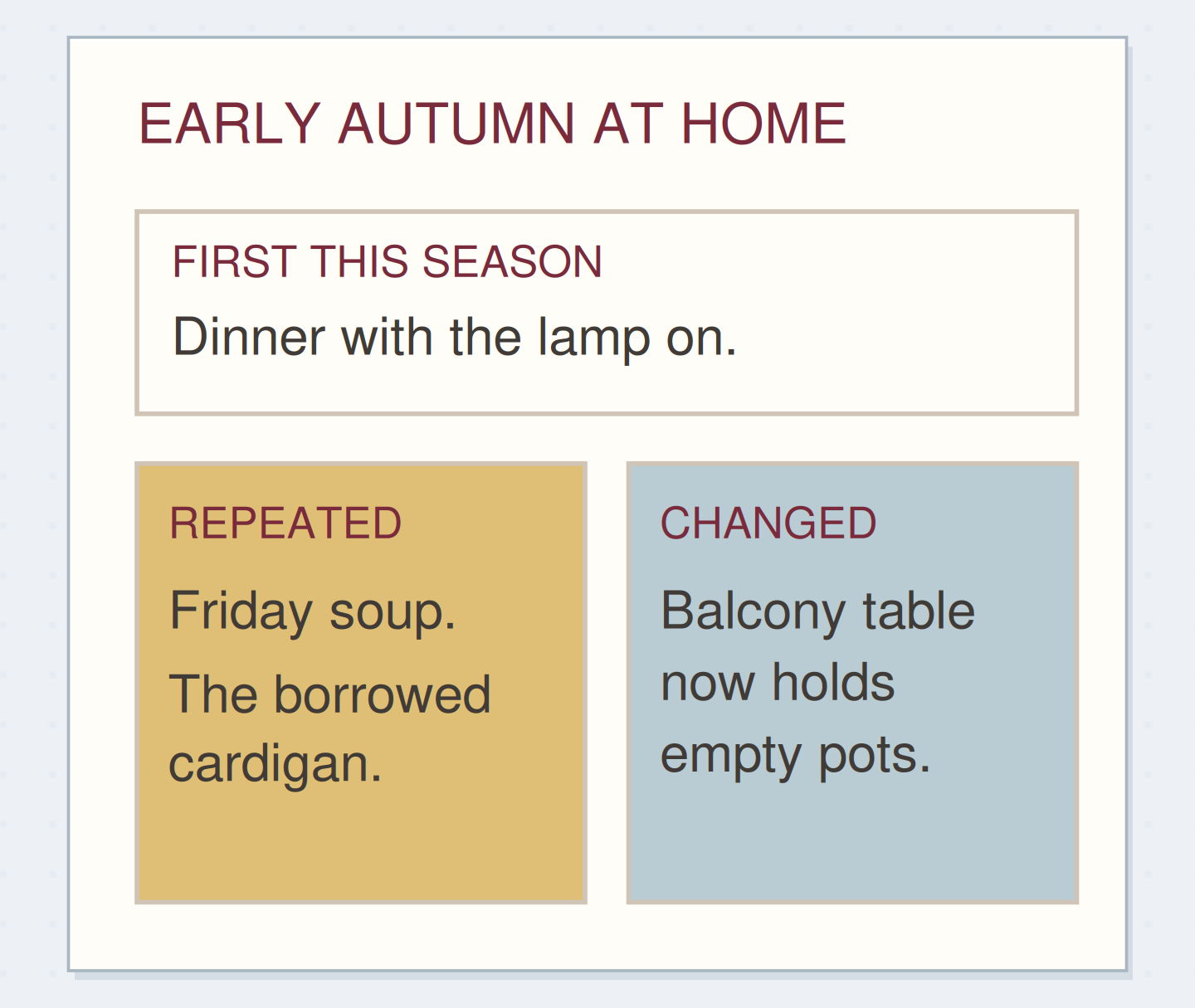
Here is a fictional example: First: ate dinner at the kitchen table with the lamp on. Repeats: Friday soup in the deep bowls; shoes lined beside the door after wet walks; the cardigan borrowed by whoever sat nearest. Changed: the balcony table became a place for empty pots instead of breakfast.
These entries describe use, not a generic picture of autumn. A small drawing of the lamp or chair can serve as a heading. Add dates to individual entries only when you know them or when timing contributes to the memory.
Write a lived seasonal list
Edit the example into a record of your own. Leave out anything you do not know.
First this period:Dinner at the kitchen table with the lamp on.
Kept repeating:Friday soup and the shared cardigan.
Quietly changed:The balcony table holds empty pots instead of breakfast.
Your words have a place now.
A short seasonal record can include continuity as well as change.
- Words on this card
- 31
Separate what happened from what you hoped for
If you also have a seasonal wish list, keep it on another page or label it clearly. “Wanted to make soup every Friday” is an intention; “made soup on two Fridays” is a record. Neither needs to be treated as a success or failure for this memory exercise.
The page can include an anticipated activity that did not happen, but write the real story: “We kept planning the picnic and met in the kitchen instead.” That sentence may say more about the season than an unchecked box beside the original plan.
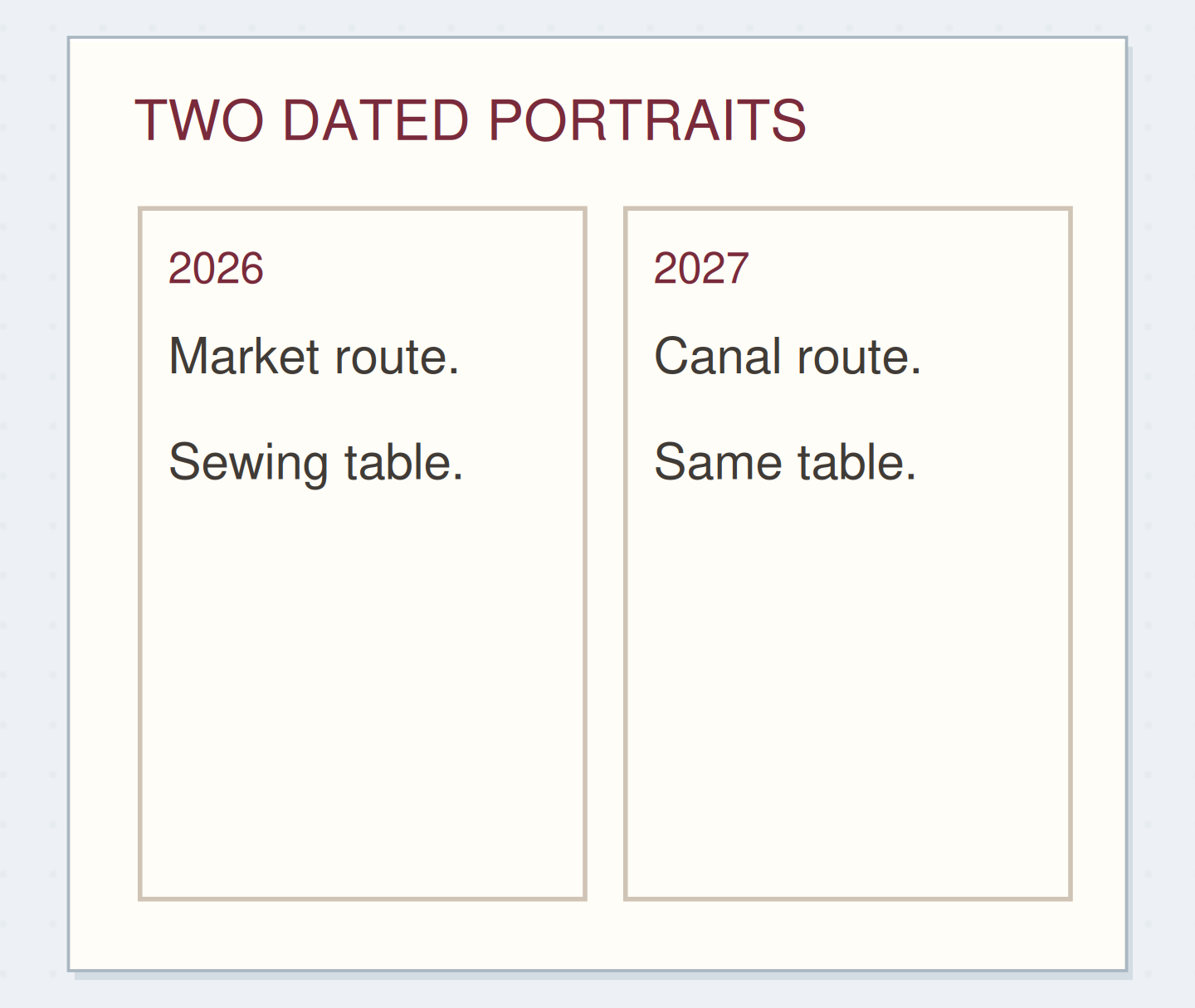
When this season looks like the last one
Choose one familiar routine and inspect its circumstances. Who is there now? Which room holds it? What time of day does it happen? A repeated meal may be cooked by someone different, or the same route may now be walked with a new companion.
If nothing changed, write that too. Continuity can be part of a useful record. “Still soup in the chipped bowls” does not need a dramatic contrast. Avoid searching for a lesson merely because two pages share many details; the resemblance may be what you want to see later.
Look closer without inventing change
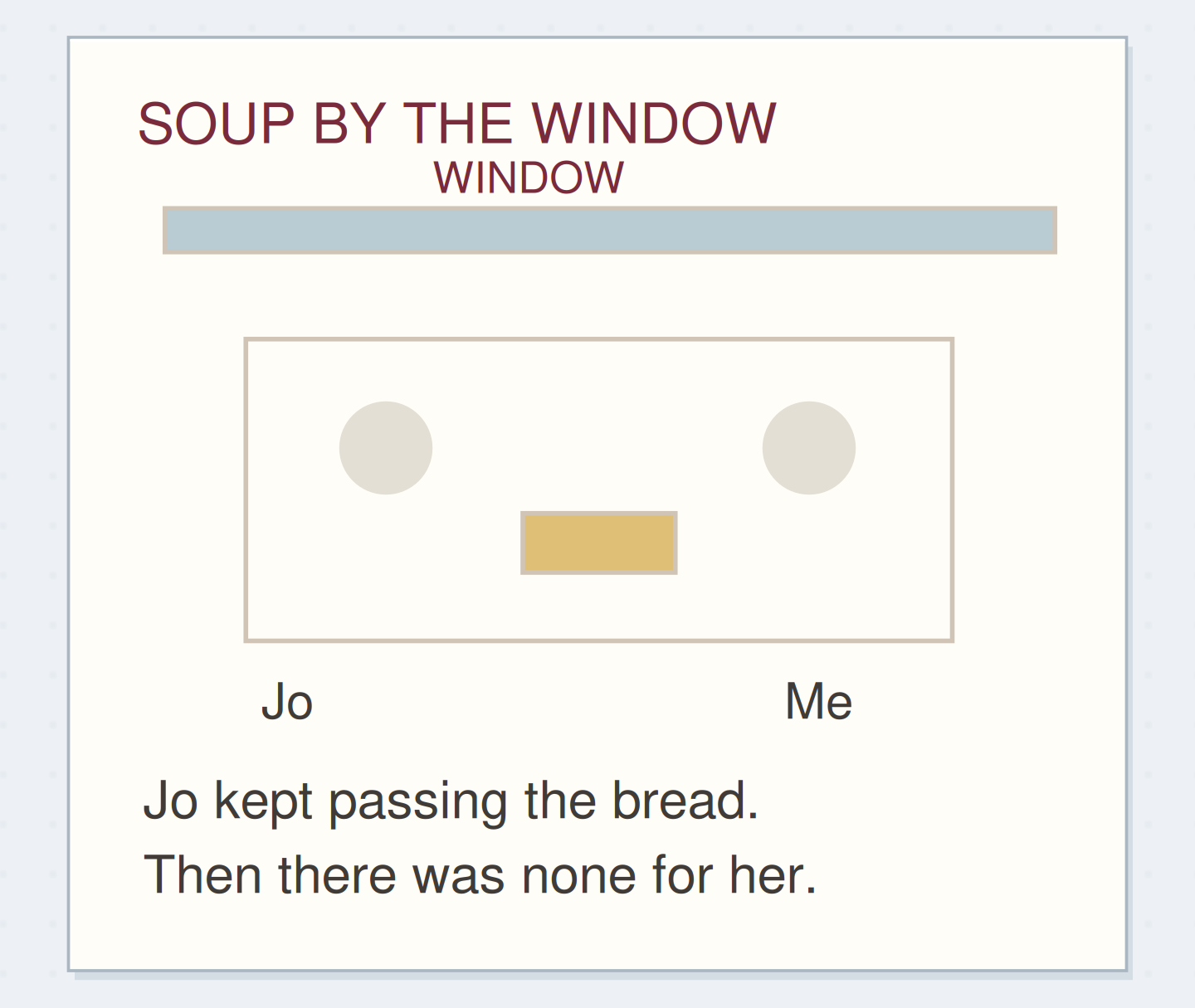
Move the reveal to see which information changes the record.
Before the revision
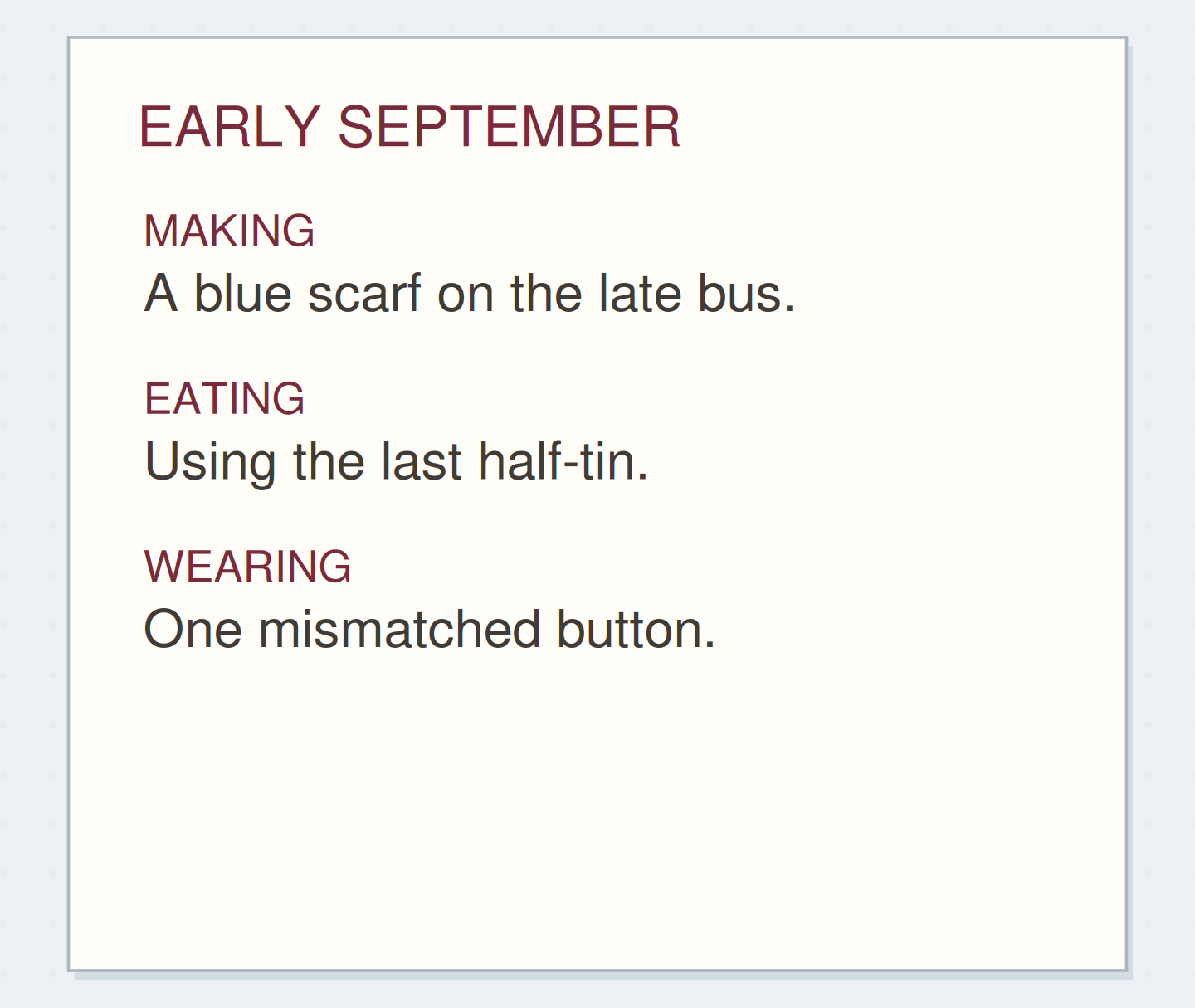
A list of nouns hides both continuity and small differences.
Choose one physical trace if it helps
A handwritten menu, a small copied calendar note, or a plain label from a shared occasion can support the list. Add the sentence that explains its connection. You do not need to gather seasonal objects, and the page works without glued material at all.
If you want to compare seasons later, keep the three group labels and change the period heading. Link the annual ordinary-life snapshot for a broader portrait. This page can remain the smaller record of what repeated and shifted during a particular stretch of days.
Choose a trace that contributes context
Try the form that matches the evidence or space you have.
The routine can be complete without an attached object.
Leave writing space clear.
Close the list at a clear boundary
The seasonal page is finished when its entries describe the period you named at the top.
Add the date you stopped collecting notes and leave any remaining space alone. A late memory can be added with its own date, but there is no need to keep extending the season until the page looks full. You have kept a few real signs of how you lived, and that is enough for this particular list.
Where this idea began
Want to follow the idea further? These community discussions and maker references are a good place to start.
- Monthly community prompts
Participants suggest seasonal and holiday prompts as well as looking back over change.
- Ali Edwards: March documenting
The post demonstrates collecting everyday stories across a month with a flexible amount of decoration.