Gather a few things See what you’ll need
- Three existing colors
- Paper scraps
- Pencil and ruler
- A retained visual reference
- Usual writing pen
Choose an exercise 4 things to try as you read
Borrow a color relationship from something nearby
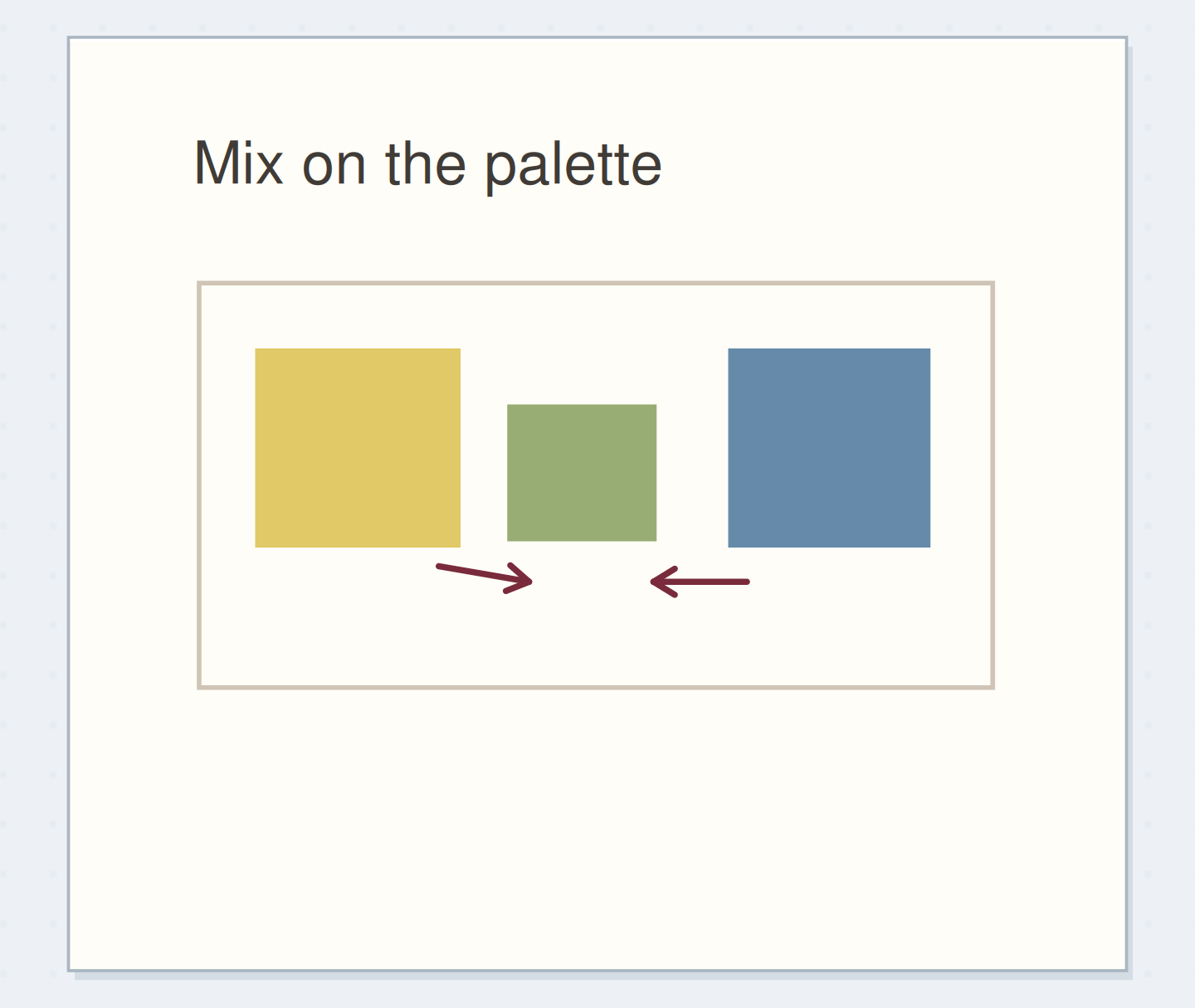
Choose a scrap, ticket, photograph, or familiar object with a color relationship you like. Select three approximate pencil or marker matches from existing supplies. Journal palette discussions seek workable starting points, and Tombow begins with inspiration then actual swatches. Keep the reference nearby without reproducing every color. Three colors form a useful limit for this exercise rather than a rule for all pages.
Compare the optionsAssign the colors different jobs
Assign the colors different jobs
Swap roles, then change area while holding the colors fixed.
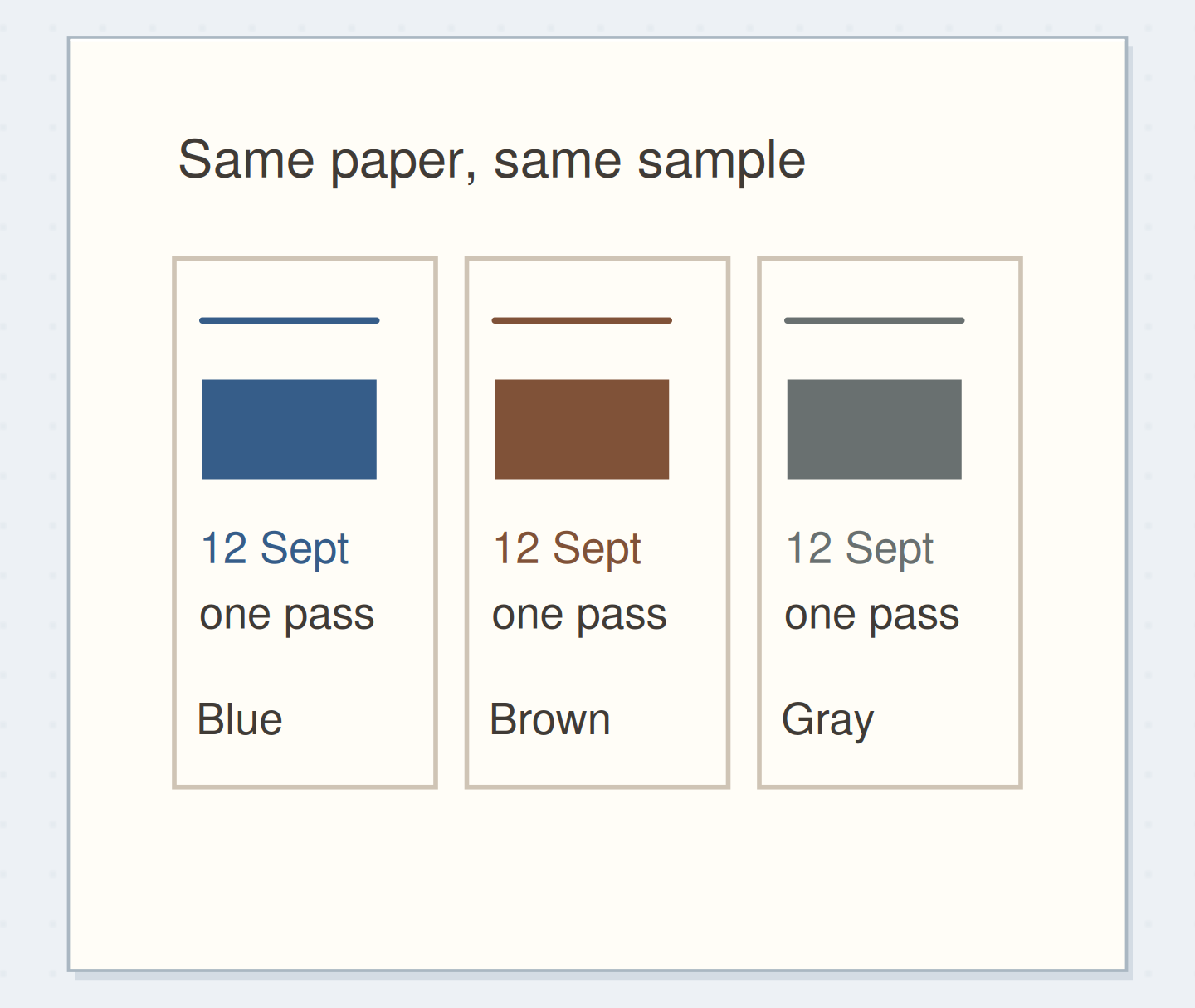
Blue gets the broad area; rust is smaller; ochre repeats in tiny marks
Blue has the broad role, rust the smaller mark, and ochre the tiny repeated detail.
ONE WORKED EXAMPLE
A train ticket brings its own orange
You have planned muted blue, rust, and ochre accents for a travel page. A saved train ticket introduces a brighter orange that was not in your original swatches.
Before
You begin repeating the ticket’s orange in every corner, and the small three-color recipe loses the quiet balance you chose in the thumbnails.
After
The ticket keeps its orange as part of the record. Added marks stay with the chosen jobs: a narrower blue band, a rust date, and three ochre dots. Dark handwriting carries the sentence beside the ticket without adding another decorative role.
What changed—and what to check
The palette organizes the marks you add. Letting the saved object retain its own colors prevents one exception from multiplying across the page.
Try this check. Point to each added accent and name its job without counting the printed colors on the ticket.
Give each accent a different amount of work
Give muted blue the broad accent, rust the smaller heading detail, and ochre a few marks. Label those jobs beside the swatches; ordinary dark writing remains separate. A large blue band and three ochre dots do very different work even when their test squares are equal. Judge the planned areas, not just whether three colors look pleasant in a row.
“Three colors form a useful limit for this exercise rather than a rule for all pages.”
Swatch the way you intend to draw
Swatch the intended application: light pencil for a pale accent or diluted marker on suitable paper for a palette wash. Tombow recommends matching swatch technique because water can change appearance. Let wet samples dry and identify tools beside them. A reproducible modest combination is more useful than colors sampled densely when you intend to use them lightly on the actual page.
See the differenceMove beyond equal squares
Move beyond equal squares
Move the reveal control to inspect this specific change.
Read the words in this example
Equal swatches only
- Swatches identify color only.
Equal swatches only
Equal swatches identify hues without showing their page roles.
Arrange a small page recipe
Draw three thumbnails, each 30 mm wide and 45 mm high. First: broad blue heading band, short rust line, three ochre marks. Second: swap blue and rust without changing shapes. Third: retain original roles but halve the broad band’s area. Add gray lines for body writing. Compare together and choose the third here if it preserves color while leaving more useful writing space.
Use the recipe on a real entry
Transfer the chosen arrangement without scaling every accent mechanically: dots may stay small while a band lengthens. Keep your reference beside the notebook and repeat the assigned roles. If a ticket introduces another hue, leave it part of the ticket rather than repeating it everywhere. This recipe organizes your added marks; recorded objects do not need to obey its decorative color count.
Write your versionWrite your color roles
Write your color roles
Your usual writing pen remains a practical separate tool.
Broad accent:Muted blue heading band
Smaller accent:Rust date line
Tiny repeated detail:Ochre dots
Your words have a place now.
Your usual writing pen remains a practical separate tool.
- Words on this card
- 16
GO A LITTLE FURTHERQuiet a color by changing its role
Quiet a color by changing its role
When rust takes over, reduce its area before abandoning the whole palette. When ochre disappears, try a slightly larger mark on a spare piece, or keep it for decoration rather than essential words. These are different problems: one color has too much area, while the other lacks enough visible contrast or size for its job.
Try a what-ifThe dried swatch changed
The dried swatch changed
Consider this page before choosing your next move.
You chose a palette from wet marker samples, but its broad accent dries much paler on your journal paper than it appeared in the test.
Compare the three choices
What comparison would help before the final page?
- Judge the colors from the marker caps.
Caps help identify tools but do not show this paper or your chosen amount of water and ink.
- Add another accent color to fill the gap.
A new hue may change the palette without explaining why the original application looked different after drying.
- Make matching application swatches and let them dry.
Use the same paper and technique you intend for the page. The dry samples show the appearance you will actually arrange.
Choose color roles from samples made the way the finished marks will be used.
What would you try?
Choose an option to see what it would do. You can explore all three.
GO A LITTLE FURTHERName a recipe you can recognize
Name a recipe you can recognize
Save the chosen miniature beside the actual dried swatches and name its jobs: “blue band, rust date, ochre dots.” Add the tool names if they matter to repeating it. On your next page, begin with that recipe and change only the part the new entry needs; a different ticket does not require a new palette.
Something for a future page?
The Washi Tape ShopAffiliate links: we may earn a commission if you buy through these links.
Where this idea began
The method references explain the underlying ideas. Community links show the questions and experiences that helped shape this guide; they are not a popularity ranking. The worked examples here are our own.
- Background mention — search excerpt onlycolor palatte
This link provides background context. The full discussion was not reviewed, so it is not evidence that this exact method is popular or effective.
- Method referenceCreate Custom Color Palettes Using Dual Brush Pens
Recommends choosing inspiration and swatching with the same application method intended for the final work.