Gather a few things See what you’ll need
- Current notebook
- Pen
- Calendar or next planning page
Choose an exercise 4 things to try as you read
GO A LITTLE FURTHERAn open box is a question
An open box is a question
Read one unchecked item and ask what is true now: unfinished, already done, blocked, or no longer needed? The empty box cannot answer that for you. Checking the current situation before copying prevents old work from being carried forward simply because its mark was never closed.
Compare the optionsTry three different endings
Try three different endings
What is true about this old task?
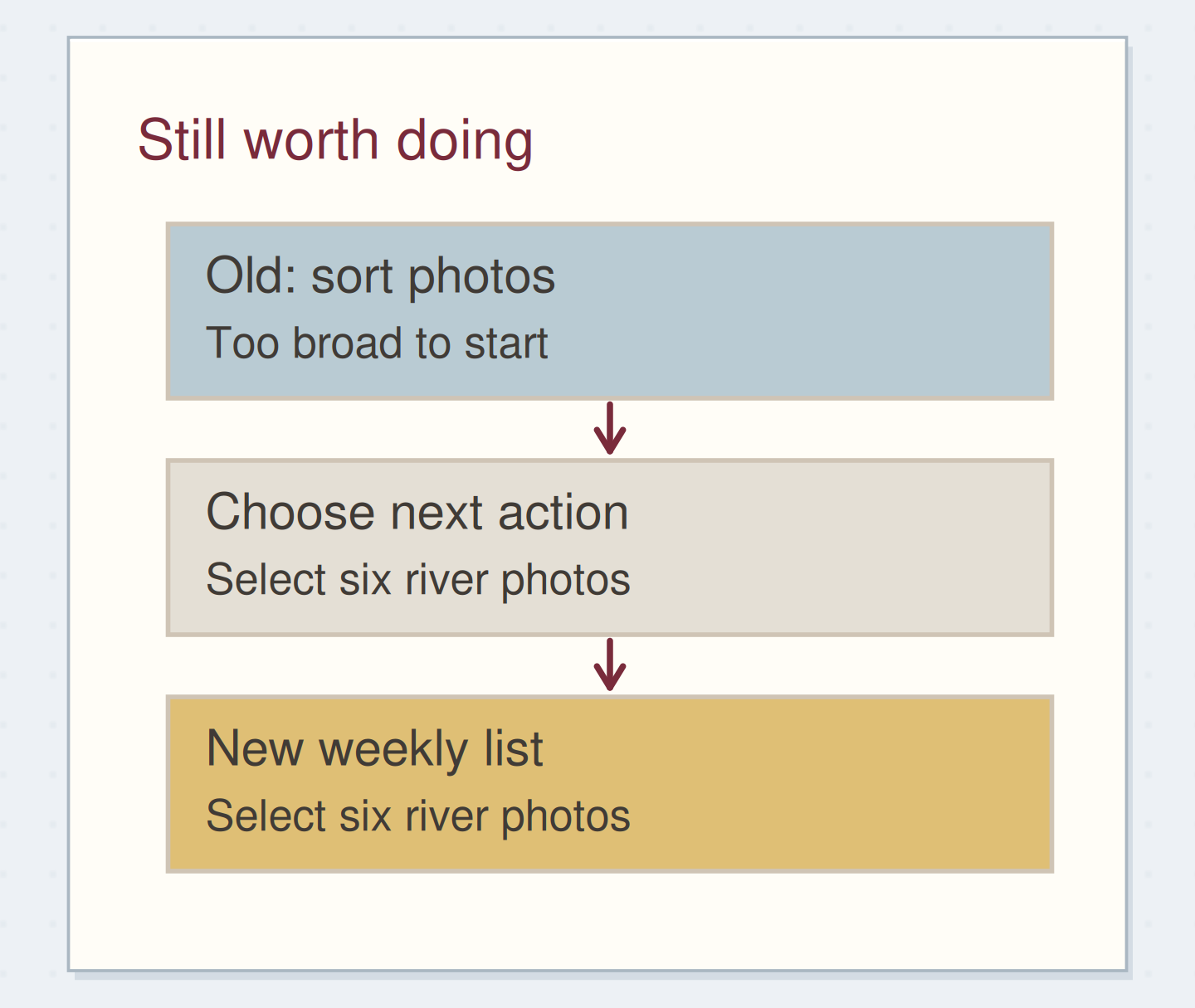
Read the words in this example
- Still worth doing
- Old: sort photos
- Too broad to start
- Choose next action
- Select six river photos
- New weekly list
- Select six river photos
A smaller action replaces vague wording.
Keep the outcome while changing what you can actually begin.
Prepare four decisions, not four new notebooks
Write four decision labels in the margin: Keep for a clear current action; Reshape for a different next action; Later for something deliberately leaving the active pool; Cancel for work no longer needed. Open the destination before marking anything moved. Preserve any standard Bullet Journal migration meanings in your key, or write a destination in words.
ONE WORKED EXAMPLE
Sort photos becomes a possible first action
A photo-sorting task has moved through several weekly pages. You still want a small river album, but opening every photo folder feels too broad to start in the time available.
Before
“Sort photos” names a large outcome without telling you which folder, period or selection would count as the next piece of work.
After
The project note keeps the album idea. The current list receives “Open September folder and select six river photos.” After checking that destination, the old line is marked moved with a reference to the new page.
What changed—and what to check
The replacement names an available action while the broader outcome keeps its project home. Closing the old mark after transfer preserves a route to the work.
Try this check. Read the new line and check that you can identify the folder and first action without another planning session.
Ask whether you could begin the words you wrote
Could you begin from the wording with the materials available? “Sort photos” may need a folder, time period, or album purpose first. Try “open September folder and select six river photos.” Keep a clear familiar action intact: “return library books” needs no further breakdown if the books and branch are known. Larger outcomes can remain in project notes.
Write your versionRewrite the action you can begin
Rewrite the action you can begin
Edit the worked example into a note you can use.
Old wording:Sort photos
First visible action:Select six river photos
Needed before starting:September folder available
Your words have a place now.
Make the replacement specific enough to start with the resources you have.
- Words on this card
- 17
Try the decisions on real-looking leftovers
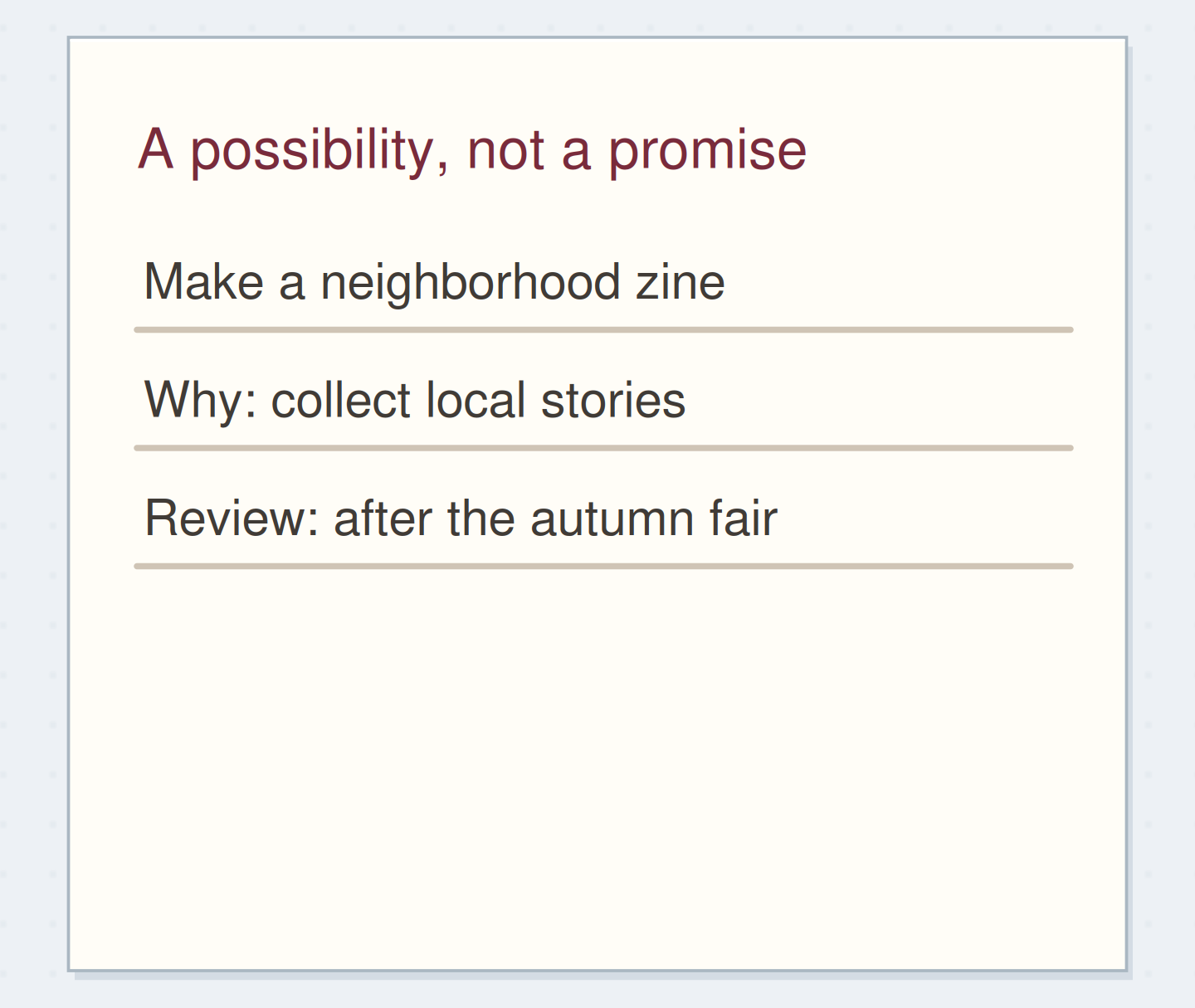
Imagine September ends with “sort photos,” “print invitations,” and “make winter album.” Reshape the first into selecting six river photos. Cancel invitations after confirming the hosts sent a shared invitation, and note why. Put the album on someday with “review after October trip.” Next week receives one available action; the other two lines retain an honest status.
Name the thing you are waiting on
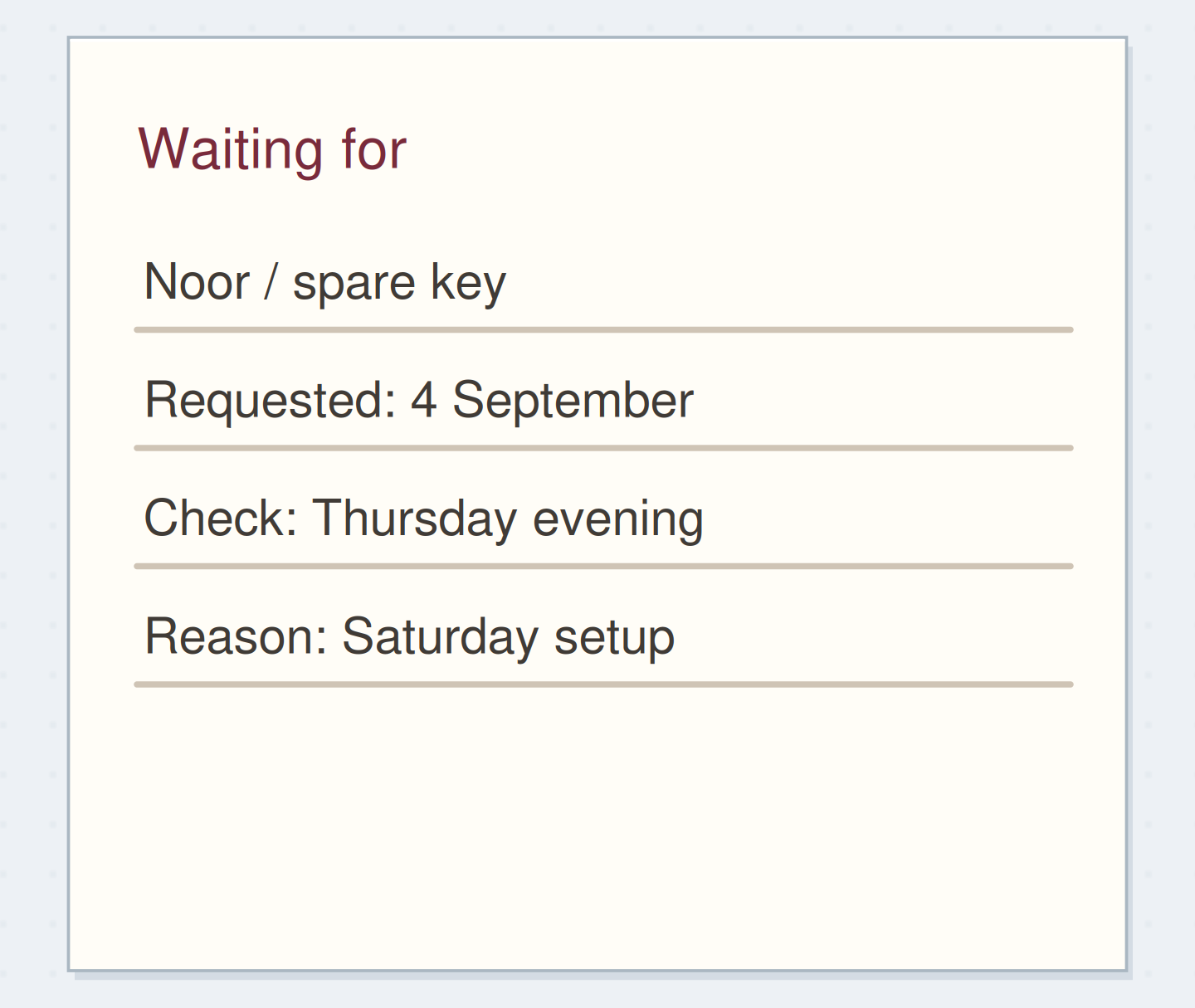
For a file someone has agreed to send, record the file, supplier, and review point on a waiting-for list. If you have not requested it, making the request is still your action. Keep any deadline in the calendar or project record, with time to respond to delays. Deferring an idea must not hide an existing commitment.
See the differenceSeparate a request from a wait
Separate a request from a wait
Read the whole example before and after the change. The tinted lines show revised wording.
Tinted lines contain wording that differs between the two examples.
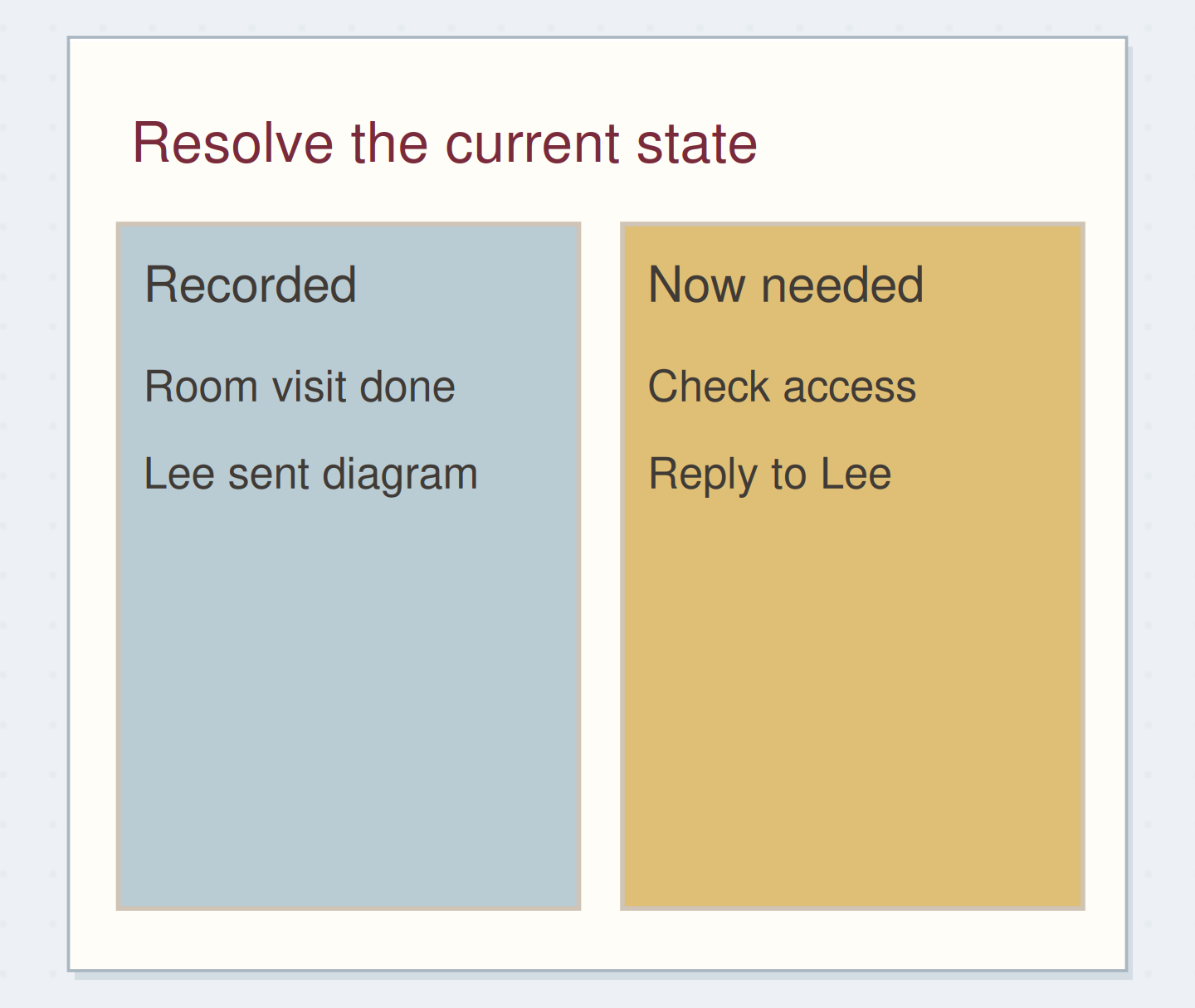
Before — Not yet requested
- On my list
- Get the room diagram
After — Request sent
- Two possible statuses
- My action
- Request diagram
- Waiting
- Diagram from Lee
Read the whole example before and after the change.
You cannot be waiting for a request you have not made. Once the request is sent, record the expected response and review point.
GO A LITTLE FURTHERLeave evidence instead of judging the row
Leave evidence instead of judging the row
Beside a line that keeps returning, name the obstruction you can identify: “missing folder,” “too broad,” or “not chosen this week.” A tally of migrations cannot explain the cause on its own. If you can review only part of the list today, name that range and keep the remaining decisions on a visible review page with a next step to return to them.
Finish the move at both ends
Before closing the old page, follow one moved item to its destination. Check the replacement wording and any copied date, then mark the original moved, with a page reference if useful. Account for every item in the range you chose to review. Leave an explicit route to the unreviewed remainder instead of making the whole page look settled.
Use those transfer decisions in a short review of the week.
Try a what-ifYou can review only half the page today
You can review only half the page today
Make the scope of the review visible.
You have time to decide six of twelve open items. The other six still need thought, and you want them findable without pretending they were reviewed.
Compare the three choices
What should the old page show?
- Mark every item moved because the next page is already open.
That would claim destinations for tasks you have not actually placed or decided.
- Copy all twelve unchanged so the review appears complete.
That keeps the lines visible but carries the six unresolved decisions into the active list without distinguishing them.
- Close the six decided items and leave a named route to review the remainder.
The record shows what was reviewed and what remains. Give the remaining review a real next step rather than an unexplained mark.
A bounded review can finish honestly while its unreviewed remainder keeps a clear route back.
What would you try?
Choose an option to see what it would do. You can explore all three.
Something for a future page?
The Washi Tape ShopAffiliate links: we may earn a commission if you buy through these links.
Where this idea began
This guide adapts the reconsideration of unfinished work in Ryder Carroll’s Bullet Journal migration practice. The four choices here are an editorial way to work through that review.
The method references explain the underlying ideas. Community links show the questions and experiences that helped shape this guide; they are not a popularity ranking. The worked examples here are our own.
- Community discussionHow Do You Use Monthly Task Migration?
A reader says carried-forward monthly tasks disappear beneath new daily work.
- Method referenceMigration 101
Review unfinished entries, discard irrelevant ones, and migrate still-relevant tasks to an appropriate log or collection.
Supports the migration decision, not a fixed review duration or the guide’s sample tasks.
Source checked 2026-09-05.